Devi Kar | Choosing A School For Your Child: The Things You Should Be Focusing On…

But a steady record of good results can’t be the only criterion for choosing a school for your child. When parents are seeking admission at the pre-primary stage, they of course, look for different things
The other day I asked a prospective parent why he was uprooting his daughter from a perfectly good institution, especially since his residence was a good distance away from our school. His answer disturbed me. He said his daughter wished to opt for the commerce “stream”, and had found our school’s commerce results had been excellent in the past five years. My response was that it was possible to attain very high marks and grades in board exams irrespective of the school. In fact, I added that a child needn’t even attend a regular school and yet get unusually good or even outstanding exam results by enrolling in a coaching centre known for churning out examinees who “maxed” their papers. Indeed, today, nothing below 100 per cent satisfies most good students, not ambitious ones alone. I have seen students being deeply disappointed with a score of 99.
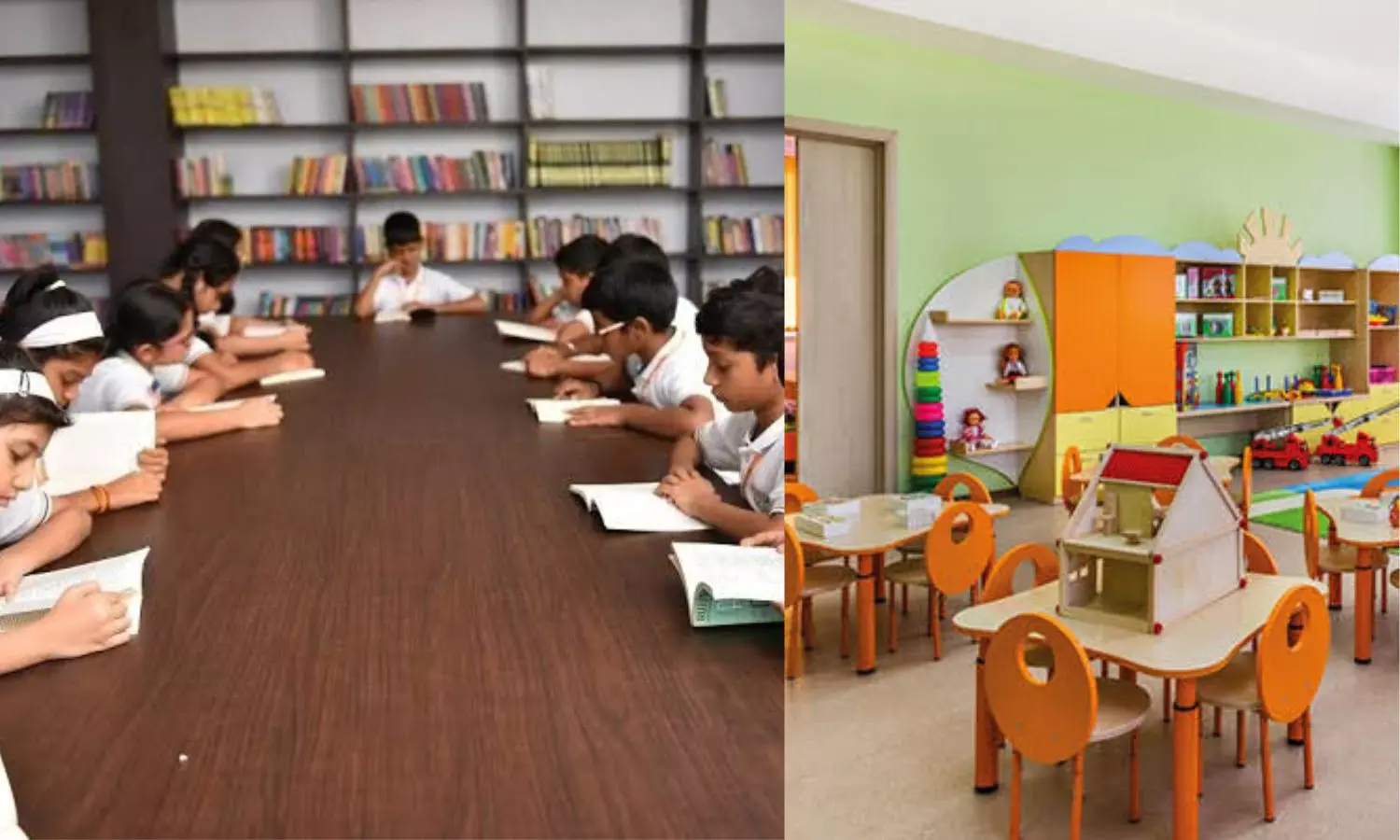
But a steady record of good results can’t be the only criterion for choosing a school for your child. When parents are seeking admission at the pre-primary stage, they of course, look for different things. For example, a playschool has to have a welcoming ambience with an inviting physical appearance along with warm and cheerful teachers. Parents are very particular about infrastructure these days. Classrooms must be cheerful, bright and airy.
Furniture must be child-friendly and ergonomic while equipment for teaching and learning should be carefully selected and meet contemporary educational needs. Parents have become fussy about various things -- the diction and appearance of teachers, the cleanliness of the school and the teacher-student ratio. Thay try to make sure the children who attend the school are from a similar socio-economic background.
Another point determining school selection is its “reputation”. I am still not quite sure about the factors that contribute to the public perception of a “good” school. Sometimes it is considered just “trendy” to send children to a particular school. But parents have to first decide on the kind of school the child should attend, depending on the child’s age, family circumstances, Board preference, personal liking and so on. Is it to be a play school, high school, international, national or regional? Distance from one’s home, the school’s infrastructure, facilities available, co- and extracurricular activities and the range of subjects offered, the kind of placements the students get after they leave school are all important factors. Strangely, there is no way to ascertain the quality of teachers, though it is generally regarded as a major factor (if not the most important one) that contributes to the quality of the school. Also, it is widely accepted that a school cannot function well without effective and imaginative leadership.
Sometimes, undue importance is given to infrastructure. Schools have learned to attract clientele by flaunting their facilities through clever advertising -- swimming pool, gymnasium, smart devices to aid teaching. They publicise board results where every other student performs spectacularly. What is sometimes discovered later, to the chagrin of parents, is a lack of pastoral care, erratic individual attention and an uninspired approach to teaching and learning.
Some discerning parents do a thorough check. They find out about the school in detail from past and present pupils and do not rely only on the school website or published rankings. However, others insist on blindly sending their children to the school they themselves attended.
Having mentioned the criteria that are believed to make a good school, people often find themselves judging the total experience of the school-going child instead of looking at different aspects of a school in a disparate manner. I believe that every child learns not only from information and instruction, but also from the environment. Therefore, it is vital that a school should be conscious of providing enriching and interesting experiences on an ongoing basis. This way, the school becomes an exciting learning centre and the child grows up to be a curious individual who is not afraid to explore and experiment.
The obsession with marks, grades and exam results has become a national disease. As a result, our children’s intellectual growth is stunted in terms of imagination, creativity, resourcefulness and innovativeness. When progressive schools encourage learning through activity and avoid dependence on textbooks and notes, I have noticed that many parents are dissatisfied and they grumble about “proper” studies not being done.
Today’s parents should have a different mindset and not equate learning with the ability to retain and reproduce information which is out there for everyone to access. What they should demand from a school, instead, is the fostering of learning which will enable young people to process what they have imbibed from real world experiences and be able to apply them appropriately.
In spite of the great importance that is placed on co-curricular activities by both home and school, most parents are still exam-oriented. Well before any exam, they become anxious and are reluctant to let their children take part in activities and want to focus on the approaching exam. To them, the only evidence of real learning seems to be reading and writing in the confines of their classrooms.
Two other conditions associated with a “proper” environment that is conducive to efficient study is that students should be quiet and still in the classroom. If you stop to reflect on these beliefs, you will realise that these are rigid assumptions and are often counterproductive.
All school teachers know that they are meant to be “facilitators”. My observations indicate that most are continuing to “teach” in the conventional sense -- that is, they inform, instruct, test and correct. We teachers would do well to step back and concentrate on enabling our students to be responsible for their own learning. I think a good school is one which ensures that its students become independent learners.
The writer is a veteran school educator based in Kolkata
