Dev 360 | South Asia’s Youth Crisis: A Warning Bell In Nepal | Patralekha Chatterjee

Kathmandu is on edge not because of ‘apps’, but because a generation raised on the promise of democracy and mobility has collided with an economy and political order that keep shutting every door
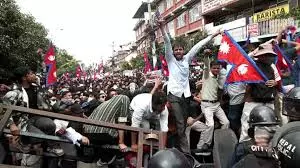
There are two ways to process the turbulence around us. One is to comfort ourselves with comparisons — India is bigger, more diverse, more resilient than its neighbours, and therefore we need not worry. The other is to be quietly grateful we are not in freefall, but self-aware enough to recognise that pockets of social upheaval, deep pools of distress and youth joblessness are already derailing India’s goal of becoming the best version of itself.
That is why youth outmigration must be seen not as a statistic, but as a signal — the canary in the coal mine of South Asia’s development crisis.
Nepal provides the latest warning. Nepal has long faced political turmoil, but its Gen Z-led protests in September 2025 reveal how pent-up youth frustration can erupt in unpredictable ways. Gen Z, born between 1997 and 2012, is the first generation raised in a hyperconnected world shaped by digital fluency and economic precarity.
In September 2025, Kathmandu erupted in youth protests after the government blocked 26 major social media platforms. But as Atul Chandra and Pramesh Pokharel wrote: “Kathmandu is on edge not because of ‘apps’, but because a generation raised on the promise of democracy and mobility has collided with an economy and political order that keep shutting every door.” The ban was the spark. The fuel was structural: mass youth outmigration, elite impunity, and a broken development model.
After a week of violent and destructive protests, Nepal finally has a caretaker Prime Minister. Former Chief Justice Sushila Karki — Gen Z’s choice and Nepal’s first woman PM — will lead an interim citizens’ government.
The lessons are clear. In 2024-25, Nepal issued 839,266 labour permits. Remittances made up 33% of GDP, among the highest ratios worldwide. Chandra and Pokharel describe this migration as “the silent plebiscite”, and “a referendum on a model that exports its youth to low-wage contracts while importing basics, and that depends on patronage rather than productivity”.
The public square, online and offline, is the only space left for asserting dignity. When that square was shut down, the explosion was inevitable.
Nepal’s youth are broadly divided into two archetypes. The fighters — urban, educated, digitally fluent Gen Z protesters who demanded transparency and representation. And the leavers — rural, economically marginalised youth who board planes for low-wage jobs abroad, often exploited and invisible. They may not often seem residents of the same space, but they share the same grievance: a system that rewards inherited privilege and punishes aspiration.
Over three million Nepalese (14% of total population) are working abroad, primarily in Malaysia, the Gulf countries, and India. Migration is now a public spectacle of government failure: visible in remittance-fuelled inequality, social media posts from abroad, and stories of disillusioned returnees. There is widespread anger against corruption. The slogans during the mass protests were blunt: “No More Nepo Babies”; “Nepal belongs to us, not the corrupt”.
This dynamic is not unique to Nepal. “Remittances are often the most important source of foreign inflow for countries in South Asia, ahead of foreign direct investments and other capital inflows, and has contributed significantly to the region’s development. In fact, South Asia is the largest recipient of remittances for a sub-region in the world, with the majority of them directed at India, which is the largest recipient of remittances in the world by country,” notes the “South Asia Migration Report 2024”, edited by migration expert S. Irudaya Rajan. Across Asia, in Bangladesh, Sri Lanka, Indonesia, youth-led uprisings have echoed similar frustrations. These uprisings are part of a regional reckoning with inequality, exclusion and flaunting of privilege.
Migration also creates social divides — between those who leave, those who stay and those who return. These divides can align with ethnic, religious, or political fault lines, turning protests violent when targeted against perceived beneficiaries of the status quo.
India’s scale and diversity buffer it from systemic collapse. But complacency is not an option. “India is not quite in the same position as Nepal, Bangladesh or Sri Lanka, where street revolts have toppled governments. It is too vast; its economy is too diverse. And critically, though India has huge inequalities and millions of young jobless citizens — and has experienced mass protests — there are safety valves. Even if flawed, we have a federal structure, Opposition-ruled states, and an active judiciary. The ruling party understands that agitations can act as safety valves, and they carefully leverage this. But disaffection has shown up in fewer votes for the ruling party, as we saw in the 2024 general election,” says Niranjan Sahoo, senior fellow at the Observer Research Foundation. Mr Sahoo, who focuses on governance, democracy, and federalism, adds: “Youth outmigration and remittances are not guaranteed, especially as the world becomes increasingly protectionist and anti-immigrant sentiments sweep across many countries. Many of those who would have left will now have to stay back. These are warning signals we cannot afford to ignore.”
India’s urban youth (15-29) unemployment hovered around 19% in July 2025, according to the Periodic Labour Force Survey (PLFS). Young people scramble for unstable gig work. The desperation is real, and rising. Beneath the surface of growth lie districts where migration has long been the escape valve. The valve is tightening.
Punjab is the epicentre. With over 13% of rural households having a member abroad, it has been hit hard by US deportations and visa crackdowns. Kerala, Bihar and Uttar Pradesh also have pockets where remittances mask deep joblessness and economic fragility.
What Nepal shows us is that youth outmigration is not just an economic trend; it is a political signal. It is the quiet protest that precedes the loud one. When young people leave en masse, it is not just for better wages. Nepal’s protests show what happens when inequality is ignored, when corruption is normalised, and when youth are treated as a problem rather than a constituency.
No one can predict the eventual outcome of Nepal’s street protests. The two other recent examples from South Asia point in two different directions. Sri Lanka now has a government that is at least more responsive to citizens’ aspirations than previous governments. Bangladesh remains in turmoil more than a year after the government fell. All three shows Gen Z cannot be ignored.
India’s median age is 28; it must act — not out of fear, but out of foresight. That means fixing the skilling pipeline, investing in local economies, and creating dignified employment. It means replacing remittance-complacency with an employment-first development model.
Because when the youth have nowhere to go, they can turn hostile.
The writer focuses on development issues in India and emerging economies. She can be reached at patralekha.chatterjee@gmail.com
