Dev 360 | Jobs, Migration & Reality: BJP’s Post-poll Challenge | Patralekha Chatterjee

People all over India are on the move, not just from West Bengal to other states in search of work
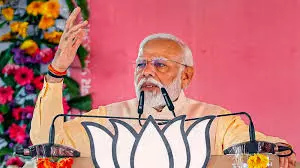
Storytelling is critical in electoral politics. But the gap between political storytelling and official data has rarely been wider.
The BJP offered voters a storyline about industrial revival, jobs, cash support for the vulnerable, and an end to economic despair, alongside huge dollops of Hindutva, its calling card.
The narrative was emotionally potent: other governments fail the people; the “double-engine” BJP model delivers. It worked.
The BJP enters mid-2026 with unprecedented political dominance: direct control of 16 states and influence over nearly three-fourths of India’s population through its NDA alliance partners.
With the polls over, bread-and-butter concerns must be centre stage.
The challenge for the BJP: operationalising its promises across the country.
Out-migration was a potent election issue. In West Bengal, BJP leaders painted grim pictures of lakhs of desperate workers fleeing their states. Exaggeration proved to be a potent electoral strategy. The data, however, tells a more nuanced story.
People all over India are on the move, not just from West Bengal to other states in search of work. As the late Bibek Debroy and Devi Prasad Misra noted in EAC-PM’s (Economic Advisory Council to PM) December 2024 working paper “400 Million Dreams” -- “Mumbai, Bengaluru Urban, Howrah, Central Delhi, Hyderabad are the districts attracting most migrant arrivals; while Valsad, Chittoor, Paschim Bardhaman, Agra, Guntur, Villupuram and Saharsa are the top origin districts.”
Even though Census 2011 is the last comprehensive, door-to-door official count of migration, experts and government bodies use alternative high-frequency proxy data to estimate current migration patterns. Debroy and Misra used high-frequency railway unreserved ticket data and telecom roaming records as proxies to assess domestic migration. West Bengal ranks in the top five for total outbound migrants, but is nowhere near the top two. Uttar Pradesh and Bihar have far higher figures for work-related inter-state migration.
“There has been significant out-migration from West Bengal to Kerala and other southern states. However, Bengal is not the only source state. Since we have not had a Census since 2011, there is no official, comprehensive data on internal migration patterns in India. Migration is normal, natural and is one of the fastest ways of intergenerational social mobility for a person from disadvantaged communities in rural India. In India, a large number of migrants move to southern states, which offer better incomes and opportunities. Bengal is merely one among many states from where rural Indians are migrating in search of livelihoods, driven by a lack of local job opportunities exacerbated by climate change,” points out Dr Benoy Peter, migration expert and executive director, Centre for Migration and Inclusive Development.
Framing any state as the worst in every way is political storytelling. The reality: large-scale distress migration from all poorer, populous northern and eastern states to western and southern industrial hubs.
The BJP tapped into real voter pain, but the exaggeration raises the bar for delivery. Reversing entrenched migration patterns will take years of sustained industrial growth, beyond campaign rhetoric.
Another hugely relevant issue across India -- investment and the quality of jobs on offer. Job growth trails GDP growth. Millions of Indians continue to survive through self-employment (mostly low-productivity) and casual labour.
This gap between promise and reality became visible in mid-April 2026 when thousands of factory workers in Noida and parts of Gurgaon protested, demanding higher pay and better working conditions. The protests turned violent in some places. The police lobbed tear as shells to quell the demonstrations. The Uttar Pradesh government announced a 20-21% wage hike, but many workers and unions rejected it as insufficient. Similar unrest has surfaced in other industrial clusters. Calm has returned but these incidents expose a hard truth: even as states aggressively chase big-ticket investments, the jobs created are often low-wage, insecure, failing to deliver the dignity and stability that ordinary workers seek.
On investment, there is visible progress in several states. However, what remains muted during stump speeches or effusive articles on “turning point on industry” is the creation of actual jobs. High-ticket investments in sectors like petrochemicals, green energy, and auto, which are often capital-intensive, generate impressive announcement numbers but modest direct employment. Big investment summits do not always lead to big-time, ground-level formal job creation.
The Indian economy is generating growth, but not enough high-quality jobs for its young population. Graduate unemployment remains high: nearly 40% among 15-25-year-olds, 20% among 25-29-year-olds, with few securing stable jobs within a year, says Azim Premji University’s “State of Working India 2026” study.
The other tricky issue is land. Land acquisition in Bengal is a tricky issue no matter who is in power. “With high population density and limited availability, acquisition is likely to remain sensitive,” Rajeev Singh, director-general of Indian Chamber of Commerce, told a business daily this week.
Assam, where the BJP retained power, has seen a sharp rise in investment proposals in recent years, with over Rs 4.91 lakh crores announced since the Advantage Assam 2.0 Summit in early 2025. However, the majority of these investments are concentrated in capital-intensive sectors such as green energy, semiconductors, petrochemicals, and infrastructure. The number of jobs it generates and its ability to meaningfully address Assam’s massive youth bulge, unemployment and out-migration challenges remains to be seen.
As Benoy Peter argues: “When we talk about new investments in a state, we must also examine their nature. A memorandum of understanding does not always translate into concrete investments on the ground. Moreover, most new investments in India today are highly mechanised and capital-intensive. As a result, they do not always generate significant new jobs and often fail to address the deepening rural employment crisis, which is increasingly worsened by the climate crisis.”
The BJP’s expanding welfare agenda is politically attractive but fiscally risky. New recurring cash doles risk crowding out capital expenditure needed for genuine job creation. The experience of the last few years shows that once launched, such welfare schemes are extremely difficult to scale back. The “double-engine” advantage can improve fund flows and coordination, but it cannot magically expand fiscal space.
The ongoing West Asia conflict has sharply worsened the situation. In recent weeks, commercial LPG (19 kg cylinder) prices jumped by nearly Rs 1,000 in major cities. Domestic household cylinders remain protected for now, but the impact is already visible: restaurants: dhabas, street vendors have raised prices. Fertiliser costs have surged globally, threatening higher input prices for kharif crops and potential food inflation.
India's economy is resilient, but persistent gaps between political narratives and actual data breed unrealistic expectations. The BJP’s challenge will be to convert political hegemony into sustainable transformation: high-quality employment, price stability, and reversing distress migration.
