Dev 360 | Chasing Global Rankings On a Crumbling Planet | Patralekha Chatterjee

Yet, one in 10 people globally still lives in extreme poverty. Food insecurity remains well above 2015 levels, affecting 2.3 billion people. More than 150 million children are stunted. Maternal mortality remains nearly three times the global target. Everyday discrimination — still felt by one in five people worldwide — continues to limit human potential
What if the greatest threat to human progress is no longer our inability to advance — but our failure to protect what we have already created? How do we stop shocks — from climate disasters, conflict, forced migration, pandemics and debt — from wiping out our gains? These are among the stark questions that leap out from the flood of data in recent global assessments of sustainable development.
With under four years left for its 2030 deadline, the UN Sustainable Development Goals Report 2026 paints a worrying picture of slow progress — albeit with some hopeful signs.
Since 2015, millions have gained access to safe drinking water and sanitation. Electricity now reaches 92 per cent of the world’s population, with a third of installed generation capacity from renewable sources. Internet access has surged from 40 to 74 per cent, connecting billions to new education and economic opportunities. Health outcomes have similarly improved: new HIV infections and AIDS related deaths have each fallen by roughly a third, 59 countries have eliminated at least one neglected tropical disease and 134 countries have met the target for reducing child mortality. Disaster-related deaths have dropped by 65 per cent compared with the previous decade.
Yet, one in 10 people globally still lives in extreme poverty. Food insecurity remains well above 2015 levels, affecting 2.3 billion people. More than 150 million children are stunted. Maternal mortality remains nearly three times the global target. Everyday discrimination — still felt by one in five people worldwide — continues to limit human potential.
“These shortfalls are compounded by intersecting planetary and human-made crises. In 2025, global temperatures reached 1.43°C above pre industrial levels, and atmospheric carbon dioxide (CO2) reached its highest concentration in 2 million years. Violent conflict surged to its highest levels in decades, reversing years of development in mere months, forcibly displacing 118 million people,” says Li Junhua, UN under-secretary-general for economic and social affairs, in the introduction to the report,
Hearteningly, Southern Asia has emerged as one of the main drivers of critical human development metrics, accounting for over 68 per cent of the global reduction in stunted children (a decrease of 20.6 million) and 55 per cent of the reduction in wasted children between 2012 and 2024.
These hard-won victories remain dangerously fragile.
The 2026 report notes that over the last decade, critical infrastructure has proved especially vulnerable to disasters. Between 2015 and 2024, based on countries’ reported data, an average of 91,847 units of critical infrastructure were destroyed or damaged every year. Over the same period, there were more than 1.5 million yearly disruptions to basic services, including continuity of health and education services. These figures reflect the systemic nature of disaster risk: water systems, power grids, transport networks and hospitals do not operate in isolation, and a single failure in one system can cascade across entire economies, undermining service delivery, livelihoods and long-term development progress.
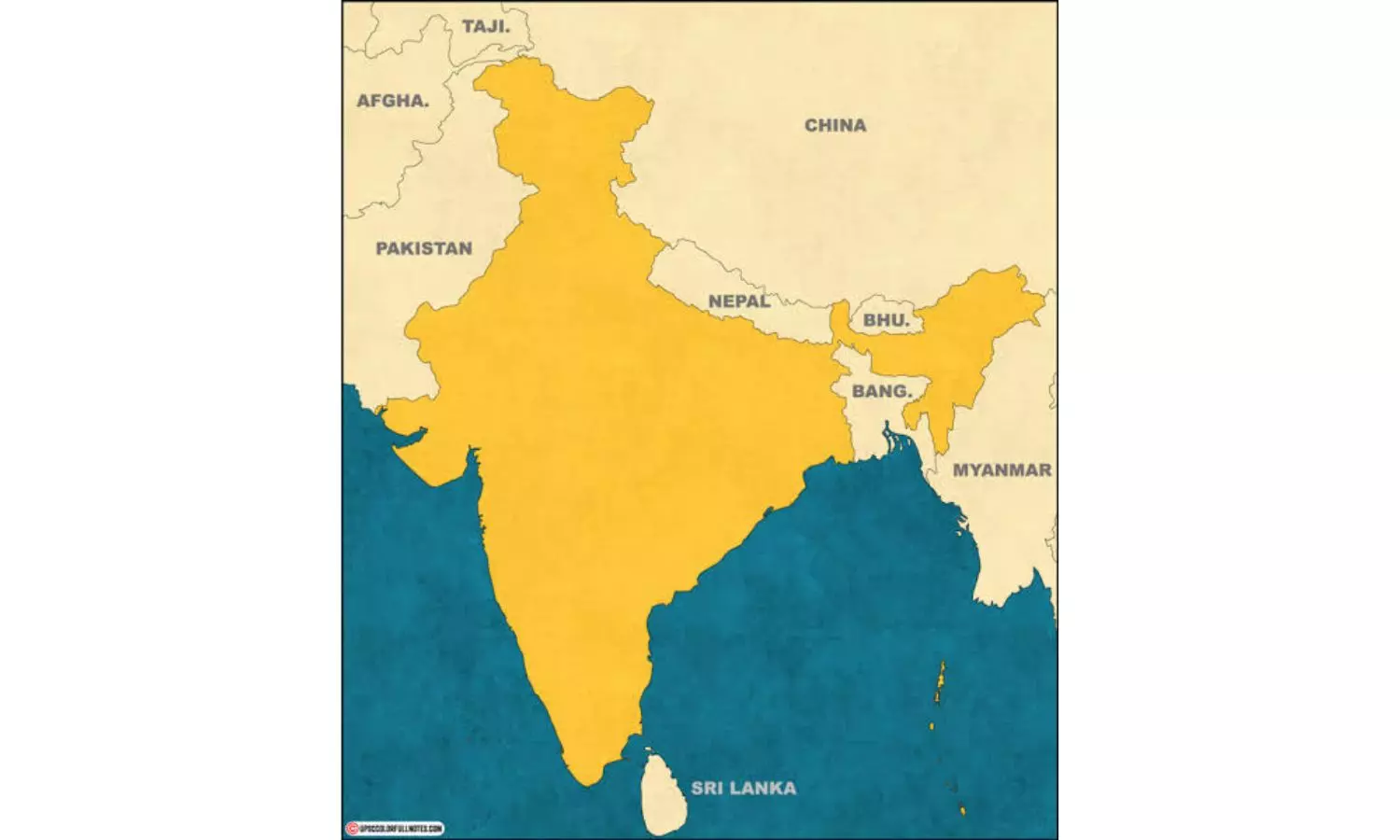
Where does India, a country of 1.4 billion, figure in the global SDG narrative?
In a separate, independent academic report led by economist Prof. Jeffrey D. Sachs, director of the Centre for Sustainable Development at Columbia University, and other experts and published by the UN Sustainable Development Solutions Network (SDSN) to coincide with the UN Sustainable Development Goals Report 2026, India ranked 94th among the 169 countries with sufficient data for inclusion in the SDG Index.
It is vital to separate this from the UN’s report, which does not rank countries on SDG. While the SDSN operates under a broad United Nations umbrella — having been launched to mobilise scientific expertise for the SDGs — its index is an independent evaluation.
Clearly, India is a key part of the global SDG ledger, embodying the agonising paradox of modern development: historic macroeconomic ascents alongside structural bottlenecks and a rapidly intensifying climate crisis.
The Sachs-led SDG Index throws up some interesting contrasts: Thailand ranks above the United States, while tiny Cabo Verde, which made football history by qualifying for the 2026 Fifa World Cup, is just one place behind India at 95th.
Stripping away the media’s obsession with the “94th rank” exposes a hard truth: economic velocity does not automatically translate into human equity. Even with its record rise on this independent index, India continues to lag behind smaller South Asian neighbours like Bhutan, the Maldives and Nepal on many fronts.
All this is happening against a worrying backdrop of increasingly frequent extreme and erratic weather fuelled by climate change. For India, this translates into erratic monsoons, brutal heatwaves, and shifting agricultural zones that ravage crop yields and drive up food insecurity. Climate change is no longer a future threat to be mitigated; it is an active economic disruptor dismantling years of progress in public health and poverty alleviation today.
India must move beyond preoccupation with overall rankings to address its deep-seated structural challenges. Treating climate action as an isolated, technocratic goal of just solar capacity or electric vehicle targets would be a mistake.
Consider data from the Council on Energy, Environment and Water (CEEW), a leading Indian think tank, which makes clear that significant portions of India’s infrastructure are completely ill-equipped to deal with intensifying extreme weather events.
In their 2024 report “Making India’s Healthcare Infrastructure Climate Resilient”, which sledgehammers the urgent need to climate-proof the country’s healthcare infrastructure, CEEW pointed out that many of the over two lakh public healthcare facilities in India could be at risk from extreme climate events such as heavy flooding and severe cyclones.
Another CEEW study, “Towards Climate-resilient Indian Industries” (2026), points out that while some leading firms have begun implementing targeted adaptation measures, climate resilience across the broader industrial ecosystem remains uneven. Micro, small and medium enterprises (MSMEs), the backbone of India’s industrial value chains, face significant constraints in accessing climate data, finance, and technical expertise required to respond effectively to these risks
If India can’t shield its food systems, industries, infrastructure and vulnerable communities from the impacts of a warming planet, the hard-fought development gains of the past decade will inevitably unravel. Reducing these disruptions requires building infrastructure to withstand disasters from the outset, factoring climate risk into the full life cycle from planning to maintenance through stronger building standards and coordinated public-private governance frameworks.
The SDG story is no longer only about how fast countries develop, but whether those gains can survive a warming planet.
Climate change is emerging as the force that can undo progress across poverty alleviation, food security, health and livelihoods. The recent SDG assessments point to the same underlying challenge: development gains are being made, but climate change and other global shocks are increasingly threatening to reverse them.
The writer focuses on development issues in India and the emerging economies. She can be reached at patralekha.chatterjee@gmail.com
