DELHIBERATIONS | India Must Tread With Caution As It Upgrades Ties With Taliban Govt | Padma Rao Sundarji

While Mr Muttaqi did not specifically mention India in his recorded address at the negotiation table when he said Afghanistan’s soil would not be “used against others”, somebody made sure India was clearly mentioned in the joint statement issued later
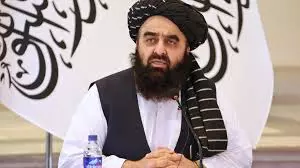
As Afghanistan’s “foreign minister” Amir Khan Muttaqi came calling in India recently, both sides agreed to kickstart their moribund relationship (India upped and left Afghanistan as the Taliban took over in 2021), evoked “old, historical ties” and promised to have each other’s backs over regional security issues. While Mr Muttaqi did not specifically mention India in his recorded address at the negotiation table when he said Afghanistan’s soil would not be “used against others”, somebody made sure India was clearly mentioned in the joint statement issued later.
There was enough drama on Day 1 of the visit. Women journalists were neither invited nor allowed through the gate of the Afghan embassy in Delhi, when Mr Muttaqi held a press conference. The anger is understandable. However, an embassy officially belongs to the country it represents, and not the host country. The Taliban were therefore strictly within their rights to invite or not invite anyone. Gender-sensitivity is anathema to most orthodox Islamic countries, and Taliban-run Afghanistan is a prime example. But after India gifted ambulances and shaken hands with what is seen as a pariah regime by most of the world, Mr Muttaqi must be wholeheartedly condemned for not showing the same courtesy to his host country on its soil, by respecting the law of this land. (The anger was limited to women journalists, the male journalists hardly noticed.)
And yet, the visit must be welcomed. Just as India has never tolerated interference by other countries over aspects like caste and religious discrimination within India, no matter how abhorrent these practices are, its re-entry into the Afghan arena is a masterly stroke. India is throwing a challenge to the big boys -- Russia, China and the United States. It’s telling them to bring it on, and showing India can chop and change strategy too. And, of course, a major motivation is to checkmate unstable, turbulent and aggressive Pakistan. It’s time for practising pragmatic policy, not for navel gazing, and India is doing just that.
But there’s a pressing need for caution. Of all countries in the region, it is Afghanistan that has remained in a volatile, turbulent churn for more than half a century. At any given point in Afghan history, there has been no telling when the tide will turn next, and what each one will bring. From monarchy, to Soviet-style communism, to puppet governments, to public executions, to clumsy Western domination and then sudden abandonment and, right up to the Taliban, Afghanistan has seen it all. This means any assurances of smooth sailing for India-Afghan ties in future is an illusion. If India is serious about entering the Afghan Great Game, it must dig its heels in for the long haul, and not depart at the first sign of the next, invariable change.
India must shed its image as a regional peacemaker, a Good Samaritan that provides earthquake aid and ambulances to her “Afghan brothers and sisters” and forget its traditional diplomatic bon mots to future its interests. If need be, India must extend its engagement beyond the Taliban -- perhaps even to some unpalatable players staking out in Afghanistan, while steering a steadfast course for India’s best interests.
There’s uncertainty and a lack of irrefutable evidence of other assurances offered by the Taliban. For instance, what is the Taliban’s current relationship with many terror outfits sprawled over Afghanistan and Pakistan’s border areas? The Afghan Taliban distances itself from the Tehreek-e-Taliban Pakistan (TTP), an offshoot of many banned terror outfits, which Pakistan accuses Kabul of sheltering and supporting. Possibly out of pique over Mr Muttaqi’s New Delhi visit, Pakistan reportedly conducted airstrikes on Kabul last week. The target of the attack was the TTP’s Noor Wali Mehsud, who said he was safe in Pakistan, but that his son was killed in the attack. If the Afghan Taliban has nothing to do with the TTP, what was his son doing in Kabul?
The Al-Qaeda stakes out in Afghanistan as does Islamic State Khorasan (ISKP). The Haqqani Network, Lashkar-e-Jhangvi, Harkat-ul-Mujahadeen and, according to a recent UN report, even anti-India terror outfits Lashkar-e-Tayyaba and Jaish-e- Mohammed float in and out of Afghanistan. Officially, the Afghan Taliban is at loggerheads with these groups and claims they are on the backfoot. But how could they all still be in the region without the knowledge, if not tacit support, of the Afghan Taliban? Can India really trust the Taliban to take on and eradicate these groups?
Pakistan is not the only extraneous factor. These terror groups are said to be struggling ever since Ankara turned the screws on the Islamic State (ISIS) and other terror funders based in Turkey. But given Turkey’s close relationship to Pakistan and President Recep Tayyip Erdogan's dogged insistence on raking up Kashmir at every available opportunity, what is to stop Turkey from now encouraging or, at least turning a blind eye to that funding, in order to shred the newfound India-Taliban relationship?
India's engagement with the Taliban is crafty diplomacy at its best. But the refrain of “our Pathan brothers and sisters” and the old “Kabuliwala” romanticism must stop.
If India re-enters the Afghan arena (and it can only be described as one, given the multitude of players involved), it has to be prepared to go way beyond mere investment and humanitarian aid. It must be prepared to face harsh realities like the Taliban’s shoddy treatment of women and try to bring about subtle changes without getting involved in the undoubted unjustness of that treatment. And, if necessary, it must stop pretending that its security personnel are sent to Afghanistan only to “safeguard its installations”.
History, especially in Afghanistan, has shown that the greatest of games can go either way. India must prepare to play it till the end.
The writer is a veteran foreign correspondent based in New Delhi
