DC EditI: Towards Greater Air Connectivity

The new policy offers subsidies for operating flights on non-profitable routes, airport development, airport maintenance and aircraft acquisition.
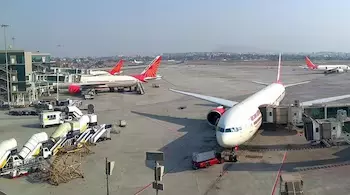
The Union Cabinet’s approval of Modified UDAN (2026–2036) marks a new pivot in India’s strategy to connect small cities by offering 360-degree support from the government. The new policy offers subsidies for operating flights on non-profitable routes, airport development, airport maintenance and aircraft acquisition.
The original UDAN or Regional Connectivity Scheme (RCS), on the other hand, assumed that unserved routes will find passengers, once the flights are available. However, as soon as the subsidy was withdrawn, the new routes and airports went into disuse due to poor passenger support. To address this issue, the government will be co-funding the actual running of airports by supporting their operation and maintenance (O&M) for three years.
The plan to build 100 airports and 200 helipads — in addition to over 100 existing airports — across 806 districts in the country will offer the fastest last-mile connectivity in the country, making each airport or helipad server every two districts.
Earlier, airlines often used large jets unsuitable for short, thin routes, leading to half-empty flights and operational losses. Under the current policy, the government is pushing for the use of indigenous HAL Dornier 228, a 19-seater twin-turboprop non-pressurised aircraft, to connect the smaller cities. Dornier 228 aircraft will reduce cost of acquisition, operations and maintenance, if the passenger load is assumed to be less than 19 people per flight.
While mandating indigenous aircraft is a commendable step toward self-reliance, restricting production to 19-seaters is operationally shortsighted. Instead of using 19-seater to connect a small city and a major hub, the government could have pushed the use of 110-seater aircraft capable of executing a 'small city-major hub-major hub-small city' circuit, which could give economies of scale while connecting two smaller cities. While an exclusive point-to-point service between smaller cities or single-hub links could face demand shortage, a larger aircraft bridging two major hubs can profitably “anchor” the smaller feeder routes from smaller destinations.
