Chandrakant Lahariya | The Electrifying Of India’s Kitchens Is An Imperative For Public Health

India has made important a great deal of progress in addressing this challenge. The expansion of liquefied petroleum gas (LPG), supported by government programmes, has significantly reduced dependence on biomass fuels in many households
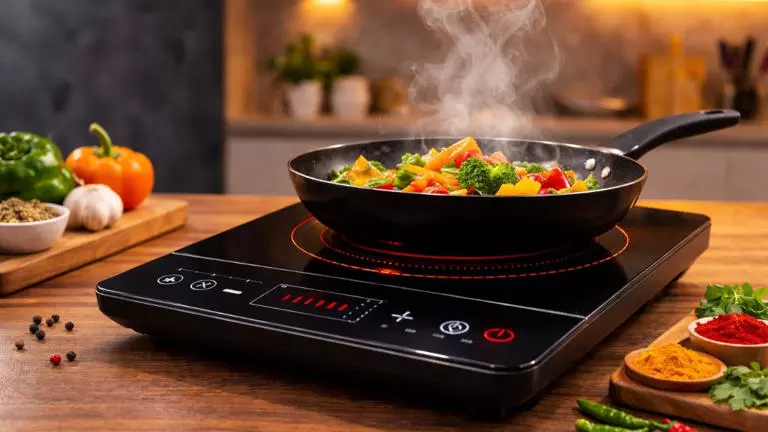
The Indian kitchen is often described as the heart of the home. Yet behind this familiarity lies an uncomfortable public health truth -- the kitchen is also one of the most polluted spaces within many Indian households. At a time when global energy markets are increasingly volatile, shaped by ongoing conflicts in West Asia and uncertainty in oil and gas supplies, India must rethink how it cooks. This is not about now but more about the future. A long-term, well-planned transition to electrifying Indian kitchens has to be considered.
For decades, indoor air pollution from cooking has quietly harmed millions. The problem is particularly severe in rural India and among poorer urban households. Studies have shown that kitchens using biomass fuels can have particulate concentrations many times higher than safe limits.
Even in urban middle-class homes, the kitchen and homes have five to 10-fold higher AQIs.
Importantly, poor indoor air quality in Indian kitchens is driven by a double burden -- the type of fuel used and the cooking methods. The high-heat processes, and the use of oils and spices that generate fumes and deteriorate indoor air quality. Specially, tadka, or tempering, during the Indian cooking is a major source of particle generation. This combination makes the kitchen a concentrated source of exposure.
This exposure is far from benign. It is a serious medical hazard. A large body of research links cooking-related air pollution with chronic respiratory diseases, asthma, cardiovascular conditions,
cataracts, skin and eye irritation, and premature mortality. The burden is highest on the poor and vulnerable. Women, who spend more time cooking, and young children, who are often nearby, face disproportionate exposure. This is, therefore, not just an environmental issue but one of health equity and social justice.
India has made important a great deal of progress in addressing this challenge. The expansion of liquefied petroleum gas (LPG), supported by government programmes, has significantly reduced dependence on biomass fuels in many households. However, LPG is, at best, an intermediate solution. It remains a fossil fuel, and its price and availability are closely tied to global geopolitics.
Electrification offers a more sustainable and resilient pathway. India -- both the government and individual households – may not be ready yet for a rapid scale-up of electric cooking but this idea need to be given a policy and public momentum. We know a policy idea takes a few years -- if not decades -- before being sufficiently implemented on the ground.
The economic case is also persuasive. Electric cooking technologies are significantly more energy efficient than LPG, transferring a much higher proportion of energy directly to the cooking vessel.
While in LPG cooking, only 35 per cent to 40 per cent energy is transferred to food being cooked, in electricity, this is around 85 per cent to 90 per cent. As India rapidly expands its renewable energy capacity, especially solar and wind, the cost of electricity is expected to become more competitive and stable.
Promoting electric cooking aligns with broader national goals of energy security and decarbonization, much like the push for electric mobility.
Yet, the transition is not without challenges. Reliable electricity supply remains uneven across regions. While access has improved, consistency and quality of supply are still concerns in many rural and peri-urban areas. Electric cooking requires not just connectivity, but adequate load capacity at the household and distribution levels.
Affordability is another barrier. Although the prices of induction cooktops and appliances are falling, the upfront cost remains significant for low-income households. This is especially relevant for families that have only recently shifted from biomass to LPG and may be reluctant or unable to invest again.
Cultural and behavioural factors also matter. Indian cooking often involves high heat, prolonged cooking times and the use of large utensils. Many households perceive electric cooking as less versatile or unfamiliar. Overcoming these perceptions will require sustained engagement, demonstration and trust-building.
There are also system-level implications. A large-scale shift to electric cooking would increase electricity demand substantially. This necessitates forward-looking investments in grid infrastructure, smarter distribution systems, and the integration of renewable energy with storage solutions.
Despite these challenges, the transition is both feasible and necessary. First, India needs a clear policy roadmap for clean electric cooking, similar in ambition to past efforts that expanded LPG access. Second, targeted subsidies, incentives or zero-interest financing can make electric appliances more accessible, particularly for vulnerable populations. Third, public-health messaging must be central to this transition. Electrifying kitchens is not merely an energy choice -- it is a health intervention. Medical professionals and public-health experts have a critical role in communicating the risks of indoor air pollution and the benefits of cleaner alternatives.
Fourth, the energy ecosystem must evolve in tandem. Distributed renewable energy, especially rooftop solar in rural and semi-urban areas, can support electric cooking while reducing pressure on the grid. Finally, innovation tailored to Indian cooking practices is essential. Appliances must be designed to accommodate local needs, including multi-pot cooking and high-heat and flame based cooking requirements.
This transition will take years and arguably some decades. Therefore, we need to start social and policy conversation now. Electrifying India’s kitchens is ultimately about preparing for the future.
It offers a pathway to better health, greater energy independence and a cleaner environment. The Indian kitchen will always remain the heart of the home. It is time to ensure that it no longer compromises the health of those it sustains, but instead becomes a cornerstone of a healthier and more secure India.
Dr Chandrakant Lahariya is a cardio-metabolic physician, health policy expert and specialist in parenting and child development
