Bureaucrats, Backroom Politics And A Restive Border

The past career of ITBP’s Kapoor was turbulent. After the death of IPS officer, Y. Puran Kumar, in October 2025, a suicide note reportedly named him and other officers. Puran Kumar’s wife, IAS officer Amneet P. Kumar, filed a complaint. Kapoor went on leave. Later, CM Khattar apparently recommended him for the ITBP’s post
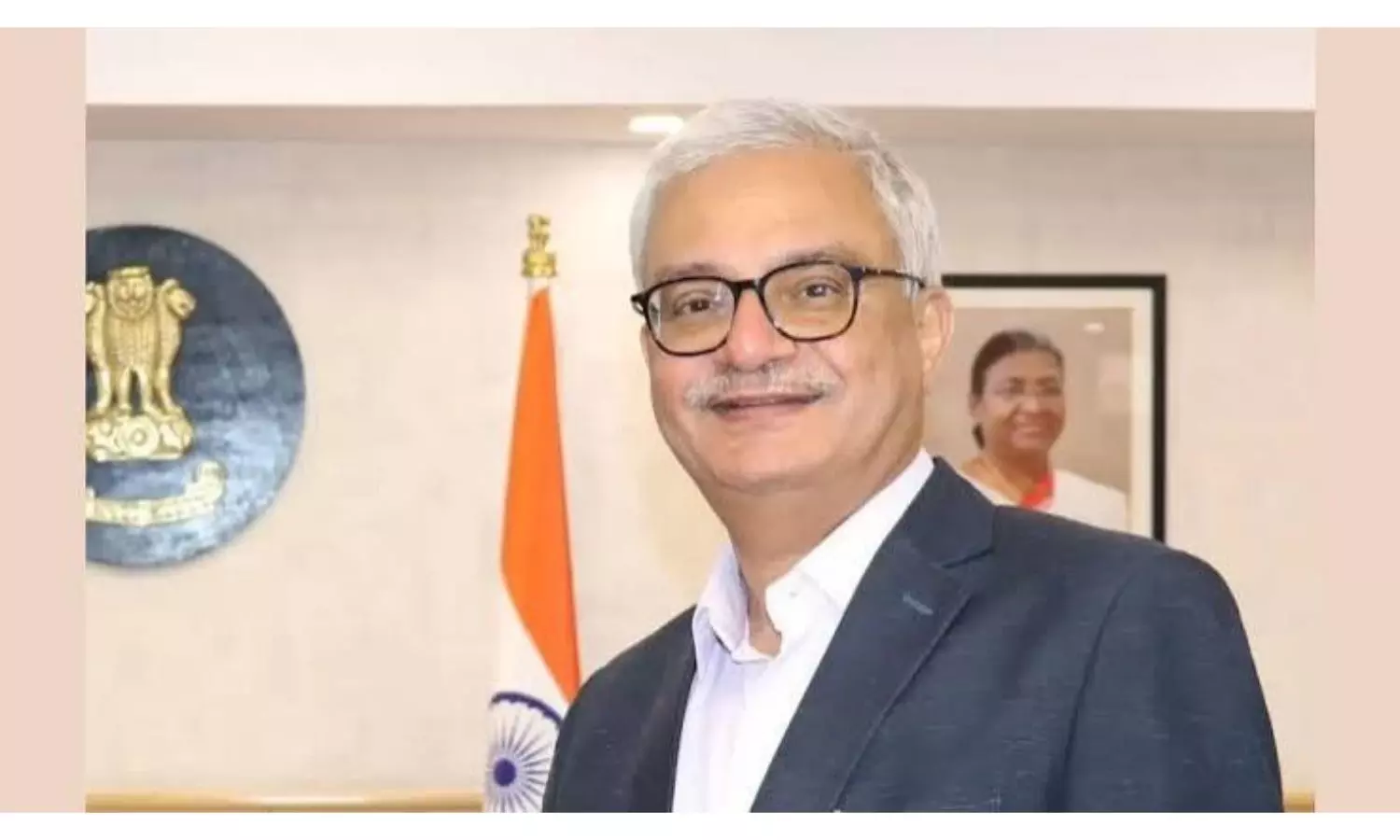
A serving chief of the Indo-Tibetan Border Police (ITBP), which guards the country’s borders with China, publicly discloses ongoing face-offs between the two nations in the northeastern state of Arunachal Pradesh. On October 22, Shatrujeet Singh Kapoor, while addressing the Himveer Samman Samaroh at ITBP’s Central Training College in Alwar, Rajasthan, said that there were regular confrontations at several locations in the state. This was not a casual remark from the ITBP’s head. It prompted the ministry of external affairs (MEA) to acknowledge that border situations are disturbed when the Chinese forces deviate from established patrol patterns. Kapoor did not disclose either the precise locations or operational details.
Still, it led to several questions. Why did the border chief make the statement at this time? Did he transgress the authorities of MEA and Home minister Amit Shah? Let us start with a backstory that originates more than 1,800 km, or air travel distance of over 1,100 miles, away in the state of Haryana. There are whispers in the political and bureaucratic circles about links with the former chief minister of Haryana, Manohar Lal Khattar, his former chief principal secretary Rajesh Khullar, and a senior RSS functionary, Arun Kumar Khanna, who is popularly known as Arunji. It connects politics with police, civil services, and ideology.
The past career of ITBP’s Kapoor was turbulent. After the death of IPS officer, Y. Puran Kumar, in October 2025, a suicide note reportedly named him and other officers. Puran Kumar’s wife, IAS officer Amneet P. Kumar, filed a complaint. Kapoor went on leave. Later, CM Khattar apparently recommended him for the ITBP’s post. Kapoor’s statement on China and Arunachal Pradesh came amid another controversy, whose origins lie in Haryana. In July 2026, election commissioner Vivek Joshi, who was former chief secretary of Haryana, wrote to Cabinet secretary T.V. Somanathan about internal differences within the Election Commission of India, which led to protests and furore. Existing evidence does not connect the episodes, but they raise issues related to power structures, formal orders, personal trust and institutional credibility.
Creamy layers, creamier orders
Suddenly, the future of 958 civil service aspirants hangs in balance. A Supreme Court judgment on the eligibility of those related to “OBC creamy layer” has stalled the entry of these individuals into the bureaucratic and administrative services. At the centre of the controversy is the department of personnel and training (DoPT), whose handling of the issue raises uncomfortable questions. Five days after the Union Public Service Commission declared the results of the 2025 civil services examination on March 6, 2026, the apex court gave a ruling (Union of India v. Rohith Nathan). It stated that apart from parents’ salary alone, the status and category of their employment must determine “OBC creamy layer” status. The order complicated service allocations as those in the newly defined creamy layer were not eligible for reservations. It delayed the foundation course at the Lal Bahadur Shastri National Academy of Administration, which was to begin in August. DoPT asked the Supreme Court for clarification and cited problems of retrospectively implementing the order. The government warned that retrospective changes could affect earlier recruitments, service allocations, cadre placements and seniority. There are challenges related to equivalence between posts in government, PSUs and private companies. The number of candidates who may benefit from retrospective aftereffects is uncertain. But could the DoPT have anticipated the consequences of a legal challenge to the creamy layer framework? Could it have commenced common training, and waited for judicial clarity before final service allocations? Now, it is imperative for the Supreme Court to settle the dispute. DoPT needs to protect the candidates’ rights minus new inequities in recruitment and seniority. For the chosen 958, the delays imply uncertainties at the beginning of their careers.
New designation, new Raj, new risks
There was a time when government offices operated by existing and established rhythms. A peon carried government files, a daftary managed records, a waterman gave drinking water, someone managed floor-covering, and a chowkidar guarded the premises. Each had a designation, and role and place in the hierarchy. That world has largely disappeared. Today, these people are included as part of the Multi-Tasking Staff (MTS), which was an attempt to reform Group D employment. After the Sixth Central Pay Commission, Group D posts were consolidated into MTS. Since 2010, there is a common framework for the support functions. It led to parallel systems: one comprises the regular employees, and the other of MTS outsourced to private contractors. The distinction matters. Regulars enjoy protections under government rules, but the outsourced ones are at the mercy of company contracts. Both sets perform similar essential duties, but their recruitment, supervision, and employment security differ. The greater concern is information-related security. The document-leak scandal in the petroleum ministry (2015) exposed how sensitive government-files were stolen. The investigations implicated MTS employees. Of course, outsourcing does not make a worker unreliable. The danger lies in weak background checks, excessive access to confidential files, inadequate supervision, and blurred accountability between ministries and contractors. Who verifies their antecedents? Who monitors and audits their access to confidential records? The old ‘Raj’ had rigid hierarchies; the new one is about flexibility. But efficiency cannot offset security.
The writer is a senior journalist and alumnus of the Delhi School of Economics. He is the editor of gfiles, India’s first magazine on civil services and governance. @AnilTyagilive.