Brabim Karki | Amid Mandate for Change, Can Balen Deliver in Nepal?

Rastriya Swatantra Party sweeps polls, signalling shift from Nepal’s traditional parties.
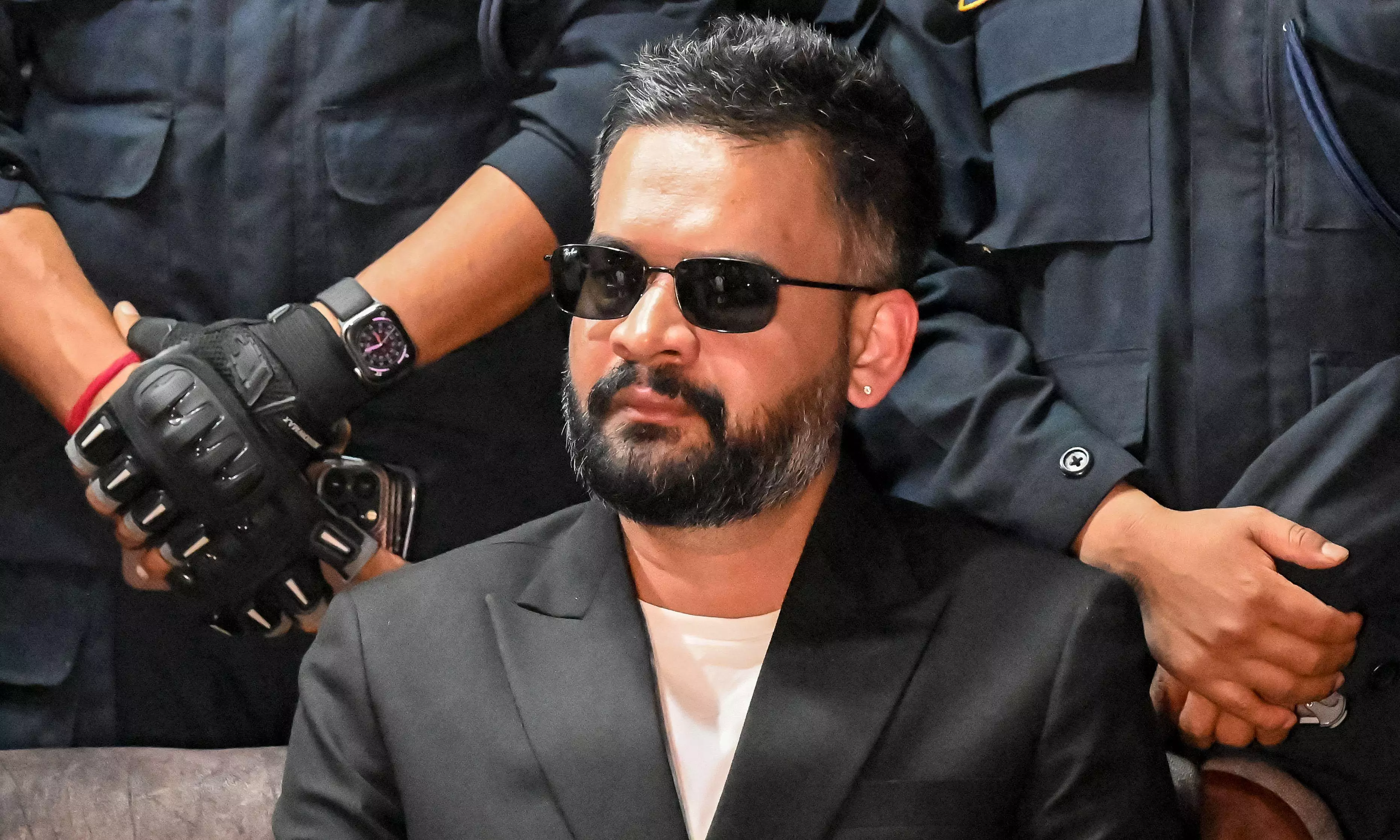
Rapper-turned-politician Balendra Shah, popularly known as “Balen”, a former mayor of Kathmandu, appears all set to take over as Nepal’s next Prime Minister as his party secured a commanding majority. Mr Shah's Rastriya Swatantra Party (RSP) has secured a landslide victory in the country’s general election -- the first since the deadly Gen Z-led protests last year, marking a major shift away from traditional old guard parties. His party secured 125 out of 165 directly elected parliamentary seats, as the counting ended late Tuesday night. It is unexpected as people wanted change in the country but no one had expected such a landslide victory by any party.
Nepal’s Parliament has a total of 275 seats. While 165 members are elected through the First-Past-The-Post (FPTP) system or direct voting system, 110 members are elected through proportional representation. As vote counting continues in Nepal, according to the recent data, the RSP leads with 48 per cent of valid votes, followed by the Nepali Congress and UML. The party is almost close to winning a super-majority. If the party achieves a two-thirds majority, it would also be the first time in decades that a single party has achieved this milestone.
Balen has secured the biggest landslide victory over former Prime Minister K.P. Sharma Oli in his own constituency. Mr Shah got 68,348 votes, far surpassing Mr Oli, who garnered 18,734 votes in Jhapa-5, according to the vote count released by the Election Commission of Nepal.
The election result reflects deep frustration with decades of political instability, corruption, nepotism and youth unemployment. After years of Nepal’s politics being dominated by a triumvirate of parties, voters have rung the bell for change. Nepali voters aren’t just switching parties. They are replacing an old guard tainted by allegations of corruption and political impunity.
Narendra Modi, Prime Minister of India, a close neighbour of Nepal, congratulated the people and government of Nepal for the successful conduct of elections. He said the successful and peaceful conduct of elections in Nepal was a proud moment in the country’s democratic journey. He also assured that India would work together with the new government.
Mr Modi held telephonic conversations with RSP president Rabi Lamichhane and senior leader Balendra Shah and congratulated both leaders on their electoral victories and the RSP’s landslide triumph in the election.
He also expressed India's commitment to work with them for mutual prosperity, progress and well-being of the two countries that share a 1,800-km open border, as well as deep economic and historical ties.
Last year, 77 people were killed in the September protests, where young people erupted over the ban on social media sites as well as the bigger issues of corruption and nepotism.
Nepal, wedged between giant neighbours China and India, has struggled with political instability over decades. Since 2008, the country has seen 14 different governments, not one of which has completed a full five-year term. Corruption has permeated every level of politics. Youth unemployment is around 20 per cent, forcing thousands of young people to toil abroad as migrants.
Balen Shah is an engineer and rapper whose songs focus on poverty, underdevelopment, unemployment and corruption in the country. His song Balidan (meaning sacrifice) is widely popular. He emerged as a trusted leader during Nepal’s Gen Z protests last year that plunged the country into a whirlwind of violence. Youth protesters ask him to lead the country after the former Prime Minister stepped down following the protests. Rabi Lamichhane, the 51-year-old chairperson of the Rastriya Swatantra party (RSP), and the 35-year-old Balendra Shah formed an alliance ahead of the election and both leaders pledged to address the demands of the younger generation following the September protests.
The real test for Mr Shah and the Rastriya Swatantra Party will be in governance. They convinced people that they would work for good governance. They should be able to manage the high expectations placed by the youths. Their campaign tapped into demands for anti-corruption drives and better service delivery. As a former mayor, Mr Shah earned a reputation by bringing down commercial and residential buildings that were built without proper permits. He widened the pavements of Kathmandu’s major areas, and his administration managed garbage collection efficiently. He should scale up nationally after he becomes Prime Minister. The new government should prioritise practical steps like investing in education and skills training to keep young talent at home.
As Nepal lies between two giants and they have their own interests, it is important to see how his foreign policy would be. China will also be hoping any future government is supportive towards its interests in the country, including the Belt and Road Initiative (BRI). The new government should build constructive relations with its neighbours. The coming government should focus on solving disputes with neighbours through dialogue and diplomacy. It should maintain dignified bilateral relationships with its neighbours. It can play a crucial role to take forward the developmental partnership with neighbours.
Balen Shah is the face of a nationalistic generation that views relations with India and China through a lens of equality. India has long been a major partner in Nepal's development. New Delhi should avoid past mistakes and engage with the new government cautiously and focus on sustainable partnerships that can enhance security and development. New Delhi must treat Nepal as a sovereign partner and a close neighbour rather than a big brother. Border disputes have occasionally strained ties between the two nations. One of the most significant disputes over years involves the areas of Lipulekh, Limpiyadhura and Kalapani. India’s relations with Nepal hit a new low after the 2015 border blockade controversy. Balen Shah's nationalist stance on many issues, including borders, presents a new challenge for India. New Delhi must find a new diplomatic landscape to enhance stability and cooperation between the two nations.
Governing a country as complex as Nepal is no easy task, especially for a relatively new party with limited national experience. Governing in Nepal means dealing with fragile coalitions, the bureaucracy, and constant political bargaining, which isn't an easy task. Some argue that they are new and not tested yet.
Still, Nepal’s voters have rung the bell for change and stability. For Nepal, this landslide offers a genuine opportunity to break free from disappointment. India is watching closely as it hopes for a stable government in the politically fragile country. If the new party cannot perform as they have promised, they will also perish like the old guard.
Brabim Karki is an author and businessman in Kathmandu who writes regularly for the overseas media. He can be reached at brabim7@gmail.com
