Bhopinder Singh | Will Saudi Arabia Come To Rescue Of Pakistan In Case A Conflict Erupts?

So, hypothetically, if the Yemeni Houthi militia were to launch attacks against Saudi forces (as they have continued to so, intermittently) or if a India-Pakistan conflict takes place again (as it did in May 2025) -- would a joint Saudi-Pakistani force strike against their respective “enemies”?
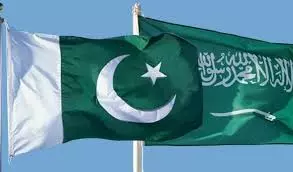
Some weeks ago, Saudi Arabia and Pakistan signed a Strategic Mutual Defence Agreement, leading to concerns about the implications of the new accord. Will the agreement’s underlying principle, stating that any aggression against any one nation be considered an aggression against both, be tantamount to both jointly counter-attacking an “enemy”?
So, hypothetically, if the Yemeni Houthi militia were to launch attacks against Saudi forces (as they have continued to so, intermittently) or if a India-Pakistan conflict takes place again (as it did in May 2025) -- would a joint Saudi-Pakistani force strike against their respective “enemies”? That doesn’t seem so, given that this agreement’s language is sufficiently ambiguous and platitudinous -- neither are the exact acts of “aggression” described, nor are any consequential protocols of joint intervention clearly defined.
It is, at best, a reaffirmation of historical ties meant to address the current urgencies for both Riyadh and Islamabad, from a posturing and optical angle. As the essential bankroller of the deal, Riyadh drives the real bargain in the agreement, and can pay an attractive “price” for the services rendered by Pakistan, that are desperately sought by cash-strapped Pakistanis.
The essentials of this buyer-seller agreement elements hark back to the age-old realm of security that a cash-flush sheikhdom can readily outsource to the decidedly more war- experienced, trained, and willing services, of the Pakistani military personnel.
That Pakistan is the only “nuclear weapon” capable Islamic nation sweetens the deal, as it affords portents of a “nuclear cover” in some eventuality. As Israel goes about pummelling the Gaza Strip to a pulp and hitting targets across any force that offers an semblance of opposition – such as Iran, the Houthi and Hezbollah militias, or even targets in the Arab sheikhdom of Qatar -- the haplessness of the Ummah (Islamic world) has perhaps never been so exposed. The Ummah, and the Saudis in particular, need a protective cover (buffer?) that suggests some sort of militaristic deterrence to disallow a similar Israeli strike on the Saudi kingdom, on the lines of Qatar.
Since the 1970s, the Pakistani military has served in protecting the territorial integrity and security threats of Saudi Arabia. Pakistani fighter pilots flew combat missions in the Al-Wadiah war between Saudia Arabia and Yemen. Pakistani forces had also guarded frontiers during the prolonged Iran-Iraq war in the 1980s and in the Gulf War (in 1990s), with the Pakistani contingent of up to 20,000 soldiers deployed in defence of the Saudi Arabian kingdom.
This figure of the Pakistan military doesn’t include an estimated 75,000 Saudi military personnel of Pakistani ethnicity, who have enlisted for soldering tasks that an average and affluent Saudi native would typically eschew.
From the Pakistani angle, the sovereign intent and emotions in protecting the two of the holiest mosques in the Islamic faith --Masjid al-Haram in Mecca and Masjid an-Nabawi in Medina -- can never be questioned. Within the Kingdom, meanwhile, the memories of the role played by Pakistani forces in quelling the seizure of the Grand Mosque in 1979 justifies the purchase of Pakistani services. Therefore, when conflict-wariness born out of sectarian tensions, extremist forces or portents of an “Arab Spring” dawned on the Saudi-led Arab (and predominantly Sunni) nations, a then recently-retired Pakistani Army Chief, Gen. Raheel Sharif, was entrusted the responsibility to be head of the Riyadh-based Islamic Military Counter-Terrorism Coalition force.
Today, as the Saudi kingdom feels a tectonic shift in the form of threat perceptions, formal joint action with a nuclear-powered Pakistan does well to assuage the Saudi citizenry to retain faith in the monarchical set-up of the Al-Saud family. For the Pakistanis who have availed of life-sustaining (default avoiding) financial assistance of up to $5 billion in recent times, the future carrot of $25 billion investment under Saudi Prince Mohammed bin Salman’s “Vision 2030”, or tactical investments in CPEC (China Pakistan Economic Corridor) imperatives, is temptingly transformational.
However, history is instructive that no amount of claimed “brotherhood” leads to practical militaristic intervention on behalf of each other, as can be simplistically assumed, going forward. The very recent India-Pakistan conflict (Operation Sindoor) did see Saudi Arabia make mealy-mouthed statements that sought to offend neither Islamabad nor New Delhi, but it steered clear of adopting a clear “pro-Pakistan” stance, as adopted by the troika of China, Turkey and Azerbaijan. Similarly, to the consternation of Saudis, Pakistan had refused to join the Saudi forces in attacking Yemen in March 2015 (Operation Decisive Storm), due to sectarian considerations.
Even the shameful pusillanimity of the Ummah in failing to defend the cause of Palestine (in its immediate neighbourhood), despite bombastic rhetoric to protect the same, should concern those who believe the Saudis could possibly marshal its troops to defend Pakistan, in an eventuality against, say, India. Saudi Arabia (or other sheikdoms) no longer have the same beef or Kashmir fixation with India, as they weigh the growing benefits of doing business with India. They can happily de-hyphenate the India-Pakistan tensions, whenever they do business or sign agreements with New Delhi or Islamabad. The days of binary interpretation are over, as recent times have seen the Pakistani leadership (including its Army Chief) bend over obsequiously to ingratiate themselves with US President Donald Trump, who is the real force behind Israel’s brazen conduct in the Gaza Strip. So, this buyer-seller agreement can suggest a lot, but guarantees precious little.
The writer is a retired lieutenant-general and a former lieutenant-governor of the Andaman and Nicobar Islands and Puducherry
