Bhopinder Singh | When Leaders Are ‘Replaceable’: How Accountability in UK & India Differs

A comparison of accountability, party control and leadership stability in two democracies.
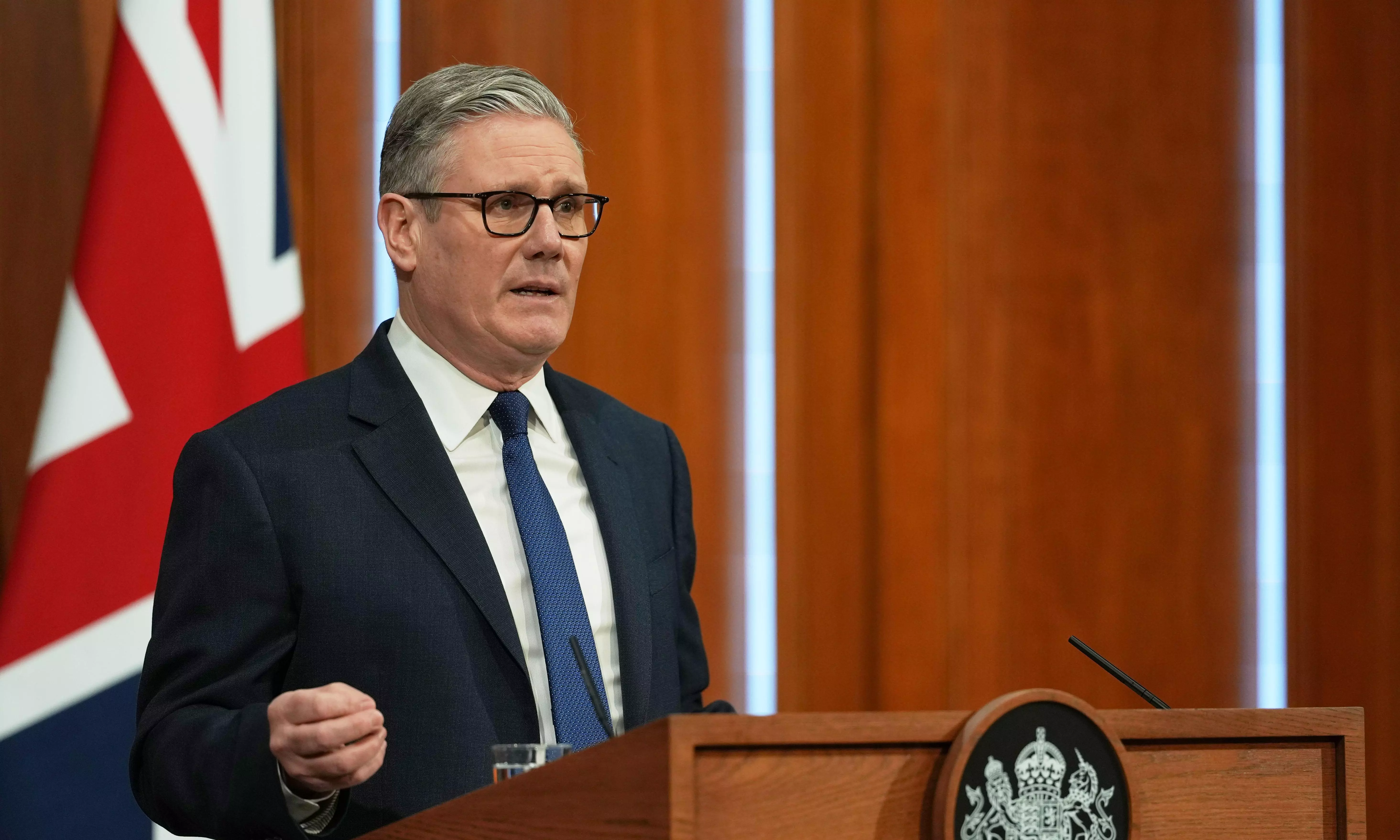
India’s democracy is essentially a parliamentary system which is mostly inspired by Westminster. Modelled broadly on the Parliament of the United Kingdom, it nevertheless differs in three key respects -- it is a republic rather than a monarchy, it is organised as a federal union, and its constitutional order is subject to judicial review. Yet at its core, the most consequential difference lies not in the structure but in practice -- how Prime Ministers are made, sustained and removed.
In theory, both systems rest on the same principle -- a Prime Minister governs only so long as he or she commands the confidence of the party and, through it, a majority in the Lower House of Parliament. In practice, however, the mechanics diverge quite sharply. In the United Kingdom, party confidence is actively enforced; leadership change within the governing party typically translates quickly into a change of Prime Minister. In India, the same principle is mediated through stronger party centralisation, electoral arithmetic, and coalition dynamics, making leadership replacement far less fluid.
The contrast is best illustrated through the recent experience of Great Britain. Over the past decade, the United Kingdom has seen rapid turnover in its highest office -- from David Cameron to Theresa May, then Boris Johnson, followed by Liz Truss, and then Rishi Sunak. Only the last exited through electoral defeat; the others were removed by internal party mechanisms once the confidence of MPs collapsed.
This pattern reflects a defining feature of Westminster politics in its country of origin -- Prime Ministers are not protected by fixed terms. They are continuously subject to intra-party evaluation. While voters determine governments at general elections, parties frequently decide whether those governments remain viable between elections. The leadership, therefore, functions less as tenure and more as a conditional contract.
The consequences are mixed. Frequent leadership changes can generate instability, disrupt policy continuity, unsettle markets, and complicate diplomatic signalling.
Modern states depend heavily on predictability as well as competence. Yet this fluidity also strengthens accountability. It shortens the gap between performance and consequence, discourages prolonged underperformance, and prevents governments from drifting indefinitely on past electoral mandates.
It also shapes the party organisation. Leadership volatility limits personality cults and ensures that parties remain much stronger than any individual leaders. Authority is more easily reassigned, and internal correction becomes structurally possible. The trade-off is clear -- too much turnover weakens coherence; too little risks stagnation.
India’s experience has moved in the opposite direction. Since Independence in 1947, no Indian Prime Minister has been removed solely through internal loss of party confidence without either completing an electoral cycle or facing broader parliamentary realignment. The formal requirement of majority support in the Lok Sabha is filtered through centralised party structures and coalition arithmetic that makes leadership change politically costly.
As a result, accountability in India is real, but quite uneven. The Prime Minister depends on legislative confidence, but this is usually exercised through party hierarchies rather than continuously tested. Internal dissent exists, but is usually absorbed within organisational discipline rather than expressed as open contestation, reducing visible intra-party correction.
A further consequence is the diffusion of responsibility. Policy outcomes are attributed to collective Cabinet responsibility, administrative execution, and political consensus. This prevents excessive personalisation of governance but also dilutes direct ownership of failure. Success is often centralised at the top, while failure is distributed across institutions.
Across Indian political history, several episodes illustrate this pattern: the failure to anticipate the 1962 conflict with China under Jawaharlal Nehru, the Emergency under Indira Gandhi, the perceived policy paralysis during the United Progressive Alliance years under Dr Manmohan Singh, and more recent controversies such as demonetisation and the Covid-19 second wave under Narendra Modi. In each case, political defence has tended to emphasise context and collective responsibility rather than explicit any personal admission of failure.
This raises a broader question: not whether Indian leaders are accountable, but how accountability is expressed. It is often electoral and retrospective rather than continuous and institutional. Leaders are most decisively judged at the ballot box rather than routinely reassessed within governing structures.
A paradox follows. While in the Opposition, India’s political parties often display sharp internal scrutiny, yet once in power, dissent narrows as cohesion takes precedence. When parties lose office, criticism resurfaces but usually after the fact, framed through electoral defeat rather than continuous oversight.
The United Kingdom, by contrast, embeds a more immediate correction mechanism.
Leadership change is framed in terms of performance and confidence rather than rupture. Even when politically charged, departures are treated as routine recalibrations within a competitive party structure.
None of this implies superiority. The British system prioritises responsiveness, sometimes at the cost of stability. The Indian system prioritises continuity, sometimes at the cost of intra-term correction. Each reflects different trade-offs within the overall framework of parliamentary democracy.
The underlying question is not whether leaders should be strong or weak, but how easily they should be replaceable. A democracy that replaces leaders too readily risks instability; but one that replaces them too rarely risks entrenchment. The challenge is to ensure that accountability remains real, but not destabilising -- clear enough to constrain power, yet restrained enough to preserve a sense of continuity.
The writer is a retired lieutenant-general and a former lieutenant-governor of the Andaman and Nicobar Islands and Puducherry
