Bharat Bhushan | Vande Mataram Won’t Hide Temple Graft, Gen Z Revolt

Nationalism may struggle to eclipse temple accountability, jobs and Gen Z’s exam frustrations
In launching a political offensive around singing the full text of ‘Vande Mataram’ the Bharatiya Janata Party (BJP) has reached for its predictable playbook to prepare for the Assembly elections in Uttar Pradesh.
The party’s vulnerability became apparent with the donation theft at the Ayodhya Ram Temple exposing cracks in its Hindutva flank. The Ram Temple has been too closely tied to the BJP’s political narrative, for the party to claim that the Temple Trust works independently of the government. Moreover, top members of the Trust are closely associated with the Narendra Modi government.
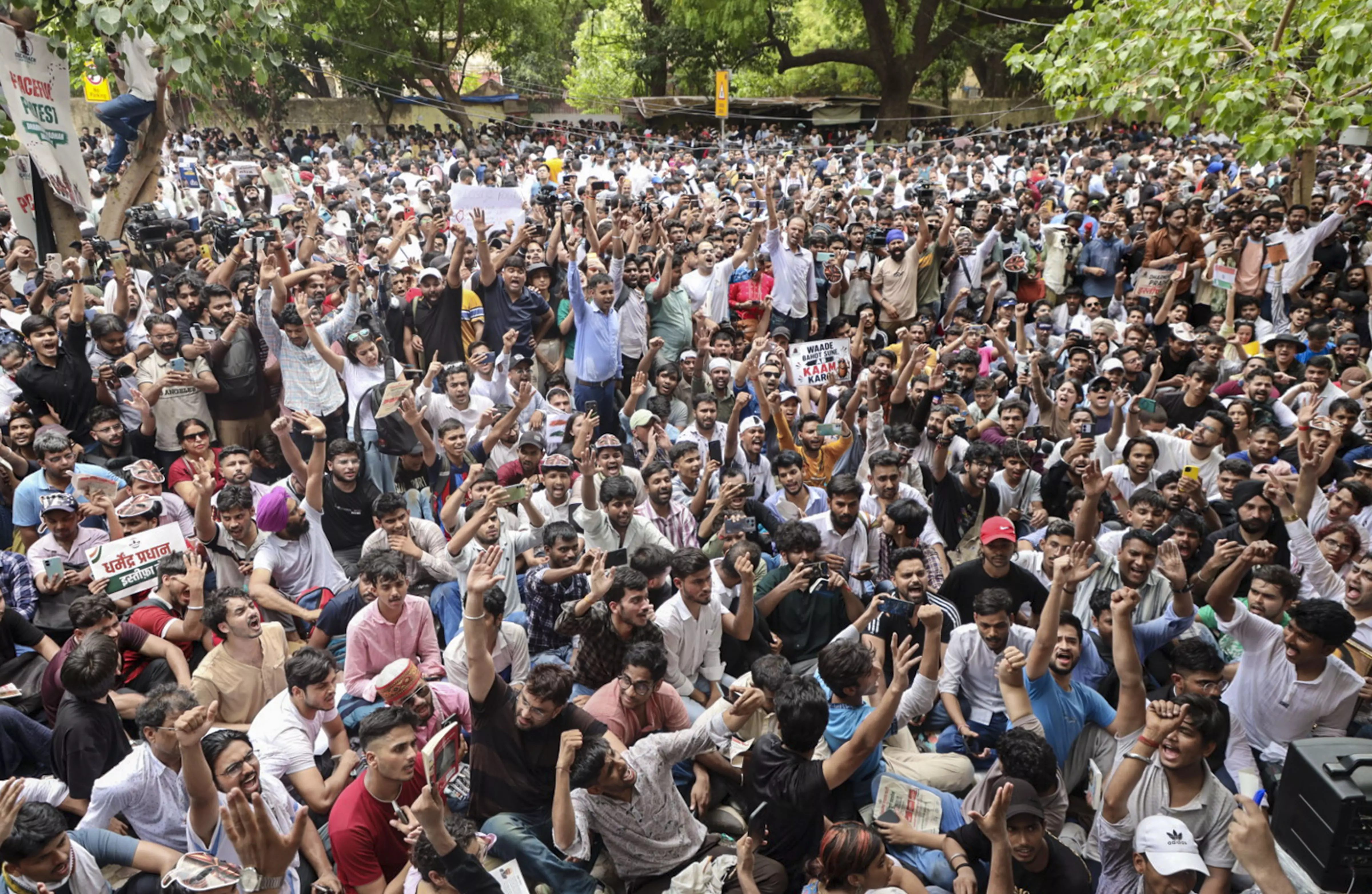
The Gen Z protests, a powerful expression of youth anxieties about unemployment, exam paper leaks and educational inflation exposed other failures of the government. Both its governments at the Centre and in Lucknow seem to have lost political ground on these issues.
The party thought it had reset the terrain of the political fight through fierce debate on the national song, equating it with the national anthem and criminalising insults to it. But the Congress stuck to its convention of singing only the first two stanzas, prompting BJP president Nitin Nabin to call it the “new Muslim League”. Home Minister Amit Shah described its position as “sin”.
Any deviation from the new Hindutva framing of nationalism is described by the BJP as diversionary.
Union Minister J.P. Nadda called Opposition leader Rahul Gandhi’s sit-in demanding an FIR on pellet gun injuries that blinded a Gen Z student as a diversionary tactic to distract public attention from the party’s stand on singing ‘Vande Mataram’. BJP spokesperson Ravi Shankar Prasad also called Mr Gandhi’s protest “anarchic” and tried to bring focus back on the Congress refusal to sing all six stanzas of ‘Vande Mataram’. He said it showed the Congress remained under the influence of the Muslim League and persisted in “pro-Muslim appeasement”.
Historically, UP has been the nerve-centre of BJP’s Hindutva nationalism and communal politics. The BJP hopes the controversy will create a sharp emotional divide among the voters before the February 2027 polls. After setbacks in 2024, including losing the Faizabad/Ayodhya Lok Sabha seat, the BJP needed a cultural anchor. By passing a strict law around singing the song, it hopes to revive its old rhetoric of nationalism vs. vote-bank politics. Its aggressive accusation of the Opposition parties as “minority appeasing” is intended to provoke them into taking a public stance, which could break their PDA (pichhda, dalit, alpsankhyak) caste alliance in favour of a larger religiously defined, nationalist identity.
The strategy is, however, undermined by the fact that many BJP leaders themselves neither know the words of the entire song nor their meaning. Rural voters could relate to the slogan but the nuances of two versus six stanzas is likely to evade them. Political geography also matters. The BJP was able to use the 150th anniversary of ‘Vande Mataram’ to its advantage in West Bengal. But it was a song composed in Bengal and carries a regional legacy charged with communal polarisation of the state since 1905.
West Bengal was also a state the BJP was trying to break into. In UP it has been in power for a decade. Besides, the donation theft scandal has landed squarely in Faizabad/Ayodhya, territory. The BJP is already in power in UP and cannot avoid responsibility. The issue is a live legislative weapon in the UP Assembly, not just a talking point.
The questions being asked of the BJP's governments in Delhi and Lucknow cannot be deflected by calling the Opposition anti-national or pro-Muslim. The BJP does not seem to recognise that when millions of devotees, presumably including its own supporters, feel cheated, that is a different order of political risk than a historical dispute over the acceptability of a song’s lyrics. One is a breach of trust within the BJP’s own ranks; the other is a stick to beat the Opposition with.
The ‘Vande Mataram’ narrative may change the media cycle, which the Modi government controls. However, it works in a different register (civilisational, nationalism vs. Congress) from the donation scandal (institutional accountability versus the BJP’s ecosystem). It is farfetched to assume that one will substitute for the other in the voters’ minds. If the Opposition keeps mobilising people’s support on the donation theft issue, the BJP will not be able to relegate it to the background using the ‘Vande Mataram’ narrative.
Nor can the ‘Vande Mataram’ issue sweep away Gen Z discontent. The slogans at the Jantar Mantar protest and others that followed across the country show that India's youth prioritise material survival and exam accountability over cultural identity.
The offer of a Hindu nationalist identity which worked to break up coalitions based on caste identities cannot work in the same way against the Gen Z narrative. This is not identity or caste-based — it cuts across these divisions, forcing attention onto exam paper leaks, recruitment delays, and irregularities. Identity politics will not address the core problem of youth grievances.
Gen Z grievances have fertile ground in UP because of the state’s long history of paper leaks: the Sub-Inspector recruitment exam leak (2017), the UP Police Constable and Tube Well Operators exam leak (2018), the UP Teacher Eligibility Test leak (2021), the UP Board Class 12 exam leak (2022), the UPPSC Review Officer/Assistant Review Officer exam leak (2024), the cancellation of the police constable recruitment exam after it was leaked on WhatsApp (2024) and the spillover of the nationwide Neet exam controversy in 2024-2025.
Each fresh leak reactivates the deep-seated grievances of Gen Z and does not need fresh mobilisation. This is likely to influence the outcome of the 2027 UP election because voters aged 18 to 29 are estimated to make up 21 per cent of the state's massive electorate. The BJP's attempt to mobilise youth by sending its youth wing activists to college campuses is already running into the solid wall of Gen Z’s grievances.
However hard the BJP tries, ‘Vande Mataram’ is, therefore, unlikely to meaningfully submerge either the temple donation theft scandal or the generational grievances of Gen Z. In fact, the more the BJP prioritises symbolism over accountability and jobs, the more it will reinforce the Opposition's core critique of its dismal governance record. It may take just one more paper leak before February 2027 for UP voters to say goodbye to the BJP.
