Bharat Bhushan | India’s Foreign Policy Is In Need Of Fresh Stewardship

The shock of the punitive tariffs imposed by US President Donald Trump has led to Indian ministers and officials making a beeline to Moscow and Beijing. This 180-degree flip is being presented as strategic agility
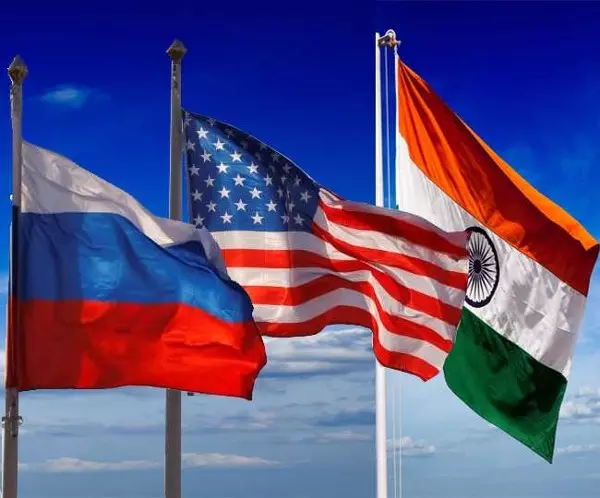
With its dream of reaching greatness by hanging on to the coattails of the United States going bust, India needs to radically rethink its foreign policy. Rather than the ongoing tentative recalibration, it needs to be redesigned from the ground up.
Although Indian political leaders value loyalty to a fault, this cannot be done by the same actors who were till recently bending over backwards to please Washington. The shock of the punitive tariffs imposed by US President Donald Trump has led to Indian ministers and officials making a beeline to Moscow and Beijing. This 180-degree flip is being presented as strategic agility.
However, both Moscow and Beijing will not fail to see the outreach as damage control although they will welcome it as a step towards a broader multipolar realignment. An India that is spurned by the US fits into their play on the larger global chessboard. Indeed, Moscow has even suggested revival of the trilateral Russia-India-China (RIC) dialogue, a potential building block of a non-Western alliance.
India, which because of its democracy, pluralism and rule-of-law had far greater credibility than the authoritarian regimes amongst the nations of the Global South, is now forced to make common cause with them.
India may claim that it is doubling down on its “special and privileged strategic partnership” with Russia, but its foreign policy establishment still has one leg firmly in the American camp. India’s love-fest with the US, especially with Mr Trump, was also facilitated by the same actors.
Recent invocations of India’s sovereignty were absent when they pushed India into the US camp, while continuing to nod timidly towards Moscow for the sake of form. They also facilitated India’s role as the cat’s paw of the US against China.
China, earlier than most other countries, understood the shallowness of the Indian strategic vision. It also had a good measure of the personalities leading India’s foreign policy. They were fully aware, even while engaging with them, that they could not walk the talk. This was evident in India’s refusal to even publicly acknowledge China’s belligerent incursions across the Line of Actual Control in Ladakh, including in the summer of 2020.
China has responded to India’s current attempts to pivot by condemning the punitive US tariffs as “bullying” and invited India to join its stance as defender of a rules-based system of trading under the World Trade Organisation.
Having till recently urged the boycott of Chinese goods, including the purchase of “small-eyed” Ganesha idols, the Indian government will now have to re-position China as a cooperative partner rather than a strategic threat.
Meanwhile, China has already begun to take advantage of India’s perceptibly weakened position. Chinese foreign minister Wang Yi’s recent visit to New Delhi marked a movement forward from stalemate to tactical engagement, but two developments stood out -- India agreed to an “early harvest” approach to border settlement, and the Chinese claimed that India had recognised Taiwan as a part of China.
India had earlier preferred a comprehensive border settlement but under Chinese insistence it seems to have agreed to settle the border along Sikkim under the “early harvest” proposal. This would isolate the Sikkim boundary from the other disputed sectors -- western, middle and eastern -- on China’s border with India. Experts believe that this will help China to settle its border with Bhutan “with an eye towards the Doklam plateau”, with India gaining little.
On Taiwan, China claims that India has recognised it as a part of China, and India has clarified that while it supports “one China policy”, it remains focused only on Taiwan’s “economy and culture". China has said that this was contrary to what had transpired at Mr Wang Yi’s meetings in New Delhi.
Much of the reengagement with China appears transactional -- restarting direct flights, promoting trade and holding summits. Core disputes like the standoff in eastern Ladakh and China’s active intelligence, surveillance and reconnaissance support to Pakistan during Operation Sindoor have not been addressed effectively. Clearly, ties are nowhere near normal and suspicions persist.
India is essentially buying time through tactical recalibration with Russia and China, hoping that meanwhile things will improve with the US. However, India-US relations henceforth will be marked with caution, if not distrust, even if the US tariffs are reduced.
Nearer home, the foreign policy missteps are even starker with Prime Minister Narendra Modi’s “neighbourhood first” approach being reduced to mere rhetoric by the foreign policy establishment. Recall the jamboree of South Asian leaders who attended Mr Modi’s oath-taking in 2014. Ten years later, India’s relationship with its immediate neighbours has never been as fraught as it is today. Leaving Pakistan aside, India's failure to improve ties with other South Asian countries is a shocking testament to the failures of the architects of its foreign policy. Meanwhile, suspicion of India in multilateral forums of the Global South, because of its close alignment with the US, is likely to persist.
Some blame India’s failure on the global stage on Prime Minister Modi’s faith in personal diplomacy -- focussing on high-profile summits, his personal rapport with world leaders, his frequent foreign visits and support from the social media. While these factors shaped India’s and Mr Modi’s international image briefly, they fell short of achieving substantive foreign policy outcomes.
However, much of the present failure lies on the heads of those who encouraged him on the path of “prestige diplomacy” and in convincing him that India’s road to greatness passed through Washington DC. They accelerated the strategic alignment with the US through the “Quad”, defence deals and cooperation in the Indo-Pacific (a term coined by the US to pander to Indian egos). They did not foresee that none of this would shield India from economic coercion. The tilt towards the US has also come at the cost of underinvesting in other relationships.
Those who showed lack of economic foresight in foreign policy by not recommending diversification of markets, failed to secure exemptions for Indian goods, actively promoted appeasement of Donald Trump and delayed pushback against the US need to be held accountable.
They have eroded India’s position, making it vulnerable through their strategic miscalculations. Verbal gymnastics about strategic autonomy may have their value in diplomacy but those responsible for India’s foreign policy predicament need to make way for others to allow the nation a fresh start.
The writer is a senior journalist based in New Delhi
