Bharat Bhushan | Governors As Agents Of Delhi? Let’s Scrap Post

While previous governments at the Centre have also misused governors, the problem has become much more acute under the Bharatiya Janata Party (BJP). What was episodic and less visible has become in-your-face
The Narendra Modi government wants to do away with all vestiges of colonialism, except one -- appointing governors who will do its bidding. Recently the governors of Karnataka (Thawarchand Gehlot), Tamil Nadu (R.N. Ravi) and Kerala (Rajendra Arlekar) refused to read out parts of policy speeches of the state government critical of the Centre’s policies. This violates constitutional conventions and amounts to partisan political conduct.
Neither the government at the Centre nor the governors seem to care that the post was designed with limited functions like that of the President of India. These include summoning and proroguing the legislature, giving assent to laws or reserving them for reference, supervising the formation of government when there is no clear majority and acting as a link between the Union and the state.
Other than these limited powers, the governor is a ceremonial head with real powers vested in the council of ministers. The constitutional design was never to encourage governors to delay assent to legislation, walk out of the Assembly, and make public statements critical of the state government.
Reading out the policy intent of the government when a state Legislative Assembly session begins is merely a ceremonial role. The governor cannot abridge it. This dismissive attitude against elected state governments comes from trying to protect any criticism of their political masters in Delhi. It may well become the prime argument for abolishing the post altogether.
While previous governments at the Centre have also misused governors, the problem has become much more acute under the Bharatiya Janata Party (BJP). What was episodic and less visible has become in-your-face. This is especially so in the southern states, which are mostly ruled by Opposition parties, and the BJP at the Centre can counterbalance them only by using governors as a tool.
The courts have done little despite several Supreme Court rulings on the role and functioning of governors. In 1974, in Shamsher Singh vs State of Punjab, the apex court cemented the “doctrine of responsible government” and limited the discretion of the governor. In 2016, in Nabam Rebia vs Deputy Speaker (Arunachal Pradesh), the court reinforced the limits of gubernatorial discretion and came down heavily on the governor for trying to destabilise the government and manipulate Assembly procedures. In its advisory opinion in 2025, the Supreme Court gave the advice that governors cannot hold assent to bills passed by the legislature indefinitely -- that doing so was unconstitutional and undermined legislative supremacy.
However, the enforcement of the apex court’s decisions has become weaker as the judiciary has become increasingly cautious. This has given governors more freedom to become purveyors of the political messaging of the BJP, acting as critics of non-BJP governments, amplifying the Central government’s narratives and censoring policy statements critical of the Centre.
Governors are no longer needed as agents of the “Crown” in Independent India. Their role, some may argue, is redundant because the real power is, and should be, exercised by the chief ministers. However, the pomp and ceremony surrounding their office perhaps leads them to believe that they have political muscle, and in times of political instability caused by hung Assemblies, that they can become real political players.
Thus, in 2017 in Goa, governor Mridula Sinha instead of inviting the Congress as the single largest party invited the BJP first to form the government, citing its post-poll alliances. The same year in Manipur, governor Najma Heptullah did not invite the single largest party, the Congress, to form the government but the BJP instead, which quickly stitched up new alliances.
In 2018 in Karnataka, the opposite happened. The BJP emerged as the single largest party but lacked a majority. Governor Vajubhai Vala did not invite the Congress, which had announced an alliance with the Janata Dal (United). Instead, B.S. Yediyurappa of the BJP was sworn in as chief minister, giving him 15 days to prove his majority. However, the Supreme Court intervened and reduced the time given to Mr Yediyurappa to 24 hours. He chose to resign.
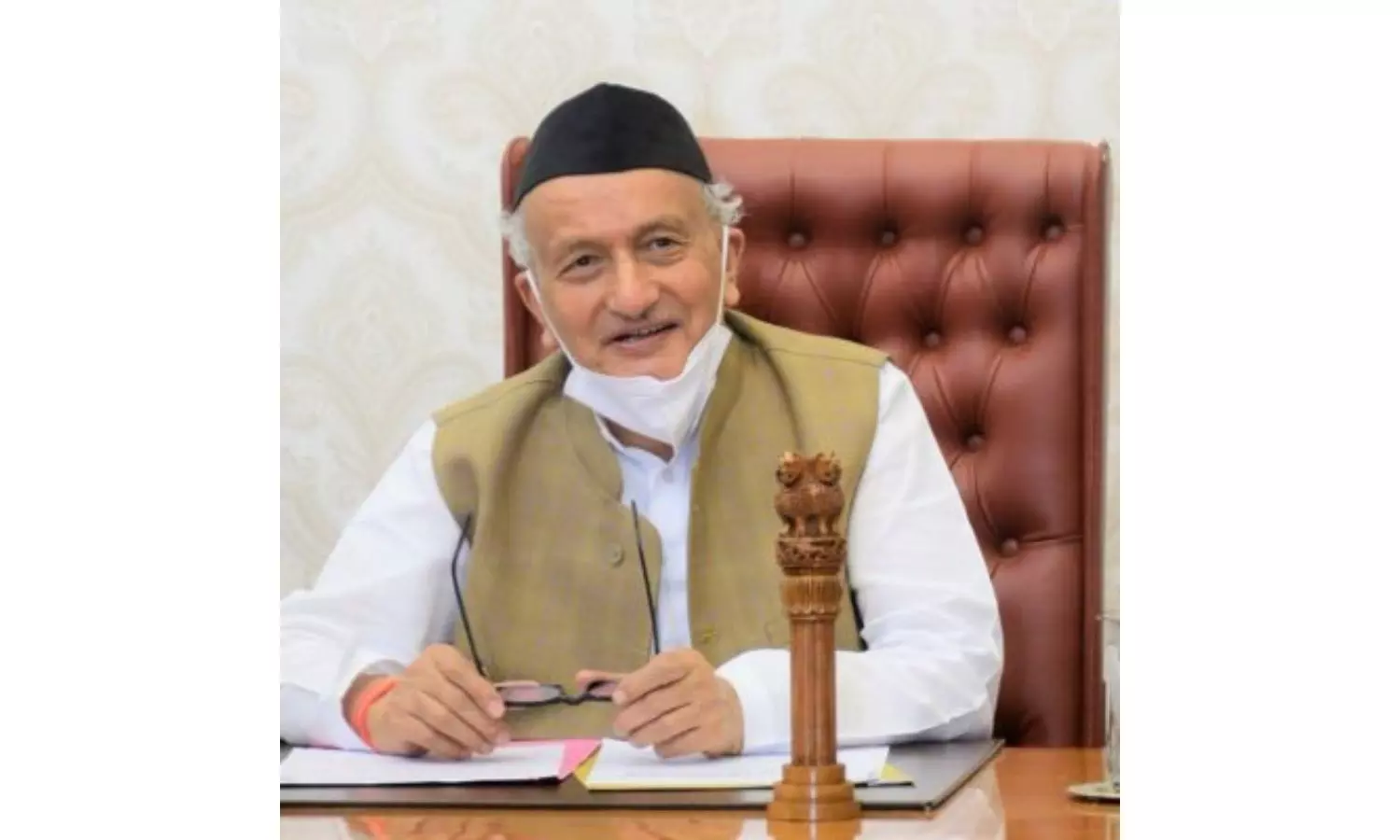
In Maharashtra in 2019, the Congress had claimed a majority when the BJP and Shiv Sena fell out after the elections. However, governor Bhagat Singh Koshiyari chose to swear in Devendra Fadnavis as chief minister and Ajit Pawar of the Nationalist Congress Party as his deputy in a pre-emptive early morning ceremony. The arrangement collapsed within a few days.
In Maharashtra, once again in 2022, after the Shiv Sena split, Mr Koshiyari ordered a floor test against the Uddhav Thackeray government, paving the way for the formation of the Eknath Shinde government. The Supreme Court ruled that the governor’s decision was unjustified, but refused to say anything about the legitimacy of the Eknath Shinde government.
These instances show that arguments of governors being neutral umpires in times of political crises are bogus under the BJP government at the Centre. Far from ensuring coordination between the Centre and state, the governor has become an instrument of harassing Opposition-ruled state governments.
The situation has worsened for several reasons. The BJP’s majoritarian Hindutva politics and strong electoral performance at the Centre since 2014 have greatly incentivised the misuse of governors.
Many RSS/BJP loyalists have been given a second lease of life as governors for ideological reasons. Since 2014, these have included Haribhau Bagde, C.P. Radhakrishnan (now vice-president), Kalraj Mishra, Lalji Tandon, Ramesh Bias, Phagu Chauhan, Satyapal Malik, Anusuiya Uikey, Laxman Acharya, Arif Mohammad Khan and Santosh Gangwar, among many others. Mr Ravi is a retired Intelligence Bureau police officer. Amongst retired Army officers who have been appointed governors are Lt. Gen. Gurmeet Singh and Lt. Gen. K.T. Parnaik and retired judges include Justice Abdul Nazeer, who gave favourable judgments in the demonetisation and Ayodhya cases, and Justice P. Sathasivam, a former Chief Justice of India, who gave relief in the Gujarat fake encounter cases.
Ideological criteria for selecting and appointing members of the Army, bureaucracy and police trained in compliance means that they are more amenable to following orders of the Centre than constitutional morality. Judicial neutrality is also skewed by incentivising post-retirement gubernatorial jobs. The Congress governments of the past had also appointed loyalists but now the obedience to the Centre and ideological alignment has become sharper.
Proposals to reform the role of governors and depoliticise the office (Sarkaria and Punchi Commissions) have gathered dust as no political party wants to give up the leverage the governors provide. Reforms, more than ever, will continue to exist on paper, especially under an ascendent BJP.
The writer is a senior journalist based in New Delhi
