Bharat Bhushan | Corporates Hedging Political Bets Suggest Changing Mood

SP and Congress moves signal wider outreach to business amid political uncertainty
Could Opposition parties and Indian corporates be readying for a post-Modi polity? Two small moves suggest that such realignment of political investments may be taking place on both sides.
Samajwadi Party leader Akhilesh Yadav has nominated Dhanraj Parimal Nathwani for one of the two Rajya Sabha seats it can safely secure from Uttar Pradesh in the routine six-year cycle of Upper House elections on October 16. He has been chosen over long-time party loyalists. The other SP candidate is Akhilesh’s uncle, Ram Gopal Yadav.
Parimal Nathwani is group president of Reliance Industries, a director of Reliance New Energy and other Mukesh Ambani entities, and president of the Gujarat Cricket Association. His father, Parimal Dhirajlal Nathwani, also a long-standing Reliance executive, is already a Rajya Sabha member backed by the ruling National Democratic Alliance in his latest election. The father, although an independent, stands with the Narendra Modi government while his son now stands with forces opposed to Mr Modi.
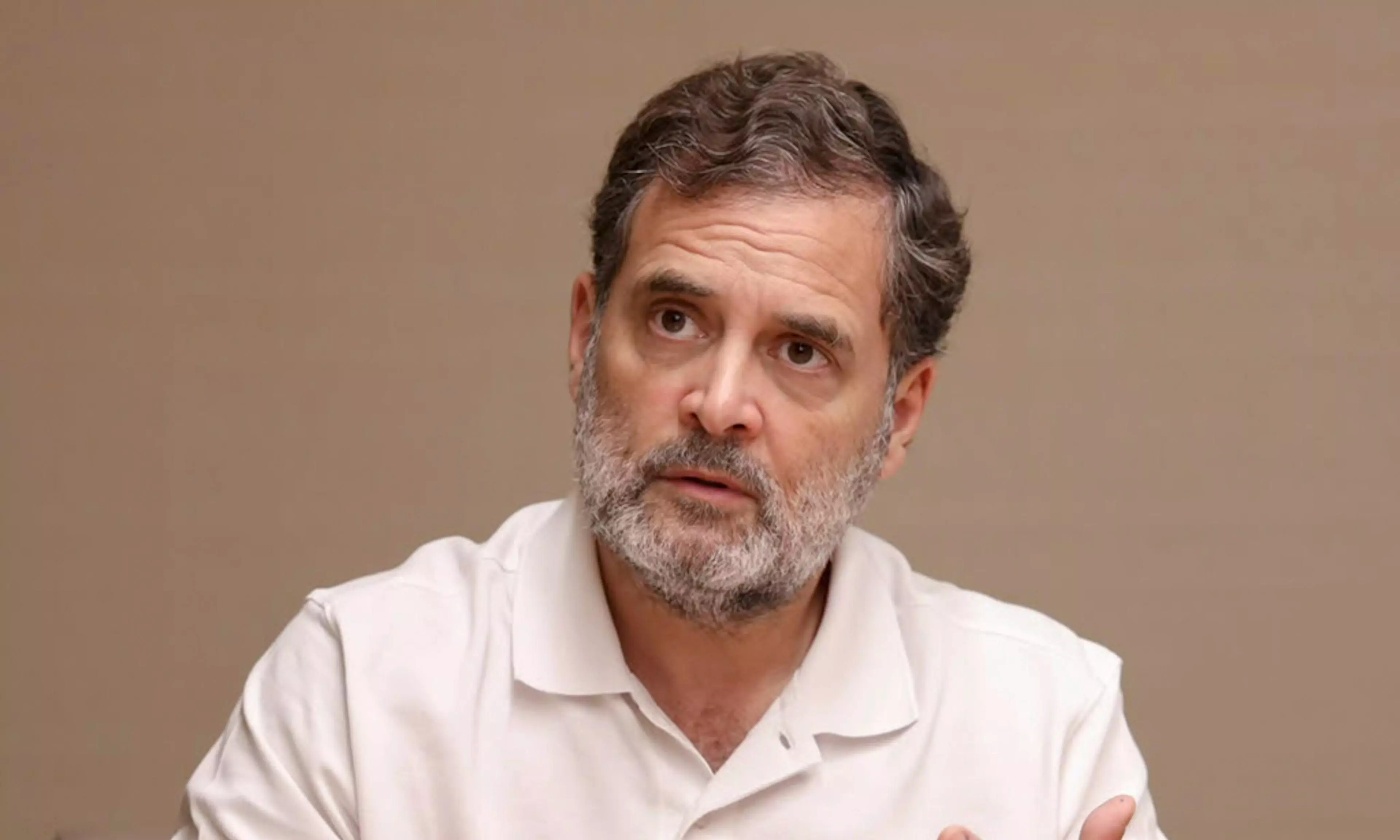
The other noteworthy gesture is that while Rahul Gandhi’s political rhetoric has attacked “Adani-Ambani” in the same breath as crony capitalists of the regime, Mukesh Ambani’s photo was dropped from Mr Gandhi’s political presentation (captioned: “Destroyers of Democracy”) to the Congress Party on September 26. Until recently, hoardings at Rahul Gandhi’s rallies such as Chhatron Ki Goonj, also featured Mukesh Ambani in slide presentations titled “the system has captured the country”. However, at the recent party gathering, while pictures of Prime Minister Narendra Modi, Home minister Amit Shah, RSS chief Mohan Bhagwat, NSA Ajit Doval, along with industrialists Gautam Adani and others, were displayed on the hoarding — Mukesh Ambani was not.
These moves can be read as straws in the wind. Akhilesh has publicly explained why he fielded the junior Nathwani — claiming that he wanted to connect with the corporate world and bring a younger generation into Parliament. He also argued that socialism, too, requires industries and investment.
Like his father, Mulayam Singh Yadav, the political language remains that of social justice but business and capital have never been outside the politics of either (one only has to recall the unctuous Amar Singh facilitating Mulayam’s corporate and Bollywood links). The significance of Mr Nathwani’s nomination may lie not so much in Reliance moving towards the SP as in the party itself becoming confident enough about its future to invite a corporate honcho into its fold. Mr Nathwani also has close Gujarat links — he succeeded Amit Shah as president of the Gujarat Cricket Association and was associated with the cricket stadium Mr Modi renamed after himself.
This by no means implies that Reliance has abandoned Mr Modi. Given Mr Nathwani’s Gujarat connections, he could also be used by Reliance and the present establishment as a bridge between politically opposed worlds when necessary.
However, his presence in SP’s ranks might also indicate that Reliance may be adopting more deliberately pluralistic relationships with the political class after sensing a shift in the political environment. It suggests that the risks of maintaining political relationships with the Opposition are lessening for a corporate house like Reliance and it needs to prepare the ground for a different political scenario for its continued growth. It allows for the possibility that Akhilesh could become an important political figure in the next state government and that today’s Opposition could eventually become the government at the Centre.
The exclusion of Mukesh Ambani from the ranks of “destroyers of democracy” suggests a greater discernment by the Congress Party between Adani and Ambani in not using their names interchangeably as proximates of the Modi regime. This is a deeper commitment than simply wooing Ambani for election resources. It signals that Congress’ criticism should not be misunderstood as blanket hostility towards big business.
The Congress, in fact, has had a long history of ties with Reliance and the Ambanis. Reliance patriarch Dhirubhai Ambani’s close relationship with Indira Gandhi from 1980 onwards led to the extraordinary rise and expansion of the Reliance empire. His most important intermediary was none other than Indira Gandhi’s commerce and finance minister Pranab Mukherjee, who, in his ministerial capacity, is believed to have facilitated Reliance’s extraordinary access to capital.
Initially, under Rajiv Gandhi, Dhirubhai Ambani was seen as the embodiment of Licence Raj. But after V.P. Singh targeted both Ambani and Rajiv Gandhi, the wariness between the two lessened. The Congress has never been inherently anti-Reliance and the relationship was never ideological but essentially transactional. Both political power and economic power needed each other. Rahul Gandhi seems to be retreating to a familiar pattern as the Congress removes Mukesh Ambani from its blacklist of enemies of democracy, while Mr Gandhi continues to publicly target Mr Modi’s political-corporate nexus. It may also be a warning to Adani not to put all his eggs in one basket. Reliance too may be buying political insurance by allowing its man to enter the SP’s sphere of influence. Nor is Adani bereft of channels of communication with the Opposition. Adani maintains ties across party lines, working with state governments led by Opposition parties — notably in Karnataka, Telangana and Jharkhand. Adani also worked closely with the Left Front government in Kerala on major infrastructure projects, particularly the Vizhinjam International Seaport in Thiruvananthapuram. Such cross-party engagement reflects a corporate strategy of diversifying political risk and safeguarding business interests.
However, as Indian politics seems to be heading into turbulence, the changing attitude of Opposition parties to corporates seems to indicate a greater preparedness for, and confidence about, a possible return to power. While Akhilesh is suggesting that an SP-led government in Uttar Pradesh will not be hostile to business, the Congress is distinguishing between a particular political-corporate nexus and all corporate houses. The latter are not permanent political adversaries.
This shift in behaviour is occurring even though the political transition remains embryonic. The Opposition seems to think that a change of government has become politically conceivable — that the space for such a transformation is opening. There is not only less indiscriminate hostility towards corporate India, but also an active attempt to reassure industry and investors by cultivating relationships with corporate leaders. The SP, as a regional party, is broadening its social and economic constituencies. Opposition chief ministers have healthy relationships with large conglomerates and are inviting investments from them.
And most importantly, corporates are broadening their political relationships, recognising the straws in the wind and spreading their options.
The writer is a senior journalist based in New Delhi
