Bharat Bhushan | BNP Govt In Dhaka Risks Squandering India's Trust

Bangladesh summoned Indian diplomats twice -- after Assam chief minister Himanta Biswa Sarma’s “detect, delete and deport” push against Bangladeshi migrants, and again after West Bengal’s newly-minted BJP government pushed back alleged illegal migrants
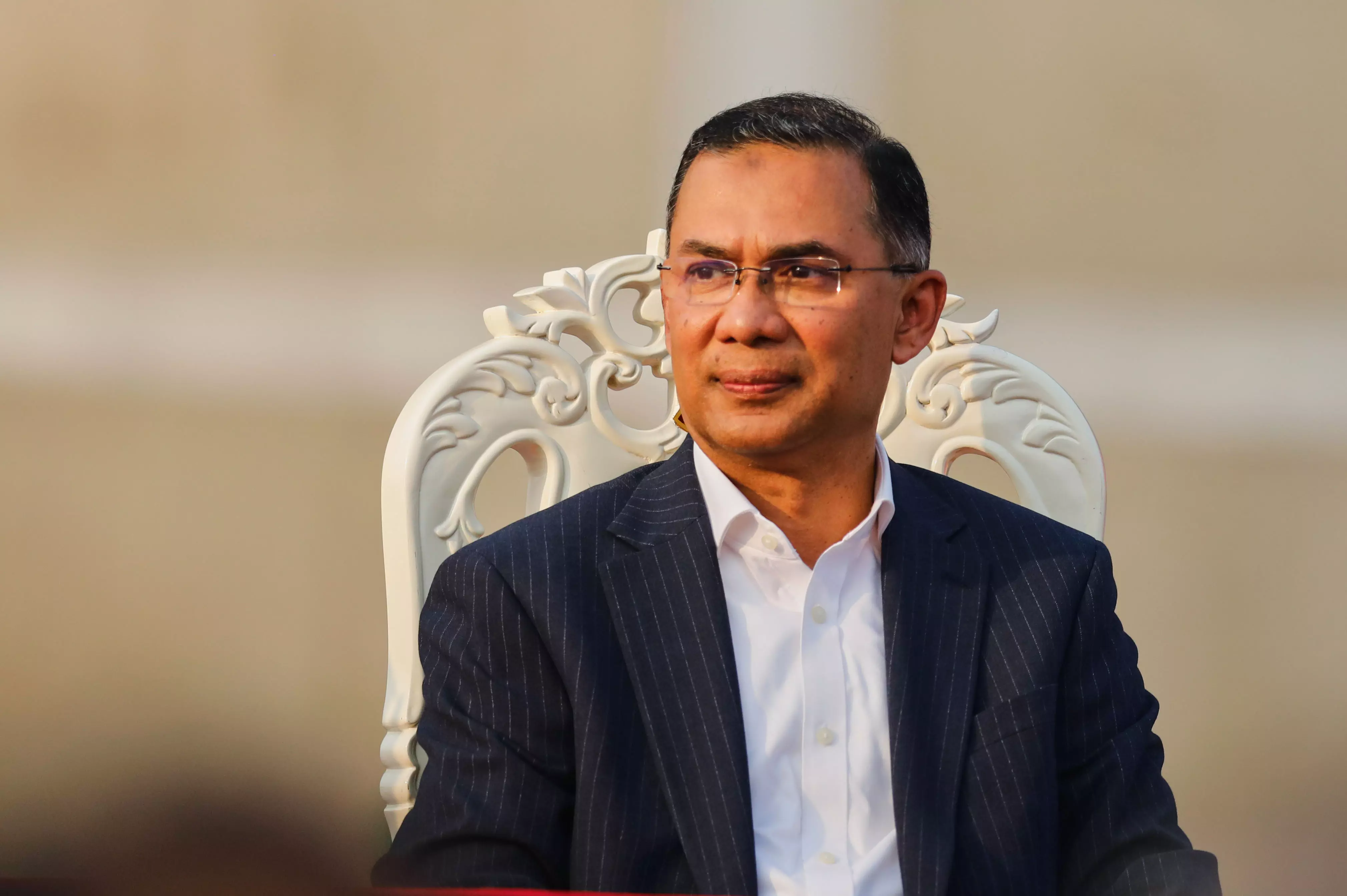
When Bangladesh’s new Prime Minister Tarique Rahman took office in February 2026, there was an air of optimism about a reset of India-Bangladesh ties. The removal of the interim administration of Muhammad Yunus, and its open anti-India bias, seemed to open space for a reboot.
That hope seems to have dissipated.
The election of the Bangladesh Nationalist Party government in February was a high-water mark. At Mr Rahman’s oath-taking, Lok Sabha Speaker Om Birla carried Prime Minister Narendra Modi’s invitation to Mr Rahman him to visit India. External affairs minister S. Jaishankar represented India at Begum Khaleda Zia’s funeral and by April the Indian high commissioner in Dhaka was speaking of a “forward-looking reset” directly with Mr Rahman.
And then everything fell apart.
India’s new high commissioner Dinesh Trivedi, who presented credentials on June 25, has not been able to meet a single Bangladeshi minister. His request for an appointment with Mr Rahman has not fructified. Mr Rahman also declined to make India his first foreign visit. He chose Malaysia first, with China next. The third is likely to be to Saudi Arabia. It is telling that his trip to India has been pending for five months. Several grievances seem to have accumulated and stalled the anticipated reset.
Bangladesh summoned Indian diplomats twice -- after Assam chief minister Himanta Biswa Sarma’s “detect, delete and deport” push against Bangladeshi migrants, and again after West Bengal’s newly-minted BJP government pushed back alleged illegal migrants. An adviser in Mr Rahman’s PMO, Zahed ur Rahman, known for past anti-India statements, was held at Delhi airport for two hours, and prompted a formal protest by Dhaka. Sheikh Hasina’s presence in India remains a sore point, where she continues to address the media and her party virtually. Her claim that she will return in December is by no means certain. Meanwhile, no progress has been made on renegotiating the Ganga Water Treaty which expires in December 2026 and the Teesta water-sharing agreement remains elusive.
The strength of the anti-India sentiment among Islamic fundamentalists in Bangladesh is evident from the Jamaat-e-Islami misconstruing Mr Trivedi’s remark that India and Bangladesh shared “same sky, same air, same pain” as a reference to the Hindu imperialist idea of “Akhand Bharat”.
Such grievances seem to have come in the way of India-Bangladesh ties moving forward, worsened by Dhaka’s growing closeness to China, apprehensions about the possible emergence of a China-Pakistan-Bangladesh axis, and what many see as Bangladesh’s strategic outreach to Turkey.
Mr Rahman’s China visit produced outcomes that New Delhi may find adverse to its strategic interests. Beijing’s role in the Teesta River Comprehensive Management and Restoration Project worries India because it lies uncomfortably close to the strategic Siliguri Corridor. China, well aware of Indian concerns, has insisted that “no third-party influence” should be allowed to impact the project. The Mongla Port Facilities Modernisation Project is also a matter of grave concern as Mongla is only 80 km from India’s border. Such a proximate Chinese presence could enable maritime surveillance and electronic intelligence gathering.
China’s footprint in the Bay of Bengal will also grow through the China-Myanmar-Bangladesh Economic Corridor, linking Yunnan to Chattogram and Mongla Ports through Myanmar’s Rakhine state. This is not a new idea -- in its earlier avatars, the corridor was variously named as the Asian Highway and BCIM corridor, but India had excluded itself from these Chinese ventures.
The agreement for a multi-modal corridor now suggests Dhaka is looking eastward, and increasing India’s anxiety for several reasons. China already has a deep-sea port at Kyaukphyu in Myanmar, but instability in Rakhine makes its access uncertain. With the new corridor, Bangladesh gains strategic depth and faster export routes, and China a greater presence in the Bay of Bengal. The corridor could potentially even serve as a military highway, with strategic consequences for India
While India also uses the diplomatic-and-defence 2+2 dialogue mechanism with its close partners, the Dhaka-Beijing agreement to set up such a mechanism could ring alarm bells in New Delhi. Bangladesh is already among the largest buyers of Chinese arms and now has in principle agreed to buy 20-24 J-10CE Chinese multirole fighter jets, the same aircraft Pakistan used during Operation Sindoor. The deal is likely to be finalised as early as August 2026.
Such a shared platform would create overlapping military ecosystems of maintenance, spares, and training between Dhaka and Islamabad. They will also deepen China's regional defence footprint.
China’s moves are underpinned by the trilateral China-Bangladesh-Pakistan relationship. Former Bangladesh ambassador Mohammad Harun Al Rashid claimed there is “increasing psychological pressure on Tarique Rahman to build a strategic China-Pakistan-Bangladesh axis to frighten India into submission”. This aligns with the China-Pakistan-Bangladesh trilateral dialogue begun in June at the foreign secretary level. If this process is institutionalised, India may fear marginalisation in its own neighbourhood. Mr Rashid also linked this to Dhaka’s outreach to Ankara, a bid to appease the Islamist forces behind the 2024 uprising.
While Bangladesh-Pakistan ties have improved, they seem limited to diplomatic exchanges, restoring contacts and expanding cooperation. No public evidence exists of institutionalised Bangladesh-Pakistan intelligence-sharing or defence dialogues.
As for conceding strategic space to Turkey, Bangladesh has shown interest in buying Turkish defence products such as drones, electronic warfare systems, armoured vehicles, etc. With China still by far its principal defence supplier, Turkey will be a supplementary supplier. This however does not automatically translate into Bangladesh sharing Pakistan or Turkey’s position on issues sensitive to India.
India must worry nevertheless if Bangladesh continues expanding Chinese infrastructure, institutionalised trilateral consultations, deepening defence links with Turkey and strategic cooperation with Pakistan. This would signal a Bangladesh more strategically autonomous than India prefers.
It could be argued that Mr Rahman is simply managing anti-India sentiment after Sheikh Hasina’s departure rather than shifting strategic alignments. There are also genuine unresolved bilateral issues that limit his degrees of freedom to accelerate engagement with India. The visible warmth he displays towards China and Pakistan does have short-term political value domestically.
The longer Mr Rahman leaves progress with New Delhi unaddressed, however, the more Bangladesh is likely to suffer adverse economic consequences – in terms of medical tourism, transit, and water-sharing deadlines. Bangladesh’s strategic options may also be narrowed as it becomes a one-patron -- China -- dependent country. It would also lose the leverage it has for a limited time, by not converting India’s enthusiastic outreach into diplomatic advantage. New Delhi may not extend its enthusiastic friendly overtures indefinitely.
The writer is a senior journalist based in New Delhi
