Anusuya Mohanty Chatterjee | How I Got Digitally Disenfranchised in Our Democracy

While we, as citizens, can link bank accounts, ration cards, and even vaccination certificates to Aadhaar, the system cannot guarantee that a voter ID is correctly mapped to the citizen who owns it
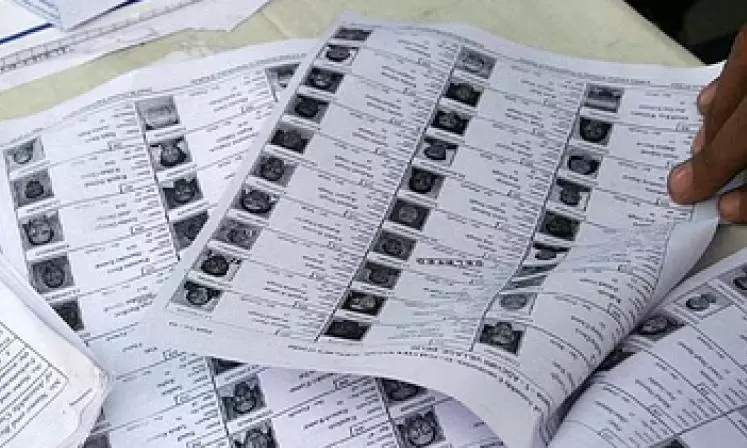
I am a law-abiding citizen of India, with all the paperwork to prove it. Yet today, I do not exist in the eyes of our democracy. My voter ID number now belongs to a 70-year-old stranger named Chitra Bose. Her husband’s name, by coincidence or manipulation, matches my husband’s. She has been “moved” from West Bengal to Haryana. I, meanwhile, have been erased.
I discovered this while trying to transfer my voter ID from Kolkata to Gurgaon. What began as a simple update spiralled into an identity theft nightmare. Online forms refused to recognise me. When I tried again later, I found my name had vanished altogether. My ID still exists, but I don’t.
This cannot be a small clerical error. It is disenfranchisement. Is the State saying that you don’t matter?
The fragility of identity: In a nation of 1.4 billion people, the loss of a single identity might seem inconsequential. A mere “blip” in the numbers. But that is precisely the problem. Our democracy is built on the principle that every vote matters. If identity can be so casually displaced, reassigned, or obliterated, the very bedrock of citizenship is under threat.
India has been at the forefront of digitisation. We boast of Aadhaar, a unique biometric-linked identity that theoretically ensures that no two citizens can be confused. Yet, in practice, I find myself fighting with shadows in a system where ghosts can thrive and real people can vanish. But herein lies the paradox: while we, as citizens, can link bank accounts, ration cards, and even vaccination certificates to Aadhaar, the system cannot guarantee that a voter ID is correctly mapped to the citizen who owns it.
This disconnect reveals a troubling fragility. What good is a digital identity if it cannot defend the most fundamental right in a democracy: our right to vote? If technology cannot safeguard this basic right, we need to question the efficiency we are so proud of, because progress runs the risk of turning hollow.
Systemic failure or silent disenfranchisement: The Election Commission of India often touts its technological upgrades and streamlined processes. But my ordeal exposes the cracks in this edifice. A voter ID is more than a slip of laminated paper; it is the State’s recognition of a citizen’s right to shape the republic. When that recognition is misplaced, it isn’t just an individual’s problem; the system must have a solution.
The question, thus, that needs to be asked: is there a deeper, systemic issue? In a political climate where identity and citizenship are constantly contested -- whether through debates on migration, NRC or the disenfranchisement of vulnerable communities -- the ease with which identities can be reassigned raises unsettling possibilities. It signals not only bureaucratic negligence but also a quiet loss of trust, where a citizen is just a number instead of a real participant in India’s electoral process.
The weight of numbers: Part of the problem is that India is simply too big for its institutions to treat individuals as sacrosanct. In a population of over a billion, the system normalises errors. If one person loses their vote, ten more will fill the gap. This attitude trivialises the individual’s role in democracy. But democracy is not an arithmetic equation where numbers cancel each other out. It is about trust -- the belief that every citizen counts.
When the system reduces citizens to statistics, identity theft is brushed off as a minor error. But for the person who has lost their voice in the electoral process, the impact is crushing. It is, in effect, civil death.
Promise versus political will: India has the technological might to fix this. With Aadhaar, biometrics and digital tracking, it should be impossible for a voter ID to be reassigned to someone else. Yet one wonders if the will to ensure this exists. Because identity itself has become politicised. Citizenship debates are routinely weaponised in public discourse, turning individuals into symbols of larger battles. In such an environment, this can become a tool for exclusion and inclusion, wielded according to political convenience and partisan interests.
If the government can boast of sending digital payments to millions with a click, if it can run one of the world’s largest biometric databases, then it can certainly guarantee that one citizen’s vote is not stolen by another’s ghost. Protecting the sanctity of the vote is not just a technical possibility, it is a test of political intent and democratic commitment.
A call to safeguard identity: My story may be dismissed as an anomaly, but in reality, it is not. There are countless others whose names have mysteriously vanished from voter lists, who have discovered that their votes have been reassigned or deleted. These are not isolated glitches; they are patterns. Patterns that erode trust.
As India celebrates its achievements in digitisation and governance, it must also confront the uncomfortable truth that identity -- the cornerstone of citizenship -- remains fragile. Unless we treat identity as sacrosanct, democracy risks the risk of being undermined from within.
India has always prided itself on being a nation of the people, for the people, and by the people. This government has the power, the technology, and the reach to correct such anomalies. What is needed is the will to act decisively and ensure that every citizen’s identity -- and therefore their vote – remains inviolable and secure. It is not just about fixing glitches in the system. It is about safeguarding democracy and protecting the one thing that makes each of us equal in this republic -- our identity as citizens, our most fundamental democratic right.
