Anita Anand | Family Roles See Big Change: A New Era Looms For Parenting And Grandparenting

As a grandparent, the common belief is that they are there to spoil their grandchildren. However, many babysit while their children work, go on holidays, or are available when the parents need a break from parenting
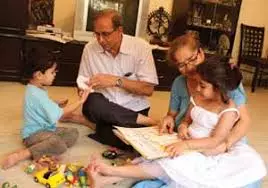
A few weeks ago, I became a grandparent for the first time. Since then, the most common question I get is: “How does it feel to be a grandparent?”
Thirty-six years ago, I became a parent. The most common question at that time was: “How does it feel to be a parent?” I will say, most notably, mixed feelings. Both experiences were and remain awe-inspiring. A nine-month period is enough to adapt to the idea of becoming a parent or grandparent. However, when it happens, no amount of preparation is enough to deal with what follows.
The news of a child’s birth brings joy, confirming that life on this planet will continue from one generation to the next. It signifies a significant responsibility for the parents of the newborn, one that must be taken seriously and handled with care. It’s a lifelong commitment, or at least until the child reaches adulthood, legally or otherwise. And for many parents, even beyond that.
But the rules for parenting and grandparenting are changing.
As a grandparent, the common belief is that they are there to spoil their grandchildren. However, many babysit while their children work, go on holidays, or are available when the parents need a break from parenting.
Since many grandparents are retired, it’s assumed they will dedicate time to this. Grandparenting can also be demanding. Some enjoy it, while others grumble quietly or loudly. They, too, have mixed feelings.
When I was growing up, by the age of four, both of my grandmothers had passed away. I never met them because they lived at the other end of India, just like one of my grandfathers. My mother’s father then moved closer to us, started a business, and led a busy and fulfilling life. He died when I was about eight years old. Our parents and household help raised my two sisters and me. I don’t have any information about my great-grandparents.
I became a mother late, at thirty-nine. As a full-time senior manager at a news agency in Italy, my days were busy, and I travelled often. I wondered if I could do justice to raising a child. I considered the pros and cons of becoming a mother and decided to accept the challenge.
The advantage of being an older parent is that one has some maturity compared to a younger one. Professional and working parents cannot always afford the luxury of staying at home with their children, nor should they.
Children were never meant to be raised solely by their parents. In some ways, traditional joint families and community involvement in raising children are beneficial because they expose children to others. This makes them more adaptable.
Nowadays, children in nuclear families tend to be doted on and indulged because there are fewer of them in such families. Having one or two children has become the norm. Or just one. Or none.
In nuclear families, parents need to be creative in childcare. A range of caregivers, such as household staff, babysitters, relatives, extended family, friends, nurseries, and schools, participate in raising children. This diversity is advantageous.
Modern middle-class parents are better informed than their parents. Through the Internet and specialised medical services, they can consult doctors, nutritionists, doulas (non-medical helpers), and, in cases of conception difficulties, IVF specialists.
As modern grandparents, roles have transformed. Unsolicited parenting advice is unwelcome because it may not be the best. Unlike in the past, there is now plenty of information available both online and offline to help young people prepare for and raise a child. As a late mother, I was well-informed, thanks to my background in education and psychology. I read extensively about child-rearing and trusted my doctors and birthing attendants.
As an expectant grandparent, I have learned about the tradition of “jhapas”, women who specialise in postpartum care. They move into the new baby’s home, helping with tasks like bathing, feeding, massaging and giving the parents a break. Their stay is brief, lasting no more than three months, after which the “jhapa” moves on to another home with a newborn.
The birth of a baby brings joy. Unlike in my time, there is now more concern about the risk of infection. Before entering the new baby’s room, we disinfect our hands and put on masks. We aren’t kissing him or pinching his cheeks.
He sleeps calmly, swaddled in cute, patterned baby sheets, with a tiny cap to keep his head warm. He has a shock of black hair. For a brief part of each day, he is taken out to the yard to be sunbathed, where the two resident dogs have a chance to admire him.
I am reminded how completely babies depend on grown-ups to feed, clean, and keep them alive. It’s a 24-hour cycle of sleep, feeding, cleaning, burping, pooping and farting. It’s demanding.
For those family and friends who are not in the vicinity of the newborn, the Internet is ready to assist with photos, videos and messaging. Social media has enabled the sharing of information that was previously unimaginable.
Not living in the same city as the new grandchild, I can participate from a distance.
The rules of parenting and grandparenting are changing. Both roles require some emotional distance. Children need love and security, with their physical and emotional needs met, and constant reassurance that love and support will always be there, regardless of circumstances.
Grandparents don’t automatically know more just because they have been parents. In parenting, it’s the parents who make the final decision.
Are we ready for a new era of parenting and grandparenting?
The writer is a development and communications consultant
