Anil Tyagi | Oil to IPOs: Rubio Visit Spotlights Ties With Ambani

Washington seeks closer energy ties and a trade deal as Reliance’s refining prowess draws US attention.
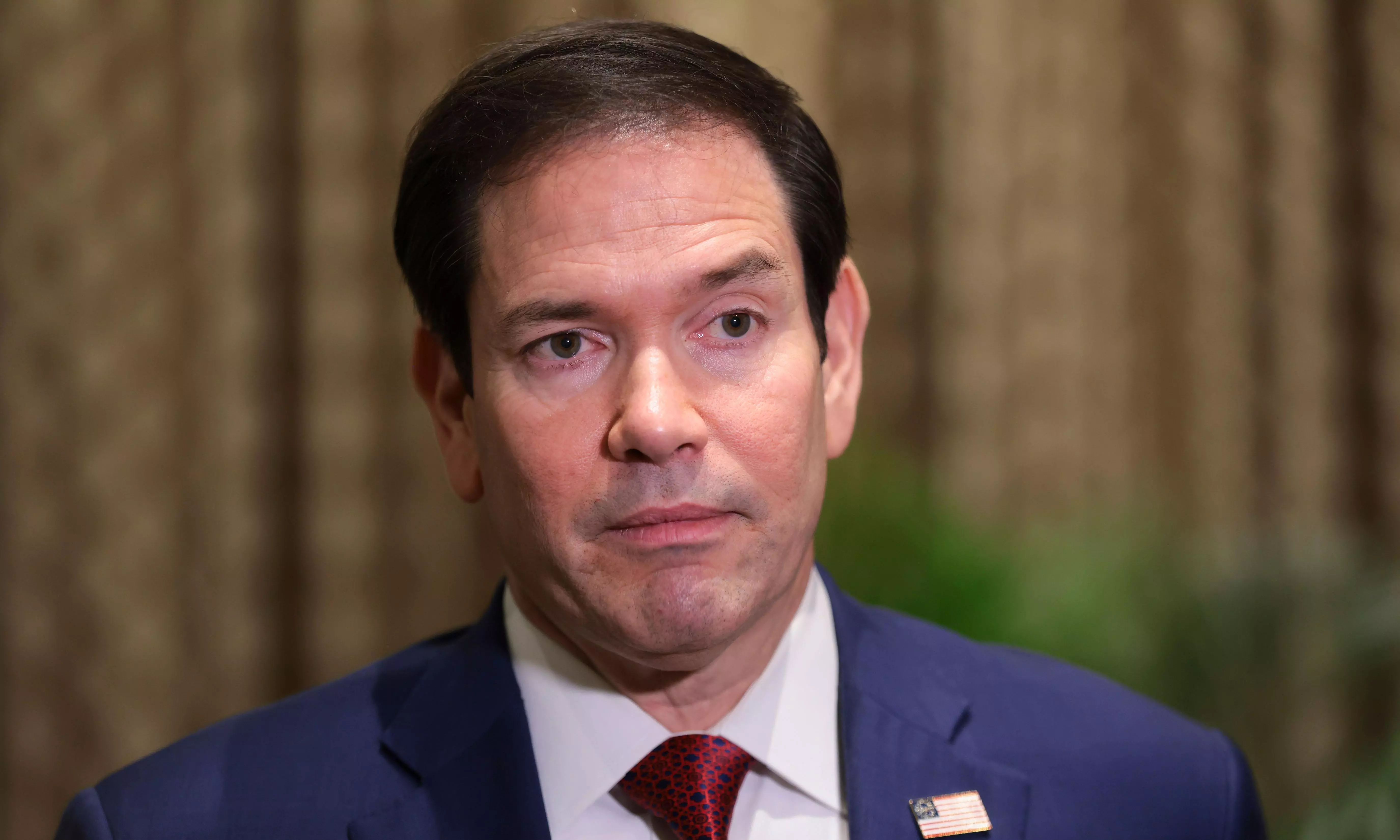
Marco Rubio, US Secretary of state, revealed a major non-diplomatic, indeed commercial, reason for his India visit. He explained that Jamnagar, Gujarat, was on his itinerary because of the US efforts to find large buyers for the not-so-easy-to-refine Venezuelan oil (under American control). Jamnagar is the location for Reliance Industries’ “largest and most complex single-site” refinery complex. Mr Rubio’s statement came on the day when (Reliance) Jio Platforms’ IPO opened to mop up Rs 30,000 crore, with an overall valuation of Rs 10 lakh crore. Stock market, diplomacy and business mingled.
Mr Rubio bypassed the politics of New Delhi and focussed on Mumbai and Jamnagar, the financial-business hubs. He headed a delegation with over 200 American business leaders. The crucial issues Mr Rubio discussed with the Indian foreign minister S. Jaishankar was to nudge India to sign a bilateral trade deal. “We’re very, very close,” said the American about it. The other issues on the agenda were American tariffs and bilateral energy interests. The US wants India to buy less of Russian crude and rely more on supplies from America and Venezuela. Diplomacy links with economics, trade and commerce.
Energy is where Reliance Industries matters. Its Jamnagar refinery is one of the few in the world that can handle the complex Venezuelan crude. The Mukesh Ambani-owned firm was one of the largest buyers of Russian oil, and has decided to pivot to imports from Venezuela. Although it does not connote a conflict of interest, Mr Jaishankar’s son, Dhruva, is executive director of ORF America, a think tank with ties to ORF India, which was set up by Mukesh’s father, the late Dhirubhai Ambani.
Along this journey from Washington to Jamnagar, via Venezuela and Russia, remember a joint deal between Reliance Industries and America First Refining to set up a $300-billion refinery in Texas, the first on the US soil in 50 years. One cannot forget the war of words between Mukesh Ambani, the richest Asian as per a list, and Elon Musk, the richest on the planet. Mr Musk accused Indian oligarchs, specifically Mukesh, of orchestrating the delay in the grant of the Satcom licence. He contended that his tariffs for satellite Internet services will be low, and impact Reliance Jio’s future profits. Experts expected this to dent the excitement for Jio’s IPO. Diplomacy links with business, and business with the stock market.
J&K civil services: Local fragrance fades
The merger of Jammu and Kashmir’s IAS and IPS cadres into AGMUT was projected as a reform. But it changed the officers’ careers and ruptured the links between the system and civil servants. Earlier, J&K had a strength of 137 IAS and 147 IPS. After 2022, the numbers within AGMUT are 65 for J&K, and 10 for Ladakh in case of IAS. The IPS figures are 70 and 10, respectively. These obviously do not denote the total strength of AGMUT. Another lesser-known impact is the arrival of new IAS and IPS in J&K, and Ladakh from other parts of the country. They are part of AGMUT, and can be transferred. “The local administrative fragrance is slowly disappearing,” remarks a source familiar with the bureaucracy. This is crucial because the three regions of the old J&K state are distinct in terms of geography, culture, languages and politics. Understanding their fault lines requires more acumen than the abilities to read official briefs. An officer describes the new revolving door culture. A few newly posted AGMUT officers treat their assignments as interim ones, like visits of guest lecturers, before the plum postings in Goa or Delhi. This is not a verdict on every officer but raises a serious question: Can continuity survive when officers think of themselves as temporary visitors? Supporters of joint AGMUT argue that a centralised cadre will shake the grip of local networks. Sources agree that patronage and corruption in parts of J&K and Ladakh need strong checks. But AGMUT must bring impartiality without alienation, and accountability without erasing local knowledge.
Bureaucratic flower power
A senior secretary based in Delhi discovered a novel way to practise austerity without sacrificing aesthetics. The PWD used to decorate his office with fresh flowers, which were replaced on alternate days. But winters came with a problem. The flowers refused to wilt on the second day, and remained fresh. But they had to be thrown away. Rather than allow healthy blooms to meet an official death, the secretary took them home. His office remained decorated with new flowers. His living room acquired fresh colours. The flowers worked overtime. It was a unique arrangement to transfer the flowers without a formal order. Call it recycling, resource optimisation or jugaad, but the civil servant ensured that ‘state’ flowers enjoyed a second innings in private surroundings. But on a serious note, this opens a window into the cost of the flowers. CPWD tender records (2026-27) list Rs 69 lakh for cut flowers at Kartavya Bhawan-1’s department of expenditure, with the lowest bid at Rs 68.30 lakh. Another South Block tender was worth Rs 8.90 lakh. A contract for floral arrangements at VIP functions was valued at Rs 94.07 lakh. No one begrudges the Secretaries some comfort. They work long hours. But can it be done economically? Yes, by opting for a simple and sensible reform: replace the flowers when they wilt, not as per the calendar.