Abhijit Bhattacharyya | After 1971, Delhi Again Facing US-China Attack

New Delhi needs to stand firm in the face of these unrelenting, deliberate and juvenile provocations
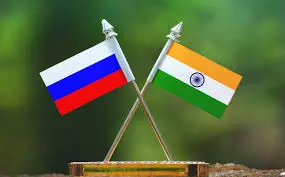
Flashback 1971: Over 50 years later, there are clear indications that the United States and China, in collaboration with Pakistan, are again targeting this country. Those who learnt the lessons of that year’s conflict, which led to the birth of Bangladesh, will recall how the Richard Nixon-Henry Kissinger duo, along with China’s Mao Zedong, was trying to help their ally, Pakistan’s Gen. Yahya Khan, from seeing his country dismembered. But India’s Iron Lady Indira Gandhi had other ideas, and despite Washington dispatching the USS Enterprise and the Seventh Fleet into the Bay of Bengal, and Beijing making loud noises, the inevitable could not be staved off.
Indira Gandhi's masterstroke was the Indo-Soviet Treaty of Peace, Friendship and Cooperation, signed August 9, 1971, under which Moscow stood by New Delhi in its gravest existential crisis. Understandably, the pivot of defence and foreign affairs between Delhi and Moscow runs till this day.
Those who are in power today in Washington, Beijing and Islamabad should pay heed.
Fast forward to 2025: The last five months have witnessed a series of endless threats, abuse, blackmail and arm-twisting by America’s 47th President, Donald J. Trump, targeting his onetime “great friend”, Prime Minister Narendra Modi. Mr Modi was one of the first world leaders to visit Mr Trump at the White House February 2025, weeks after his inauguration in January, but things went downhill very quickly.
New Delhi needs to stand firm in the face of these unrelenting, deliberate and juvenile provocations. It began with Washington complaining loudly and repeatedly about high Indian tariffs, but then came the terrorist attacks in Pahalgam and India’s “Operation Sindoor” response, which set off the four-day India-Pakistan conflict in May 2025. Ever since, the US President has been incessantly taking almost the entire credit for bringing about the ceasefire on May 10, 2025. New Delhi’s mistake, if any, was not to call him out on these false claims. Like in 1971, and despite getting full support from China as it did 50 years ago, Pakistan was compelled to back down and ask for a truce.
Today, the US President would do well to stop interfering in India’s bilateral relationships with other nations, especially when it is in pursuit of its own economic interests. If India buys energy and has a long-term defence alliance with Moscow, it does not pose any threat to the US or any other nation. The same, however, can’t be said of the US, which has intermittently and deliberately created an existential threat to India, first by arming Pakistan military from the 1950s onward, and then by befriending China, despite knowing fully well Islamabad and Beijing have, in concert, always been hostile to India. New Delhi’s exercise of its “strategic autonomy”, even while being a partner of the US in associations like the Quad, has always rankled Washington, which would always prefer this country to be a subservient ally. President Trump’s recent bonhomie with Pakistan, such as his White House lunch for Field Marshal Asim Munir, should be seen in that light.
It's no surprise that most of India, even outside the usual diplomatic and political circles, are tired of Mr Trump’s grandstanding and will endorse the government’s new-found resolve to lay down the “red lines”. The US President’s tantrums and ceaseless lies, false, vituperative allegations, humiliation and motivated adjectives poured on India day in and day out, from all angles, is extremely similar to Chinese dictator Mao Zedong targeting of Jawaharlal Nehru’s India in the 1950s and 1960s. Understandably, the latest statement by Beijing welcoming Prime Minister Modi’s coming visit to China for the SCO summit on August 31 is of a pattern, trying to take advantage of the US-India friction. New Delhi must be wary, and not fall into the Dragon's trap.
Donald Trump may well believe he is the strongest and best candidate for the Nobel Peace Prize, but his campaigning for it has gone out of control. After endorsements by Israel, Pakistan and now Cambodia, he may be more than a little unhappy that India refuses to play ball and hail his role as peacemaker. Instead, he should take note that while the whole of North and South America combined have a population of 1.04 billion, there are 1.4 billion people in India, and their needs and necessities can’t be dictated from 14,000 km away.
There are, however, a few factors today working to New Delhi’s disadvantage, which Indira Gandhi did not have to face in 1971. One is the powerful lobby of traders and businessmen working to promote their own sectional interests, not necessarily those of the nation at large. That is in play with regard to both the US and China. Regarding America, there is a bigger factor, and that is the presence of the five million-strong prosperous US Indian diaspora, which is an increasing eyesore to the white Christian supremacists who form the core support base of Mr Trump’s MAGA (Make America Great Again) movement. This lobby puts huge pressure on New Delhi’s foreign, economic and security decision-making.
Mr Trump and the US is fully aware of most Indians’ “American Dream” -- of their craze for visas and Green Cards, and their desire to study, work and build careers in US. This has been going on for over six decades: Indians constitute the most visibly prosperous non-white ethnic group compared to other non-American ethnicities. Mr Trump’s actions have put enormous pressure on this five-million-strong group, who may be coerced to force India to not counter POTUS for the sake of their own future survival in America. Knowing Mr Trump’s bent for unbalanced action, he may in future use them as hostages to arm-twist India.
On China, some Indian traders, unscrupulously adept in undervaluation of imported Beijing goods and selling at high prices in Indian domestic markets, is one of the strongest obstacles to the government’s firm action on economic issues.
What should New Delhi do, in the face of this pincer movement by the US and China?
First, a change of guard is needed in the foreign ministry urgently. Put a strong professional diplomat in charge of dealing with the US and Chinese bullies. The time for excessively confusing gentlemanliness towards these two powers may be over. Indian diplomacy needs to hit back. Second, Russia should never be discarded even as Mr Trump and his team use horrendously undiplomatic language. This is simply not acceptable. India must act in accordance with its own economic and security self-interest. The age of imperialism, of being subservient to the West, is well and truly over.
