Aakar Patel | Could Mamdani Win NY Mayoral Poll, Give Politics New Focus in US?

Democratic nominee leads ahead of November 4 election after a grassroots campaign.
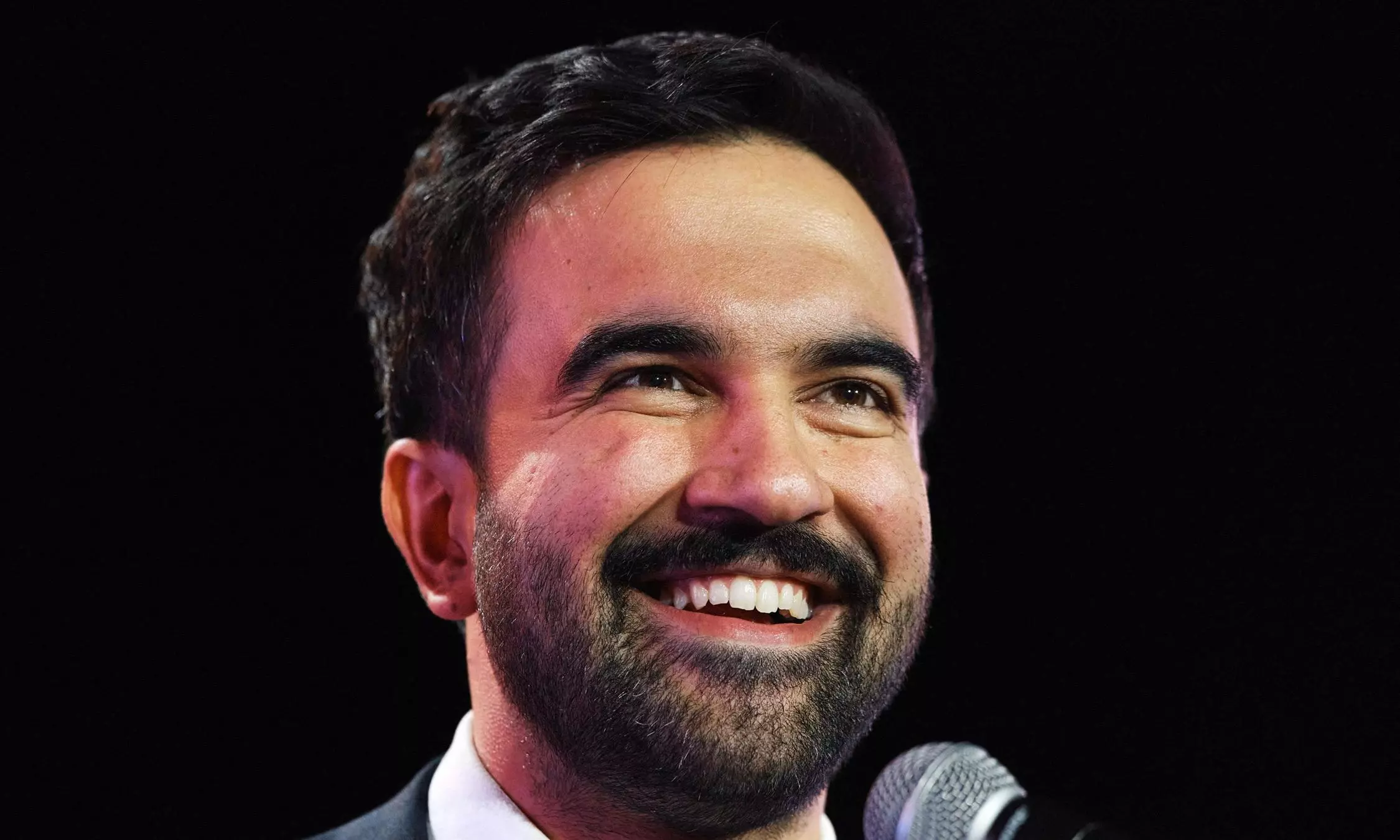
If all goes well, and your columnist is really hoping that it does go well, the world’s most famous city will soon be won and run by a man with a Gujarati father and a Punjabi mother. Zohran Mamdani won the Democratic Party’s nomination in June and on November 4, is poised to win the general election to become New York’s mayor.
What I wanted to focus on was his campaign and how he came out on top. In January this year, he was polling at one per cent but by June had won 43 per cent of the primary (the election that decides who will represent the Democratic Party in the general election) and now polls show him at 50 per cent in an expanded electorate of the entire city. How did this happen? Americans refer to such analysis as punditry and let us indulge in it.
First, take a look at the city’s demographics. New York City has 350,000 millionaires and 123 billionaires, as might be expected in the place that is host to Wall Street. But one-fourth of its population lives also in poverty, as defined in that city. That definition is that a family of four surviving on $47,000 or less a year. That is a total of more than 20 lakh New Yorkers.
Mr Mamdani’s starting point in his campaign was to focus on this problem of affordability. This went against conventional wisdom and polling, which showed that crime and safety were the top priorities for voters. Mr Mamdani’s rivals focused on those, but he took up affordability and made it his main plank. He then offered three primary solutions -- a four-year rent freeze on rent-stabilised apartments (in which 20 lakh tenants live); free childcare for children up to the age of five (something which costs a family around $22,000 per year if both parents are working); and free travel on buses.
He stayed with this message from the start of his campaign a year ago till now with no change. The second element to his success is the volunteer army that took up his cause. In June these were 50,000 in number of whom 30,000 had participated in knocking on doors, canvassing on the street or making phone calls on his behalf to raise money or sign up volunteers. By the end of October, this is likely to be just under double.
This is a staggering number and can be explained by two things. The base comes from Mr Mamdani’s political home, the New York branch of the Democratic Socialists of America. This is a group that began participating in elections only a decade ago, but has seen success because it is laser-focused on issues affecting working class people. Mr Mamdani’s campaign greatly expanded the number of volunteers that the DSA deployed in previous elections. His campaign team comprises youngsters (he is 34 and many of his team are younger than he is), most of whom had little experience in managing something of this size, but have turned out to be more competent and effective than the usual consultants and strategists.
The third element was the candidate himself. Mr Mamdani is Muslim and openly identifies as being such, in a city where Islamophobia has been an issue, particularly after 9/11. But New York is also a city where 40 per cent of the population was born outside America and has a large Muslim and South Asian population, which has rallied to his cause.
As important as this is his ability to attract all sorts of people towards him, including young Jewish New Yorkers, because of his charm and his talent. His dazzling social media output will be studied for years as a model and many months ago, politicians across America were already copying it, most of them badly because they lack Mr Mamdani’s ability to make it all look effortless and fun. A happy warrior, as American pundits referred to him.
These three things to my mind are the building blocks of his (fingers crossed) victory come November 4. I have touched on this in a previous column, but if and when he wins, he will represent a shift in the way many Americans see Israel. Polls consistently now show that the majority of Americans sympathise with Palestinians over Israel because of its practice of apartheid and genocide. But this shift has not been owned in politics because the Israel lobby is powerful and nasty and can kneecap candidates running for office. Mr Mamdani has weathered their sharpest attacks, being called, predictably, a jihadist, bigot and anti-Semite and so on. We know this because it was an essential part of his rival’s attack on his in the primary.
It continues even now, but has not been as effective as it might have been even just a couple of years ago, because of his courage as much as the appalling behaviour of the Israeli State.
Optimists think that if he is able to govern New York City competently, his campaign and his platform can offer a model for the entire Democratic Party in America. We shall see if that happens, but it is true that there is no other alternative that has been put forward by those inside the party which is as original as Mr Mamdani’s and (again fingers crossed) as successful.
What an achievement it will be if a young Gujarati-Punjabi man is able to give the most powerful nation in the world a new direction.
The writer is the chair of Amnesty International India. Twitter: @aakar_patel
