SC Takes Serious Note of Delay by Several States in Sending Proposal for DGP Appointment

The apex court granted four weeks to the UPSC to convene a meeting and make recommendation for appointment of Director General of Police (DGP) for Telangana, where the last regular DPG retired in 2017
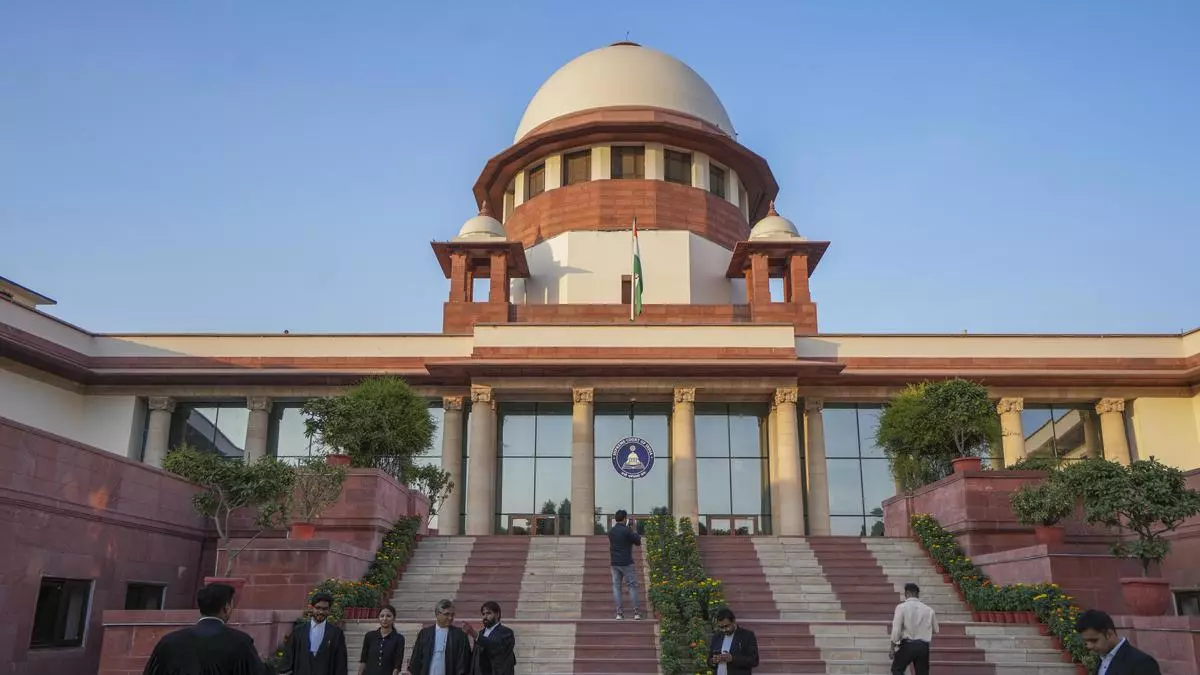
Hyderabad: The Supreme Court on Thursday expressed its strong disapproval over the persistent delays by the Telangana government as well as those of other states in initiating the process for the appointment of regular Directors-General of Police. The court also castigated the trend adopted by the state government in appointing ad hoc or acting DGPs.
The Supreme Court gave four weeks to the Union Public Service Commission (UPSC) to recommend a name for posting as full-time DGP for Telangana. The court authorised the UPSC to take proactive steps against defaulting states, including issuing reminders and initiating contempt proceedings before the apex court.
"Please do not be trapped by the states, they do not want DGP, they want some acting DGP, ad hoc DGP, that suits them," the CJI told UPSC counsel.
The bench comprising Chief Justice Surya Kant and Justice Joymalya Bagchi was hearing a petition filed by the UPSC challenging a January 9, 2025, order of the Telangana High Court, which had directed the commission to complete the process of selecting a regular DGP within four weeks.
A single judge of the High Court had issued the orders in a petition filed by one Dhangopal Rao challenging the GO issued to appoint B. Shivadhar Reddy as DGP with full additional charge. The petitioner’s contention was that the guidelines framed in the Prakash Singh case had not been followed.
Hearing the UPSC appeal against the High Court order, the Supreme Court noted that the last regular DGP of Telangana had been appointed in November 2015 and had retired in November 2017, after which the state continued with ad hoc arrangements. The UPSC submitted that Telangana had failed to send its proposal within the timeframe mandated by the ‘Prakash Singh’ guidelines, which required states to forward proposals at least three months prior to the retirement of the incumbent DGP.
The bench asked the UPSC why it had done nothing all these years. “… you are the authority… what steps have (you) taken against those states which have not followed (the guidelines). When the High Court issued orders, why did you file an appeal,” the apex court asked.
“Convene the empanelment committee meeting at the earliest and make recommendations for the appointment of a DGP for Telangana,” the bench told counsel for Telangana. The UPSC was granted an additional four weeks to complete the process, including determination of eligibility of officers under consideration.
The Supreme Court also raised concerns over the listing of the petition on the DGP’s appointment before a single judge of the Telangana High Court. “These kinds of important matters must be heard by the Chief Justice bench of the High Court or any division bench headed by a senior judge. Why was it listed before the single judge,” CJI Surya Kant asked senior counsel Dama Sheshadri Naidu, who was representing the opponent side in the appeal.
The CJI also said there was nothing wrong in the directions issued by the single judge. Hence, it was not inclined to intervene in the matter, except giving more time to the UPSC.
The bench observed that the UPSC’s challenge to the High Court’s direction had the unintended effect of further delaying the appointment of a regular DGP, thereby indirectly encouraging ad hoc appointments. The court remarked that if the UPSC’s plea were accepted, Telangana would be left without an active DGP, a situation it found unacceptable.
The Chief Justice questioned why the UPSC had not initiated contempt proceedings earlier against the state for violating the court’s directions. Senior advocate Naresh Kaushik, appearing for the UPSC, sought time to comply with the High Court’s order and requested clarification on whether or not the UPSC would be entitled to approach the Supreme Court in future cases of non-compliance by states.
In its order, the Supreme Court endorsed the UPSC’s objections to the practice of appointing acting or ad hoc DGPs and formally authorised the commission to write to state governments, whenever timely proposals for the appointments were not submitted. It directed that in cases of continued default, the UPSC would be at liberty to move appropriate contempt applications in the ‘Prakash Singh’ case, making it clear that accountability would be fixed on those responsible for the delay.
