Yasin Malik Wants To Release Pakistani Wife From Nikah, Requests Death Penalty in Sarla Bhat Murder Case

In a 25‑page submission before the Additional Sessions Court (TADA/POTA) in Srinagar, Malik declared that he will no longer contest the trial in the 1990 murder of Kashmiri Pandit nurse Sarla Bhat, even requesting capital punishment—while simultaneously announcing his decision to dissolve his marriage with Pakistani wife Mushaal Hussein Mullick
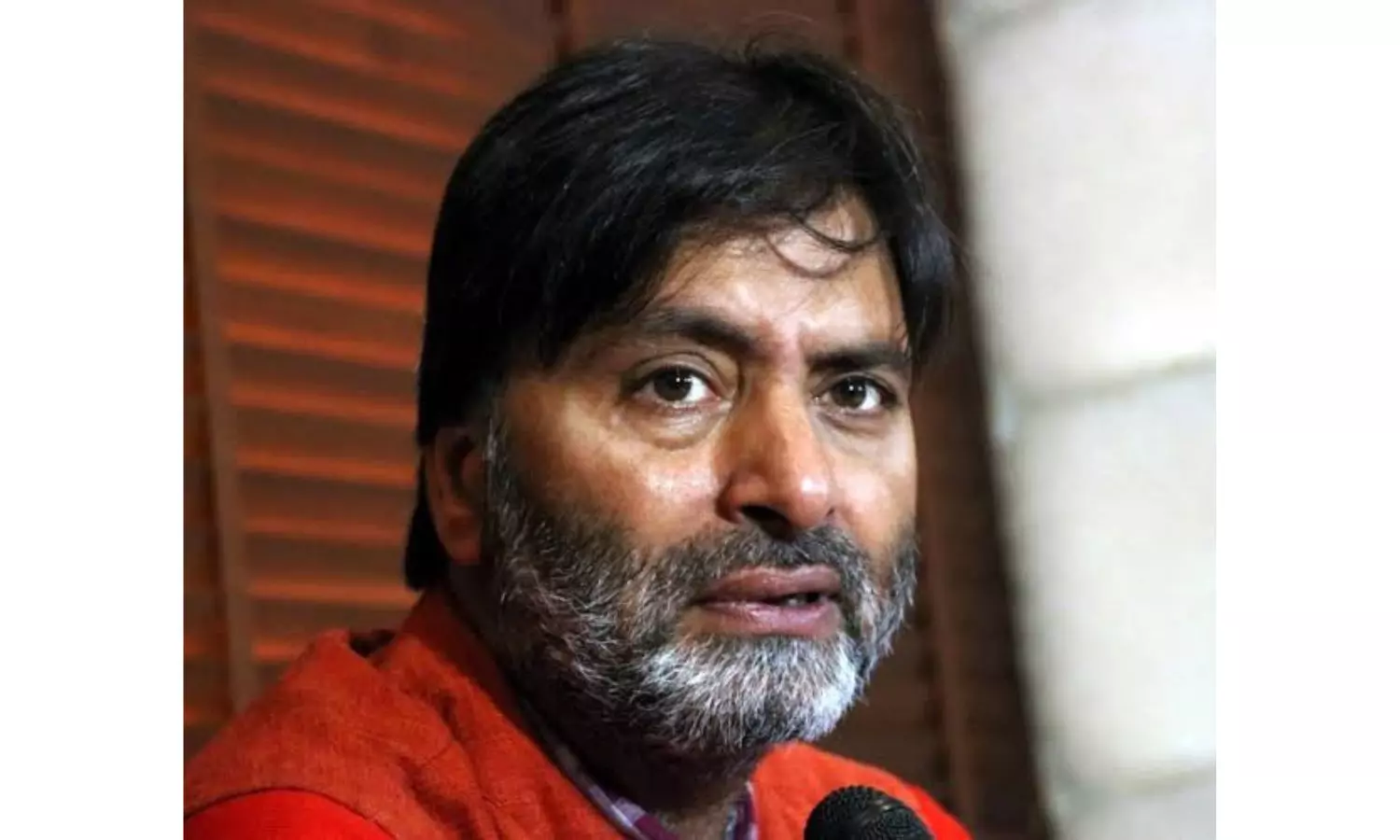
SRINAGAR: Jammu Kashmir Liberation Front (JKLF) chief Muhammad Yasin Malik, currently serving a life sentence in Delhi’s Tihar Jail in a terror‑funding and money‑laundering case where the NIA is seeking the death penalty, has taken an extraordinary and deeply personal turn.
In a 25‑page submission before the Additional Sessions Court (TADA/POTA) in Srinagar, Malik declared that he will no longer contest the trial in the 1990 murder of Kashmiri Pandit nurse Sarla Bhat, even requesting capital punishment—while simultaneously announcing his decision to dissolve his marriage with Pakistani wife Mushaal Hussein Mullick.
Malik, imprisoned since 2019, told the court that his choice stems from “Istikhara,” a sincere Islamic prayer for seeking blessings and guidance from God for a decision, and insisted that his withdrawal from the trial should not be mistaken as an admission of guilt. He reiterated that he has been “falsely implicated” due to political circumstances and that the proceedings arise from decisions taken in a charged political climate. His counsel, Advocate Abu Adil Pandit, submitted the statement on September 2, with the next hearing scheduled for September 19.
In the same document, Malik addressed his wife Mushaal—an artist, activist, and former special advisor on human rights and women empowerment in Pakistan’s caretaker government (2023–2025). Married since 2009 and parents to a 13‑year‑old daughter, Razia Sultana, the couple has lived apart for years due to Malik’s incarceration. Malik wrote that he does not want Mushaal to “spend her life carrying the burden of his circumstances or living as a widow,” urging her to begin a new life “with dignity and hope.” He also appealed to Razia to call her grandmother in Srinagar every day “for at least five minutes” to ease her loneliness.
Till the filing of this report, no public reaction from Mushaal has been reported to her spouse’s statement that he wants to end their marriage.
The murder of 27‑year‑old nurse Sarla Bhat, abducted on April 18, 1990 and found dead the next day in Srinagar’s Malabagh area, resurfaced in 2025 when the J&K State Investigation Agency (SIA) filed a detailed 737‑page chargesheet naming Malik and four others. Of the accused, only Malik remains alive; Khurshid Ahmed Chalkoo is absconding, while Abdul Hameed Sheikh, Muhammad Yousuf Sofi, and Ghulam Mohammad Taploo have died.
The reopening of the Sarla Bhat case is part of a wider initiative by the J&K administration under Lieutenant Governor Manoj Sinha to revisit what have been described as “deliberately buried” militancy-era cases. In July last year, Sinha directed officials to prioritise unresolved killings, file fresh FIRs where needed, provide jobs to victims' next-of-kin, and reclaim seized properties. Special cells were set up to support terror-affected families, which, officials claimed, reflected a commitment to accountability after years of perceived inaction.
Malik maintains he had no role in Bhat’s killing, claiming he first learned of the incident months later from an Intelligence Bureau (IB) officer. He pointed to the absence of any allegation against him in contemporaneous records, including writings by former Governor Jagmohan. Malik also highlighted the mysterious escape of accused Chalkoo and Captain Rashid from Srinagar Central Jail in 1990, arguing that the real perpetrators must be identified rather than implicating an “innocent substitute.”
He questioned the credibility of a purported written note cited by the SIA, arguing that such a document would not have gone unnoticed by authorities at the time. Malik further stated that although dozens of TADA cases were filed against him after his arrest in August 1990, the Bhat murder case was never among them.
Malik’s submission also revisits his political engagements with the Government of India, including interactions with former NSA R.K. Mishra and IB official Ajit Doval during Atal Bihari Vajpayee’s tenure. He recounts being issued a passport for medical treatment abroad and claims he declined financial assistance offered by both Indian and Pakistani embassies.
He alleges that his image was politicised during the 2019 and 2024 general elections and that media coverage surrounding the 2022 framing of charges portrayed him as responsible for atrocities against Kashmiri Pandits. He cites statements by former DGP Kuldeep Khoda noting that most Pandit killings occurred after 1996, and recalls his own protests and strikes against such violence.
Malik also referenced his interactions with Kashmiri Pandit community members, including journalists and politicians, and recounted being asked by a retired Inspector General of Police in 2014 to visit a migrant colony facing threats.
This latest submission follows an 82‑page affidavit Malik filed in 2025 before the Delhi High Court, asserting his identity as a non‑violent political leader and urging the Government of India to honour commitments made to him during the 1990s.
By declining to defend himself in the Sarla Bhat case and asking the court to consider the death penalty, Malik has taken a notably consequential step in both his political journey and personal life—one that blends legal non‑resistance with pointed political messaging and a deliberate distancing from his family obligations.
