SIR of Electoral Rolls Gains Momentum in J&K, Ladakh

April-May Push Likely for Exercise in Twin Union Territories
SRINAGAR: The groundwork for the upcoming Special Intensive Revision (SIR) of electoral rolls has accelerated across Jammu and Kashmir, with indications that the full-scale revision is likely to take place in April–May this year across both Union Territories of J&K and Ladakh.
This nationwide exercise is designed to verify voters’ place of birth and residency status, with the central objective of identifying and removing foreign illegal migrants from the electoral rolls. The initiative has assumed added importance amid ongoing crackdowns in several states on undocumented migrants, particularly those originating from Bangladesh and Myanmar.
However, the exercise initiated by the Election Commission of India (ECI) in late 2025 across several states including West Bengal ahead of the 2026 assembly elections, sparked intense criticism from the opposition, with West Bengal Chief Minister Mamata Banerjee leading the charge. Opposition leaders and parties argue that the exercise is not a neutral or routine administrative cleanup but a politically motivated effort to manipulate electoral rolls in favour of the BJP-led National Democratic Alliance (NDA).
In J&K, officials emphasise that the revision will be closely scrutinised to prevent any potential inclusion of Bangladeshi, Pakistani, or Myanmarese nationals. The concern is not theoretical, they said, adding that in 2021, the State Election Commission (SEC) annulled elections to two District Development Council (DDC) seats after it was discovered that the winning candidates were residents of Pakistan-occupied Jammu and Kashmir (PoJK) who had managed to register themselves as voters in the Union Territory. Fresh elections were subsequently held for both seats.
As part of the preparatory phase, the Chief Electoral Officer’s office has instructed field teams to expedite the replacement of blurred or black-and-white photographs in the electoral rolls with clear, coloured images. This effort aims to strengthen voter identification and eliminate discrepancies in voter records before the formal launch of the SIR. According to officials, the process of capturing fresh photographs and correcting defects is already underway and is expected to conclude shortly.
The SIR carries particular significance in J&K due to persistent concerns about alleged illegal inclusions in the voter lists. Officials note apprehensions regarding the enrolment of illegal immigrants—including Rohingyas, Bangladeshis, and others—who may have obtained voter cards or identity documents through fraudulent means. Ensuring the integrity of the rolls is therefore seen as essential ahead of any future elections.
Local body elections for Panchayats, Urban Local Bodies, Block Development Councils, and District Development Councils are pending in J&K, though no schedule has been announced so far. Authorities have indicated that the SIR timeline may be adjusted if these elections are notified during the April–May window. The 2021 annulment of two DDC seats in Kupwara and Bandipora—after it emerged that the elected candidates were PoJK residents—remains a key reminder of the need for rigorous verification, they said.
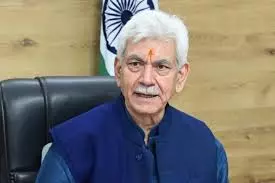
The EC is reportedly keen to ensure that electoral rolls are error-free, credible, and fully updated before any electoral process resumes. Lieutenant Governor Manoj Sinha recently reiterated that panchayat and urban local body elections will be held soon in J&K. The last panchayat elections were conducted in 2018, and the terms of those bodies expired in 2023, resulting in a prolonged gap without elected grassroots institutions. J&K has around 4,292 panchayats—2,182 in Kashmir division and 2,110 in Jammu division—comprising thousands of sarpanch and panch seats.
By early 2025, preparations for local body elections were already in motion, including the procurement of nearly 40,000 voting compartments and the planned setup of around 38,800 polling stations—18,700 in Jammu and 20,100 in Kashmir. A key pending requirement, however, was the report from the J&K Local Bodies Dedicated Backward Classes Commission, mandated to recommend OBC reservations in panchayats and municipal bodies under a 2024 parliamentary law. This report remained awaited even after the finalisation of electoral rolls, contributing to delays in announcing the election schedule.
The panchayat and local body electoral rolls in J&K, finalised on January 20 last year (with January 1, 2025 as the qualifying date), list a total of 7,000,670 electors—3,566,475 males, 3,434,048 females, and 147 third-gender voters. This revision added 341,072 new voters and deleted 110,768 entries due to deaths, migration, or other reasons. These rolls, are meant specifically for rural local body elections.
In recent years, the addition of large numbers of new voters to J&K’s electoral rolls has drawn considerable attention. In 2022 alone, more than seven lakh fresh names were added, prompting widespread scrutiny and political debate. Opposition parties argued that the scale of new registrations created the possibility of non-locals being enrolled as voters, characterising the development as a potential avenue for “electoral manipulation.”
Amid the growing controversy, the ECI clarified that only bona fide residents who ordinarily live in J&K are eligible for inclusion in the rolls. However, parties such as the National Conference and the People’s Democratic Party continued to press for greater transparency in the enrolment process. They maintained that the integrity of voter registration was directly linked to the region’s demographic composition and political equilibrium, and therefore required heightened safeguards and public accountability.
In Ladakh, the electorate is significantly smaller. Current estimates place the number of registered voters between 1.7 and 2 lakh, consistent with the region’s population size. Electoral rolls in Ladakh are managed by the CEO Ladakh.
