Navigating Leadership in an Age of Relentless Disruption

The metaphorical goalposts are in constant motion, requiring leaders to demonstrate agility, foresight and the ability to orchestrate alignment across verticals in real time.
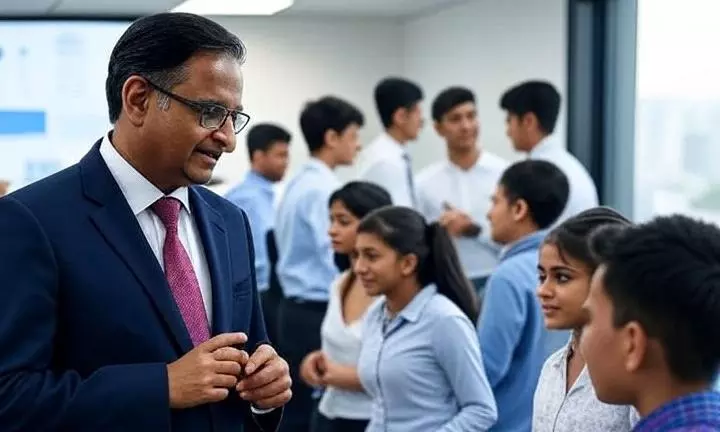
In today’s volatile business climate, the role of a C-suite leader has become both extraordinarily demanding and consequential. These leaders are tasked with not merely managing operations, but with steering the strategic direction of their organisations amidst an ever-evolving tapestry of geopolitical flux, economic volatility and societal shifts. The metaphorical goalposts are in constant motion, requiring leaders to demonstrate agility, foresight and the ability to orchestrate alignment across verticals in real time.
Fortunately, while the challenges are formidable, we are also witnessing the emergence of tools that are equal to the task. Technology has become a critical enabler—offering the promise of strategic clarity in an uncertain future. Sophisticated digital platforms now equip leaders with the capacity to anticipate, assess and act upon disruptions through the lens of empirical data and predictive modelling.
Strategic foresight, as a discipline, has assumed renewed importance in this context. It involves horizon scanning for nascent technologies and socio-economic trends that may necessitate policy recalibration. Whether situational or ongoing, these practices are enhanced by scenario planning and sensitivity analyses that account for a multitude of possible futures. The COVID-19 pandemic, for instance, catalysed a lasting shift in the workplace model. The rise of hybrid work and co-working hubs—concepts that once seemed peripheral—have now become structural features of the corporate ecosystem, with businesses recalibrating real estate commitments based on dynamic staffing needs.
Equally transformative is the growing reliance on real-time analytics. Today’s digital infrastructure enables near-instantaneous decision-making by ingesting and responding to streaming data. This ability to observe and react as conditions unfold allows businesses to prevent crises before they escalate. AI enables businesses to increase productivity and reduce costs. Frameworks like the OODA loop—Observe, Orient, Decide, Act—have become indispensable in helping organisations iterate rapidly, incorporating feedback to remain adaptive. When combined with AI, real-time data can significantly enhance both operational efficiency and strategic agility, amplifying productivity while containing costs.
Yet, the virtue of speed is not without its perils. Accelerated decisions often entail an inherent element of risk. Herein lies the nuanced challenge for contemporary leadership—crafting a risk appetite that accommodates innovation while preserving institutional resilience. Risk-enabled growth is not simply about avoiding pitfalls; it is about embracing uncertainty as a catalyst for transformation. Effective risk management now demands a dynamic, metrics-driven approach—one that evolves in tandem with the organisation and the marketplace it serves.
This imperative for resilience extends to organisational architecture as well. Redundancy management—through the identification of mission-critical systems and pre-emptive response mechanisms—is no longer optional. Advances in AI and machine learning have made it possible to bolster supply chain resilience, optimise resource allocation and fortify decision-making frameworks. In doing so, they enhance the organisation’s ability to weather disruption while maintaining business continuity.
And yet, even technology—once the disruptor—is itself now being disrupted at an unprecedented pace. For leadership to keep pace, continuous learning has become an executive imperative. The modern leader can no longer afford a hiatus to pursue upskilling; instead, education must be seamlessly integrated into professional life. IIM Kozhikode has designed the Executive Post Graduate Programme (EPGP) in Management precisely for such discerning professionals. Recognised as the second-ranked Executive MBA in India by the QS Global Rankings 2025, the programme offers an industry-aligned curriculum delivered through immersive digital and in-person learning formats.
Its “classroom in your city” model ensures accessibility for working professionals, blending synchronous online learning with localised contact sessions. Learners hail from diverse backgrounds—engineering, operations, finance, consulting—and increasingly, from senior general management roles across Tier 1 and Tier 2 cities. Encouragingly, the institute has also observed a steady rise in women executives joining the programme, reflecting broader trends in gender diversity within Indian boardrooms. The alumni of this transformative journey emerge not just as better managers, but as visionary leaders equipped to engage in strategic discourse at the highest levels. These leaders possess the clarity to navigate complexity, the confidence to lead through change, and the conviction to shape the future of business in a world that defies predictability.
Leadership in the age of disruption is not defined by the absence of turbulence, but by the ability to harness it. The true measure of a leader today lies in their capacity to convert disruption into direction—and in doing so, to lead with purpose, precision and resilience.
By Prof Debashis Chatterjee, Director, Indian Institute of Management Kozhikode
