J&K Govt Rejects Outsourcing Allegations as PDP Gears Up for UT-Wide Agitation

The clarification comes just ahead of a UT-wide agitation announced by the PDP for Tuesday, intensifying the political discourse around transparency and recruitment in J&K
SRINAGAR: Amid escalating political tensions over employment practices in Jammu and Kashmir, the government on Sunday firmly dismissed allegations by the opposition People’s Democratic Party (PDP) that permanent government jobs are being filled through outsourcing.
The clarification comes just ahead of a UT-wide agitation announced by the PDP for Tuesday, intensifying the political discourse around transparency and recruitment in J&K.
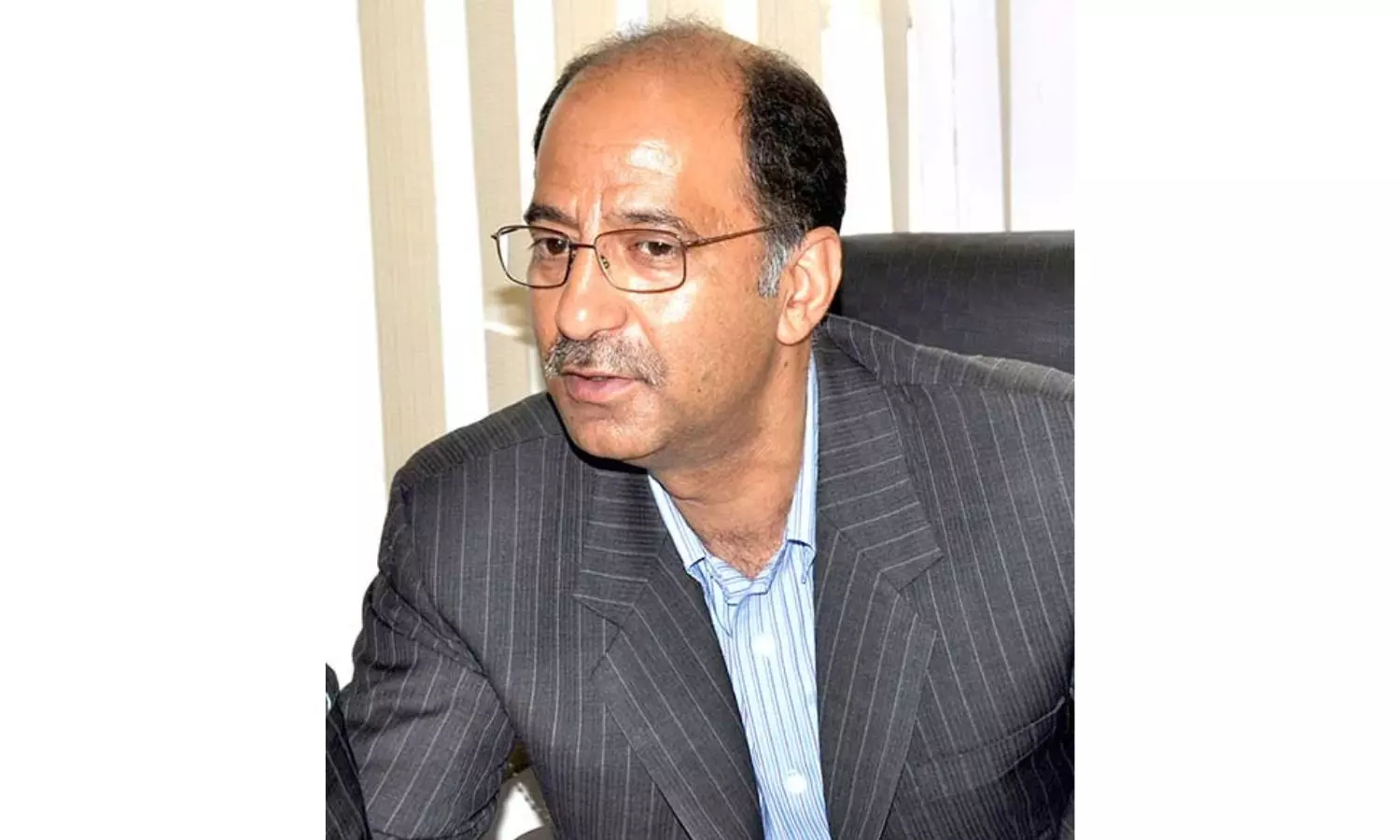
Addressing a press conference here, Advisor to the Chief Minister Nasir Aslam Wani categorically termed the opposition’s claims as “baseless and misleading.” He asserted that all regular government appointments are made strictly through a merit-based and transparent process overseen by the J&K Public Service Commission (JKPSC) and the J&K Services Selection Board (JKSSB). Wani emphasised that outsourcing is limited in scope and is used only “over and above the sanctioned strength” to meet urgent and temporary manpower requirements in essential sectors such as health, agriculture, and sanitation.
He further clarified that outsourcing arrangements are not a substitute for permanent employment and cannot be construed as backdoor recruitment.
According to Wani, such engagements follow established norms, including transparent tendering processes, procurement through the Government e-Marketplace (GeM) portal, and adherence to financial rules. He also pointed out that the outsourcing policy itself was introduced during the PDP-BJP coalition government between 2015 and 2018. “We have inherited outsourcing just like we inherited the loss of Article 370 and statehood,” he remarked, attributing the policy framework to decisions taken during that period. Prior to 2015, he noted, departments were allowed to hire manpower only on a seasonal basis for specific tasks such as plantation drives.
Mounting a counterattack, Wani challenged the opposition to produce credible evidence of even a single instance of backdoor appointment under the present administration. He, in turn, accused the previous PDP-led government of making such appointments in institutions like the J&K Bank and the Khadi & Village Industries Board (KVIB), alleging that evidence of irregularities exists in those cases.
Echoing these assertions, Minister for Health and Medical Education Sakina Masood Itoo reiterated that all permanent posts in government service are filled through JKPSC and JKSSB. She underlined that outsourced workers are not government employees and do not enjoy benefits such as pensions or service security. “Hospitals often engage support staff like security personnel and sanitation workers independently. These decisions are taken at the institutional level and do not require ministerial approval,” she explained.
The minister also linked the prevalence of outsourcing to centrally sponsored schemes initiated between 2015 and 2018, such as Samagra Shiksha and Mission Vatsalya (ICPS), under which manpower is engaged through external agencies. Displaying a list of alleged irregular appointments in J&K Bank during PDP rule, she claimed that the matter remains under investigation by the Anti-Corruption Bureau (ACB).
Questioning the opposition’s credibility, she asked, “Where was merit and transparency when such recruitments were made?”
In a sharper political exchange, Itoo also responded to comments made by former Chief Minister and PDP president Mehbooba Mufti, expressing strong disapproval of what she described as a lack of understanding of the recruitment process. She reiterated that outsourcing cannot be equated with permanent employment and stressed the need for informed public discourse.
Minister for Rural Development and Panchayati Raj Javid Dar added another dimension to the government’s defence, stating that outsourcing is a standard administrative practice across India, particularly under Government of India schemes. He explained that while infrastructure under centrally sponsored programmes is government-funded, manpower is often engaged through agencies to address operational gaps. These engagements, he said, are carried out through competitive procurement processes in line with General Financial Rules (GFR), particularly in sectors like animal husbandry, livestock health, and rural development. He maintained that the current system is part of a larger administrative framework inherited by the present government.
Meanwhile, the PDP has intensified its attack on the ruling National Conference (NC) government. Earlier on Sunday, party leader Iltija Mufti questioned the transparency of outsourcing contracts in a post on social media platform 'X', asking why “hundreds of crores” are being spent on outsourcing jobs to private companies. She sought details about the selection process, recruitment criteria, and whether the government would make such contracts public.
Her mother and PDP president Mehbooba Mufti has announced district-level protests across J&K on June 30, alleging that the government has facilitated around 25,000 “backdoor appointments” while ignoring unemployed youth. She further claimed that regular vacancies were distributed among ministers, legislators, and alliance partners outside formal recruitment systems, with allegations that bribes of up to ₹3 lakh were taken in some cases.
As the political confrontation sharpens, the issue of outsourcing versus permanent employment has become a flashpoint, with the government defending its record on transparency and merit, while the opposition continues to raise concerns over fairness, accountability, and opportunities for J&K’s youth.
