J&K Court Allows Renewal of Farooq Abdullah’s Passport

Imposes Strict Conditions on Foreign Travel
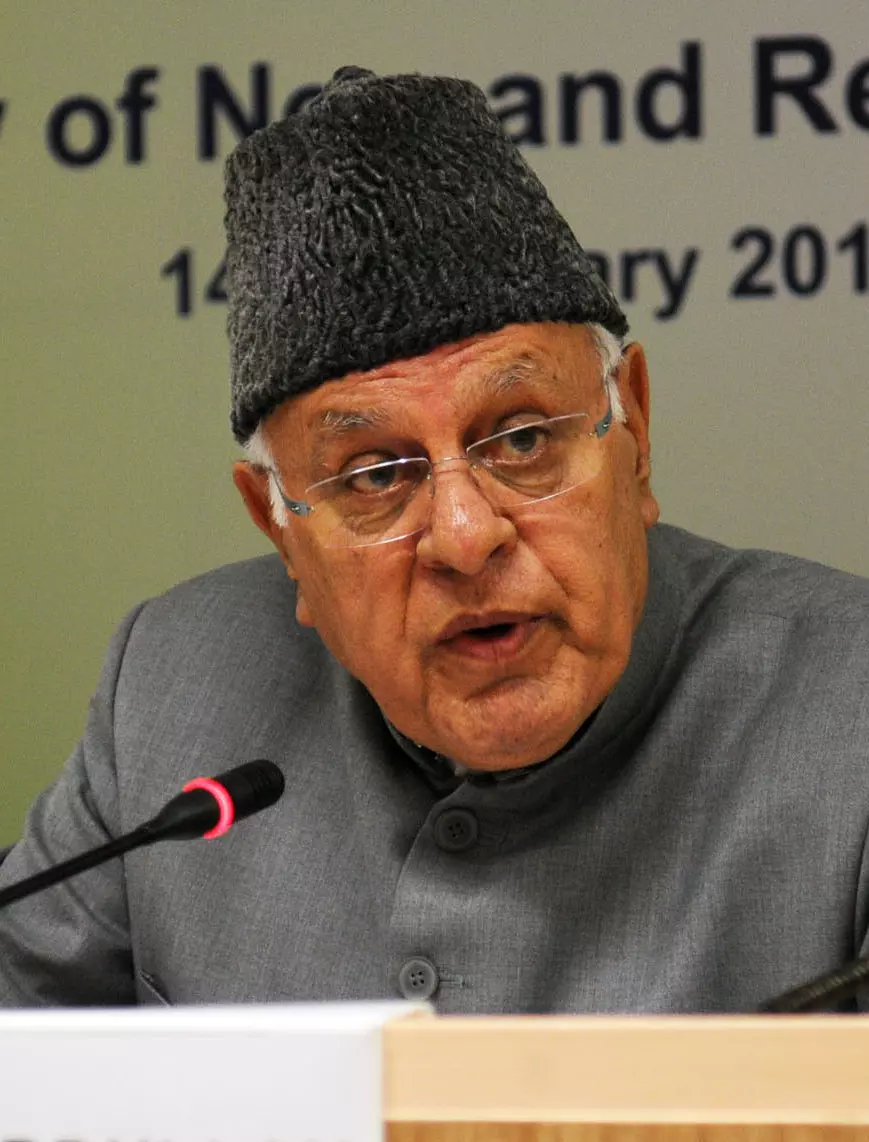
SRINAGAR: In a significant judicial development, the Court of the Additional Sessions Judge, Srinagar, has authorised the issuance of a No Objection Certificate (NOC) for the renewal of National Conference (NC) president and former Jammu and Kashmir Chief Minister Farooq Abdullah’s passport. While granting this relief, the court, however, underscored that any foreign travel by Abdullah will require prior permission from the competent court, ensuring that ongoing criminal proceedings remain safeguarded.
The order, passed by Additional Sessions Judge Farooq Ahmad Bhat, came in response to a petition filed by Abdullah seeking permission for passport renewal amid the pending investigation into the J&K Cricket Association (JKCA) funds misappropriation case being probed by the Central Bureau of Investigation (CBI). Abdullah, a three-time chief minister, informed the court that his passport application had been stalled by the Regional Passport Office, Srinagar, following an adverse police verification report linked to the criminal case. He argued that the proceedings against him were already under stay in a revision petition and that renewing his passport would not prejudice the pending matter.
The CBI opposed the plea, asserting that serious criminal charges remained pending against Abdullah in the alleged embezzlement of JKCA funds. The agency contended that renewing his passport could facilitate his departure from India, potentially impeding the course of justice.
After hearing both sides, the court observed that neither the Passports Act nor relevant Central Government notifications impose an absolute bar on issuing or renewing passports solely because criminal proceedings are pending. It relied on a recent Supreme Court judgment affirming that the right to hold a passport forms part of the constitutional guarantee under Article 21 and is distinct from the right to travel abroad. The court clarified that possessing a passport merely equips a citizen with a travel document; it does not, by itself, authorise foreign travel. Existing bail conditions and judicial safeguards, the court emphasised, remain fully operative, and any travel outside J&K—or outside India—will require prior judicial permission.
Consequently, the Regional Passport Officer, Srinagar, was directed to consider issuing or renewing Abdullah’s passport for a period of one year, subject to the condition that he is not involved in any other criminal case that would legally bar such issuance. The court further stipulated that the NOC would automatically stand revoked if any subsequent judicial proceedings adversely affect the petitioner. A copy of the order was directed to be forwarded to the Passport Officer for compliance, and the petition was disposed of accordingly.
The passport dispute unfolds against the backdrop of long‑running investigations into alleged financial irregularities in the JKCA. In a major relief for Abdullah, the Jammu, Kashmir and Ladakh High Court, in August 2024, quashed the Enforcement Directorate’s chargesheets against him and others in the money‑laundering case linked to the alleged ₹113‑crore JKCA scam. Justice Sanjeev Kumar held that no predicate offence existed, rendering the ED’s chargesheets unsustainable.
The ED had earlier alleged that between 2005 and 2011, JKCA received ₹109.78 crore from the BCCI, and that Abdullah, as JKCA president, misused his position by appointing office bearers who were allegedly given financial powers to siphon funds. The agency claimed that over ₹45 crore was diverted, including cash withdrawals of around ₹25 crore without justification, and had attached assets worth ₹21.55 crore belonging to Abdullah and others.
Parallel to the ED’s proceedings, the CBI filed a charge‑sheet in 2018 accusing Abdullah and three others of transferring large sums from JKCA accounts into those of office bearers and unrelated individuals. The accused were charged under sections of the now‑defunct Ranbir Penal Code relating to fraud, criminal conspiracy, and breach of trust. The case had initially been investigated by a Special Investigation Team of the J&K Police, but due to concerns over the pace and credibility of the probe, the High Court transferred the matter to the CBI in 2015.
Abdullah, removed as JKCA president in 2015, has consistently denied involvement, asserting that his name was dragged into the litigation to tarnish his political image. He has appeared before the ED multiple times and has publicly stated that the agency’s actions amount to political harassment.
