Friday Sermon Row Sparks Political Storm in J&K

Omar, Mirwaiz Accuse Waqf Board of 'State Intrusion' into Religious Affairs
SRINAGAR: A fresh political and religious controversy has erupted in Jammu and Kashmir after reports emerged that the J&K Waqf Board was considering a mechanism to introduce uniform Friday sermons across mosques, shrines and other Muslim places of worship in the Union Territory.
The proposal sparked sharp reactions from political leaders and religious organisations, with Chief Minister Omar Abdullah and Kashmir's chief cleric Mirwaiz Muhammad Umar Farooq accusing the Waqf Board of attempting to interfere in religious affairs and advancing what they described as a broader ideological agenda through the religious pulpit.
The controversy centres on reports that the Waqf Board had proposed a system under which Friday sermons, or Khutbas, delivered by Imams and preachers at thousands of mosques, shrines and religious institutions under its jurisdiction would focus on pre-selected themes approved by a committee of Islamic scholars and preachers. According to the reported proposal, the exercise was aimed at ensuring coordinated religious messaging on pressing social issues such as drug abuse, youth alienation, rising suicide cases, family disputes, delayed marriages, moral decline and other societal challenges.
If implemented, J&K would become the first region in the country to attempt such a coordinated sermon mechanism on such a scale.
However, even before any formal notification was issued, the proposal generated a strong backlash from religious and political quarters, with critics viewing it as an unprecedented intrusion into matters of faith. They argued that the authority to determine the content of sermons rests exclusively with religious scholars, Imams and recognised Islamic institutions rather than a statutory body functioning under government oversight.
Chief Minister Omar Abdullah led the criticism, describing the reported move as an unacceptable attempt by the BJP to interfere in the religious affairs of Muslims. In a strongly worded post on 'X', he said that the BJP-appointed Waqf Board chairperson should immediately stop the initiative, asserting that any effort to regulate or prescribe religious discourse from mosques would not be accepted under any circumstances.
Abdullah alleged that the proposal reflected an attempt to satisfy political masters rather than address genuine religious concerns and warned against state-linked institutions encroaching upon spaces traditionally reserved for independent religious guidance.
The sharpest response came from the Mutahida Majlis-e-Ulema (MMU), the influential umbrella body representing major religious and socio-religious organisations in J&K and headed by Mirwaiz Umar. The MMU said it had taken serious note of reports regarding the proposed uniform Friday sermons and categorically rejected any suggestion that a statutory body could decide or regulate what is preached from the Mimbar, the pulpit from which Friday sermons are delivered.
In a strongly worded statement, the MMU described the very idea as "ridiculous" and declared that such interference would never be accepted by the Muslims of J&K. The amalgam emphasised that the Mimbar is an Amanah, a sacred trust, and that religious guidance falls exclusively within the domain of Ulema, Imams and recognised religious institutions rooted in Islamic scholarship and the traditions of various schools of thought. It stressed that neither the state nor any government-linked institution could arrogate to itself the authority to determine religious discourse or script sermons for delivery in mosques.
The MMU further argued that there was a fundamental difference between religious scholars voluntarily coming together to address common social concerns and an administrative body attempting to prescribe themes, directions or language for Friday sermons. Such an exercise, it said, would amount to forced state intrusion into the religious sphere and run contrary to constitutional guarantees of religious freedom. The MMU advised the Waqf Board to confine itself to its primary responsibilities of managing, maintaining and protecting Waqf properties rather than creating what it termed unnecessary controversy through a "devious agenda".
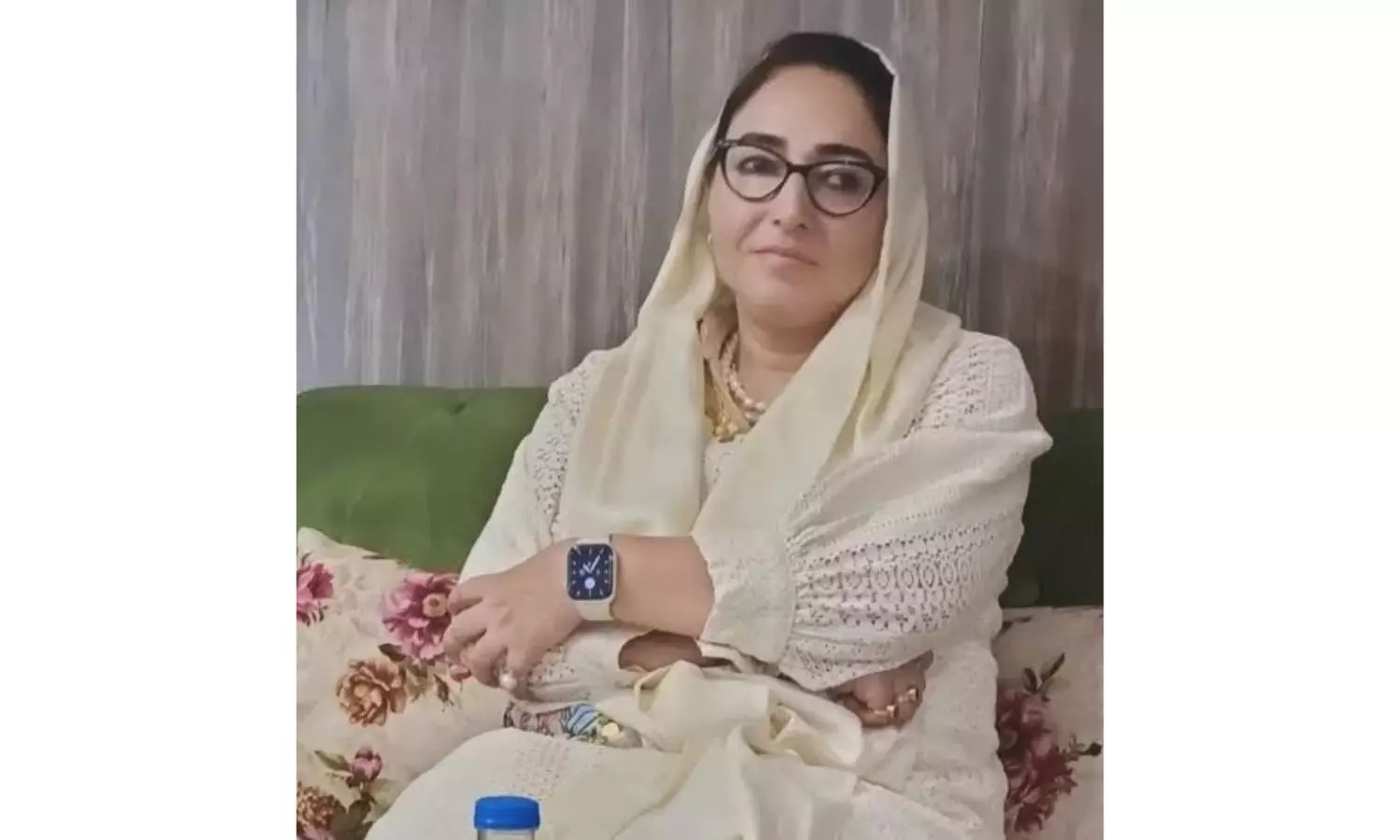
As criticism mounted, J&K Waqf Board Chairperson Dr Darakhshan Andrabi moved to clarify the Board's position and denied that any directive had been issued mandating uniform sermons. Rejecting allegations of political interference, she said the controversy was based on a misunderstanding of discussions held during a recent press briefing and insisted that no government agency had any role in deciding what would be preached from mosque pulpits.
According to Andrabi, the idea under discussion was not to impose centrally drafted sermons but to encourage religious scholars and Imams associated with institutions managed by the Waqf Board to collectively focus on social problems affecting Kashmiri society. She said thousands of scholars and religious teachers are associated with the Board and that decisions on religious matters are taken through consultation rather than by the chairperson alone. The objective, she explained, was to harness the influence of mosques and shrines in addressing social challenges such as drug addiction, youth distress, rising suicide rates and the erosion of moral values.
Andrabi argued that when different mosques speak simultaneously about a common social issue, the message resonates more effectively across society. She maintained that the proposal was conceived by scholars themselves, not by politicians or government officials, and that Imams and Khateebs would remain free to determine the content and manner of their sermons. Describing social reform as an integral part of religious teaching, she said Islamic institutions could not remain silent on the problems confronting society.
Responding to accusations that the move reflected a BJP or RSS agenda, Andrabi dismissed the charge as baseless and politically motivated. She asserted that discussions about combating drug abuse, guiding youth, strengthening families and addressing social evils should not be viewed through a political lens. Taking aim at political leaders, she alleged that controversy was being manufactured around a proposal that sought only to promote social awareness through religious institutions. She further claimed that politicians were attempting to politicise the issue to divert attention from their own failures and accused some of having historically used the Waqf Board for political purposes.
The Waqf Board chairperson also pointed out that prominent religious leaders, including Mirwaiz Umar Farooq, had often spoken from mosque pulpits about social problems such as drug abuse and moral decline. She argued that the Board's discussions were in line with that broader objective and should not be misconstrued as an attempt to dictate religious doctrine or control religious institutions.
Despite the clarification, the issue has triggered a wider debate in J&K over the limits of state-linked bodies in religious affairs, the autonomy of mosque institutions, and the relationship between governance, social reform and religious authority. With both political leaders and influential clerical organisations firmly opposed to any perceived regulation of sermons, the controversy has quickly evolved from an administrative proposal into a broader confrontation over religious autonomy and political influence in the Union Territory.
