Congress Pushes for Two Cabinet Berths, Signals Discontent with NC’s One‑Seat Offer

Congress High Command Still Split on Joining Omar Abdullah Government, Despite Debate Over One or Two Berths
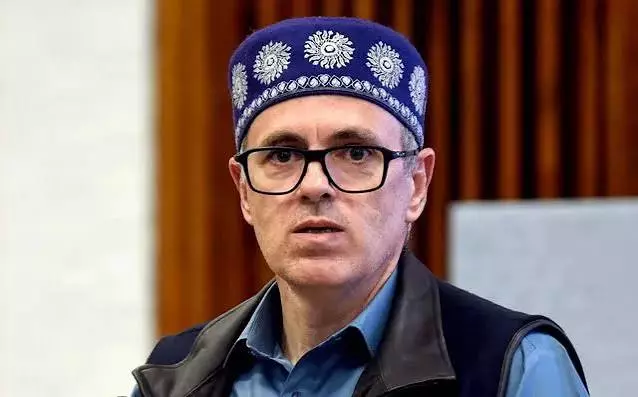
SRINAGAR: The Congress and the National Conference (NC) are navigating one of the most delicate phases of their post‑election partnership in Jammu and Kashmir, with negotiations over cabinet entry, representation, and coalition management reaching a decisive moment.
What began as a tactical alliance ahead of the 2024 Assembly elections has now evolved into a complex political balancing act—marked by internal divisions, competing priorities, and the urgent need to stabilise governance in a sensitive Union Territory.
The latest flashpoint is Congress’s renewed push for greater representation in the Omar Abdullah‑led government. According to senior leaders, the party has demanded two ministerial berths instead of the single seat earlier offered, along with the chairpersonship of a key government‑run corporation or board. This comes even as the party high command remains undecided on formally joining the cabinet.
The Chief Minister who was in New Delhi for personal engagements and to attend the INDIA bloc meeting held on Wednesday, is understood to have discussed the matter informally with top Congress leaders, though neither side has publicly confirmed these conversations. The INDIA bloc meeting itself was politically charged, with parties demanding the resignation of Chief Election Commissioner Gyanesh Kumar over alleged irregularities in the Special Intensive Revision (SIR) of electoral rolls—an issue that has sharpened opposition coordination nationally.
Amid this backdrop, the NC and Congress have agreed to establish a joint coordination committee—an eight‑member body with four representatives from each party. NC has already finalised its nominees, while Congress is expected to announce its members shortly. The committee is conceived as more than a routine liaison mechanism. Leaders from both parties describe it as a structured bridge designed to resolve disputes, harmonise policy positions, and ensure that governance does not suffer due to internal disagreements. It will address administrative bottlenecks, development priorities, recruitment concerns, and public grievances requiring coordinated action. Crucially, it is also intended to stabilise the alliance until the Congress high command decides whether to enter the cabinet.
This decision has become a source of visible friction within the J&K Pradesh Congress Committee (JKPCC). The NC’s renewed offer of one ministerial berth has split Congress leaders into two camps. One faction argues that joining the government—even with limited representation—is essential for maintaining political relevance across both regions of the Union Territory-Jammu and the Kashmir Valley. They warn that staying out of power risks shrinking the party’s influence, especially with the BJP maintaining a strong organisational presence. These leaders acknowledge the challenge of selecting a minister from the party’s small pool of six MLAs but insist that alliance stability must take precedence.
On the other side is JKPCC chief Tariq Hameed Karra, who has taken a firm public stand- Congress will not join the government until full statehood is restored to J&K. Karra has repeatedly asserted that statehood has been the party’s unwavering demand since 2019, and entering the cabinet without achieving this goal would undermine its credibility. His public articulation of this position—before the high command could deliberate—prompted senior leader Ghulam Ahmed Mir to rush to New Delhi, arguing that rejecting the NC’s offer could weaken the alliance and reduce Congress’s political space.
The AICC leadership has adopted a cautious posture. Syed Naseer Hussain, AICC General Secretary in charge of J&K, recently reaffirmed that the party’s stated position is to wait for statehood before joining the cabinet. Yet he also emphasised that any change in this stance rests solely with the high command, signalling that the matter remains open for reconsideration. This delicate balancing act reflects competing pressures in New Delhi: maintaining political principle, managing alliances, and addressing organisational vulnerabilities.
The debate is rooted in the alliance’s history. Formed ahead of the 2024 Assembly elections, the NC–Congress partnership was driven by mutual necessity. NC sought to consolidate its dominance in the Kashmir Valley and expand into Jammu, while Congress needed a strong regional ally to counter the BJP. Their seat‑sharing arrangement delivered a comfortable majority, with NC winning 42 seats and Congress 6. Yet Congress declined to join the government when Omar Abdullah took oath, citing the legal cap of nine ministers and reframing its refusal as a principled stand for statehood. Remaining outside the government also suited Congress’s internal strategy. With limited legislative strength, the party feared being overshadowed and preferred to rebuild its organisation while criticising the government from the outside.
Over the past year, Congress has adopted a watchdog role—raising concerns over recruitment delays, administrative centralisation, and steep electricity tariff hikes. These interventions strengthened the argument that joining the government without structural guarantees, such as adequate representation and a formal coordination committee, would be politically risky. Now, with Omar Abdullah preparing a cabinet reshuffle and the NC renewing its offer, Congress faces a decisive moment. One faction warns that rejecting the berth could weaken the alliance and reduce the party’s influence. The other insists that entering the government without statehood would erode Congress’s credibility.
The coordination committee thus becomes more than a procedural body—it is a stabilising instrument designed to manage tensions, facilitate dialogue, and ensure that governance remains unaffected by political disagreements. For Congress, it offers a structured space to negotiate its concerns while the high command deliberates on joining the government. For the NC, it provides a mechanism to keep the alliance functional and prevent internal disputes from derailing governance.
The coming days will reveal which faction within the JKPCC succeeds in persuading the high command. Political observers say the decision will shape not only Congress’s role in the Omar Abdullah government but also the future trajectory of the NC–Congress partnership in J&K. As the high command weighs its options, the coordination committee stands ready to steady the coalition—ensuring that political turbulence does not compromise governance or the interests of the people.
