BJP Trains Guns on Omar Abdullah, Revives 1987 ‘Rigging’ Debate in J&K Politics

Leader of Opposition in the J&K Assembly Sunil Kumar Sharma delivered the sharp remarks while speaking to reporters, asserting that “the biggest allegation of vote theft in India lies on Omar Abdullah’s family.” Sharma said the accusations of electoral manipulation during the 1987 polls—held when Omar’s father, Farooq Abdullah, was at the helm of the NC and the chief minister—remain one of the most contentious chapters in J&K’s political history
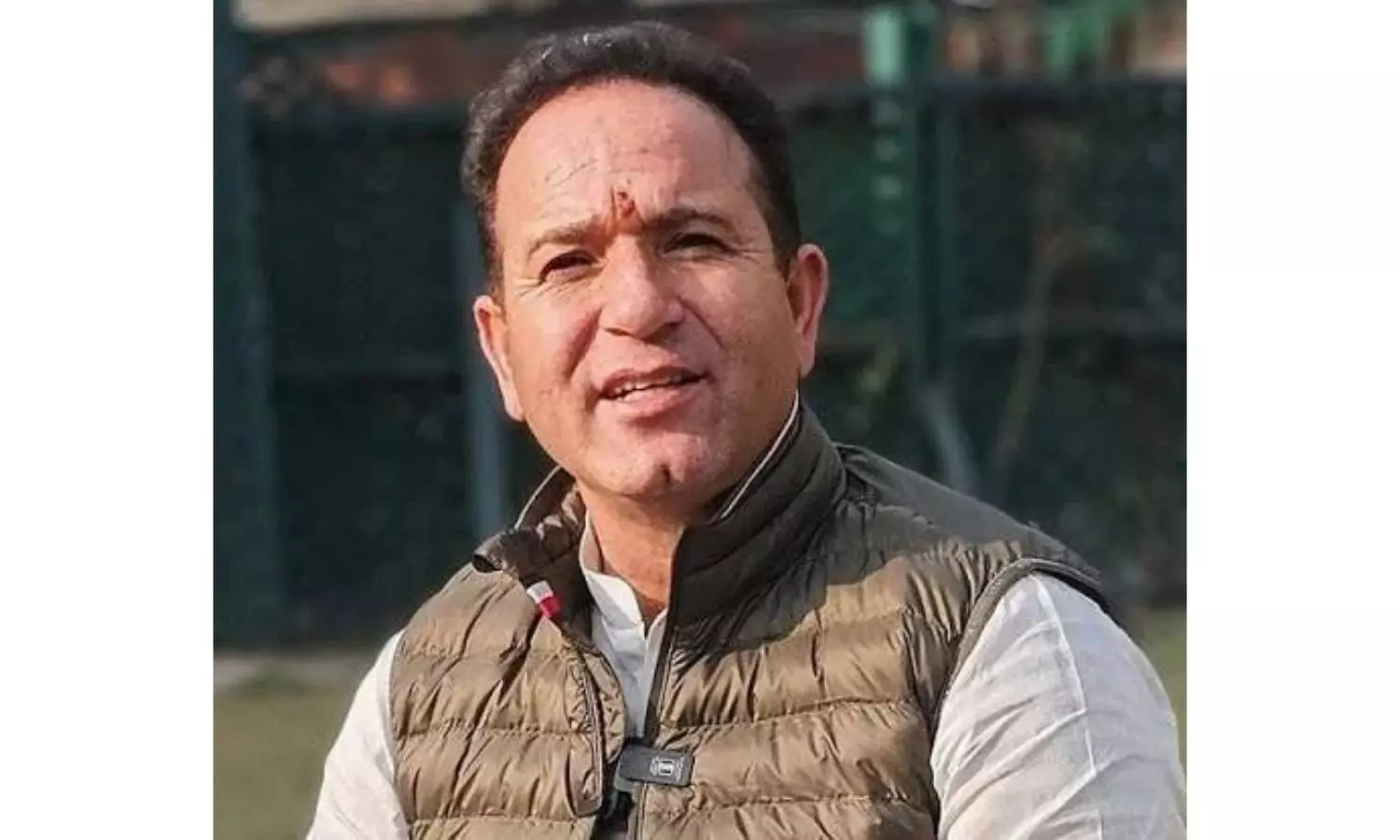
SRINAGAR: The Bharatiya Janata Party (BJP) on Monday escalated its attack on Jammu and Kashmir’s political opposition, urging Chief Minister Omar Abdullah to “look within” before accusing others of electoral malpractice. The party revived the long‑standing controversy surrounding the 1987 Assembly elections in the erstwhile state, alleging that the National Conference (NC)–Congress alliance of the time “stole votes” and laid the groundwork for decades of militancy.
Leader of Opposition in the J&K Assembly Sunil Kumar Sharma delivered the sharp remarks while speaking to reporters, asserting that “the biggest allegation of vote theft in India lies on Omar Abdullah’s family.” Sharma said the accusations of electoral manipulation during the 1987 polls—held when Omar’s father, Farooq Abdullah, was at the helm of the NC and the chief minister—remain one of the most contentious chapters in J&K’s political history.
“If the allegation of vote chori is to be put on someone, it is on the 1987 rigging,” Sharma said, claiming that Farooq Abdullah “was made Chief Minister after stealing votes.” He described that election as a global example of electoral malpractice, adding, “1987 is an example in the whole world. The biggest allegation of theft in the country is the theft of ’87. The Abdullah family should first answer that.”
The 1987 Assembly elections have long been cited by political analysts and sections of civil society as a turning point in J&K’s troubled history. Allegations of widespread rigging, disenfranchisement of opposition candidates, and manipulation of results have been linked by some critiques to the rise of armed militancy, as disillusioned youth turned away from democratic processes. Sharma’s remarks sought to revive that narrative at a moment when the NC and Congress have intensified their criticism of the BJP.
However, the NC and its leadership have repeatedly and emphatically denied that any rigging took place in the 1987 Assembly elections. Their position is supported by some political analysts and election observers who argue that the Muslim United Front (MUF)—an alliance of right‑wing political organisations and religious groups that had emerged as the principal challenger to the NC‑Congress coalition—might indeed have secured a few more seats than it ultimately did, but was unlikely to have won enough to form a government.
Yet it remains an acknowledged and uncomfortable fact that many Kashmiri youth who participated in those elections, or served as polling agents for MUF candidates, later faced harassment and persecution. A number of them soon appeared at the forefront of the armed insurgency that erupted in the Valley in 1989. Among the most prominent were Muhammad Yusuf Shah alias Syed Salahuddin and Muhammad Yasin Malik, both of whom went on to lead major militant organisations—Hizb‑ul‑Mujahideen and the Jammu Kashmir Liberation Front, respectively. These groups became central actors in the conflict that followed.
Sharma further claimed that truly fair elections in J&K were held only under former Prime Minister Atal Bihari Vajpayee and current Prime Minister Narendra Modi, accusing the Congress of having a “history of stealing votes” in the erstwhile state. In a pointed reference to past administrative practices, he alleged that a district deputy commissioner named Khaliq Bhat “used to appoint MLAs,” saying, “Those MLAs were called ‘Khaliq‑made MLAs’.”
The NC, now part of the INDIA bloc, has been vocal in accusing the BJP of attempting vote chori or stealing of votes through electoral manipulation, ranging from booth capturing and tampering with voter lists to influencing administrative machinery. NC leaders, including the father‑son duo Farooq and Omar Abdullah, have repeatedly charged the BJP with undermining democratic institutions, especially in the wake of the 2019 constitutional changes that stripped J&K of its special status and split it up into two Union territories.
