Indian Entities Suspected in Russian Oil Smuggling Ring, reports FT

27 Feb 2026 1:46 PM IST27 Feb 2026 1:46 PM IST
Since the sanctions were imposed, an otherwise unknown company in the network, “Redwood Global Supply”, has become the single largest exporter of Russian crude
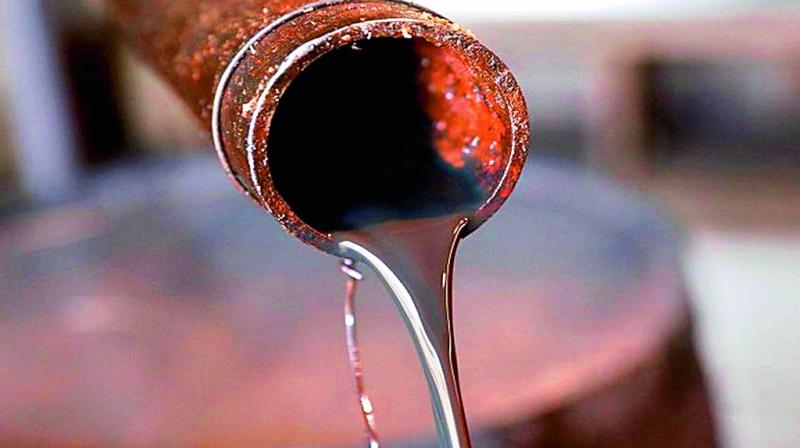
A smuggling ring that has moved at least $90 billion of Russian oil has been identified by Financial Times and it seems to have entities that appear in Indian customs records. (File Photo)
Chennai: A smuggling ring that has moved at least $90 billion of Russian oil has been identified by Financial Times and it seems to have entities that appear in Indian customs records.
The FT has identified 48 seemingly independent companies working from different physical addresses that appear to be operating together to disguise the origin of Russian oil, particularly from the sanctioned Rosneft.
Since the sanctions were imposed, an otherwise unknown company in the network, “Redwood Global Supply”, has become the single largest exporter of Russian crude. The companies are linked to a group of Azeri businessmen with strong ties to Rosneft.
Routing oil through third parties can mask blacklisted entities involved in trades and prices paid. The FT was able to identify 442 web domains whose public registrations show they all use a single private server for their email, “mx.phoenixtrading.ltd”, showing that they share back-office functions.
The FT was then able to identify companies by comparing the names in the domain to those of entities that appear in Russian and Indian customs records as involved in carrying Russian oil. Foxton FZCO, a Dubai-based entity listed as the buyer of $5.6 billion of oil in Russian export filings, matches “foxton-fzco.com”. Similarly, Advan Alliance, an entity listed in Indian filings as having sold $1.5 billion of Russian oil into the country, can be linked to “advanalliance.ltd”.
Analysis of shipping patterns shows that companies on the domain list frequently rely on Rosneft-connected ships, such as those formerly run by Gatik Ship Management, an Indian-registered company that briefly emerged in 2023 as the owner of 58 ghost fleet tankers.
The precise legal relationship between entities in the network is unclear. But the companies seem to play distinct roles. The network uses one set of companies to buy cargoes and another set to sell them into markets such as India and China. Only two of the companies have appeared in paperwork from both India and Russia.
In a report in December, Kpler had said that the purchases by "unknown" Indian buyers have gone up to more than one-third of the total purchases made by the country. "Unknown buyers" had surfaced in November, but their share was small. Their share went up by several fold in December.
( Source : Deccan Chronicle )

Next Story