Vande Mataram Row: Omar Abdullah Defends Full Rendition, Cites Legal Mandate and Constitutional Protocol

The Chief Minister added that objections raised by the Congress over the full rendition were misplaced, noting that the legal framework governing national songs was already in force. “They could have stopped this through Parliament. But the law is already in place,” he remarked, suggesting that any political discomfort should have been addressed at the legislative level rather than at a ceremonial event
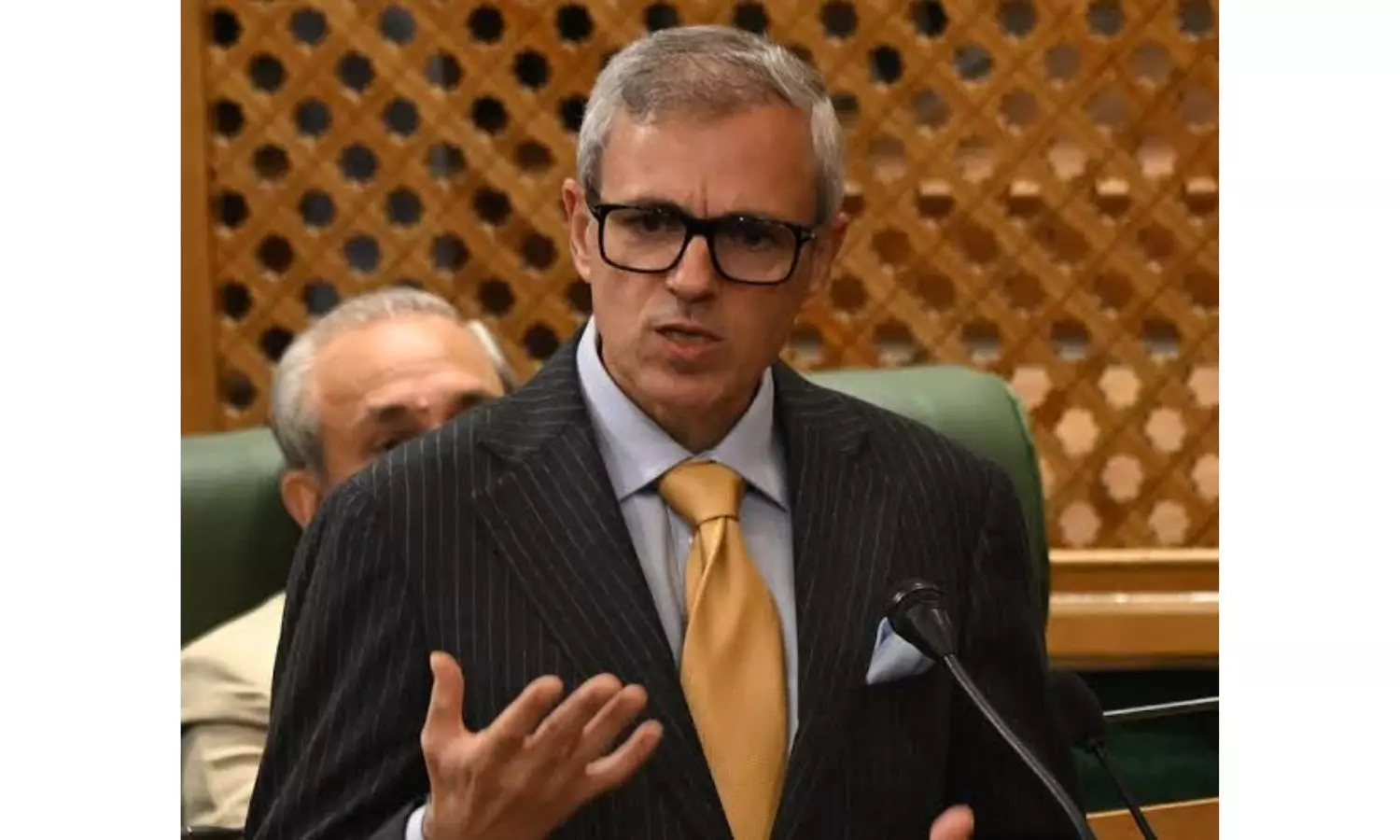
SRINAGAR: Chief Minister Omar Abdullah has firmly defended the singing of the full version of Vande Mataram during an official government event in Srinagar, stressing that the act was not a political choice but a statutory obligation.
The event, held at the lakeside Sher-i-Kashmir International Convention Centre (SKICC) on Monday, was attended by senior constitutional authorities including two governors, a lieutenant governor, the acting Chief Justice of the Jammu & Kashmir and Ladakh High Court besides the Chief Minister and his father and ruling National Conference (NC) president Farooq Abdullah. With such dignitaries present, the Chief Minister argued that both the national anthem and the legally prescribed standards concerning Vande Mataram naturally applied.
He acknowledged that the NC, as a political party, has historically not accepted Vande Mataram in its entirety. However, he underlined that the government is bound by law. “Vande Mataram is now a statutory obligation and that is what the government did. Though NC as a party has not accepted the full version, we have to fulfil our legal and statutory duties,” he said while speaking to reporters here.
The Chief Minister added that objections raised by the Congress over the full rendition were misplaced, noting that the legal framework governing national songs was already in force. “They could have stopped this through Parliament. But the law is already in place,” he remarked, suggesting that any political discomfort should have been addressed at the legislative level rather than at a ceremonial event.
Abdullah also clarified that the provisions related to the national anthem and Vande Mataram were not exclusive to J&K. “This is not only for Jammu and Kashmir; it applies across the country,” he said, adding that Congress-ruled states were equally bound by the same requirements. He further noted that failure to follow the prescribed protocol could invite legal consequences. “If it does not, legal action can be taken against those who do not stand,” he stated, underscoring the seriousness of compliance at official functions.
Congress General Secretary (Organisation) K. C. Venugopal criticised the singing of the full version of Vande Mataram at the Srinagar function, arguing that it conflicted with the syncretic and pluralist ethos upheld by India’s freedom movement. He said the Congress continues to rely on the collective judgment of leaders such as Mahatma Gandhi, Jawaharlal Nehru, Sardar Patel, Subhash Chandra Bose, Rajendra Prasad, Acharya Narendra Dev, Maulana Azad, Sarojini Naidu and J. B. Kripalani—wisdom shaped significantly by the counsel of Rabindranath Tagore. Venugopal urged allies to respect that legacy by adhering only to the version of the song adopted during the freedom struggle, a version chosen deliberately to prevent communal interpretations. Upholding that choice, he said, was essential to preserving the secular and inclusive character of the Republic.
JKPCC chief Tariq Hameed Karra also expressed concern, stating in a post on ‘X’ that national symbols derive their strength from their ability to unite a diverse nation. He said it was troubling that alliance partners chose to sing the full version of Vande Mataram, disregarding the careful evolution of the song’s place in India’s national life—from the freedom movement through the constitutional journey of the Republic. Karra argued that the adopted version represented a conscious balance, preserving the song’s historic and emotional significance while remaining sensitive to India’s plural ethos and the constitutional guarantee of freedom of conscience. National symbols, he said, gain dignity when they accommodate India’s diversity, not when diversity is asked to accommodate them. According to him, the issue was not about patriotism but about the constitutional temperament with which patriotism in a diverse Republic must be expressed, ensuring that every Indian feels equally at home with the nation’s symbols.
The controversy over Vande Mataram and the political reactions surrounding it have added another layer to ongoing discussions about governance, symbolism, and constitutional obligations in J&K. The Chief Minister’s defence signals a clear stance-statutory duties must be honoured, regardless of party positions or political discomfort.
