Srinagar’s Floating Post Office: A Living Landmark on Dal Lake

These houseboats, dating back to the early 1900s, are renowned for their intricate wood carvings, antique furnishings, and luxurious yet stationary charm. Managed by local Kashmiri families and accessed by shikaras (traditional water gondolas), they form an essential part of the region’s cultural and architectural identity
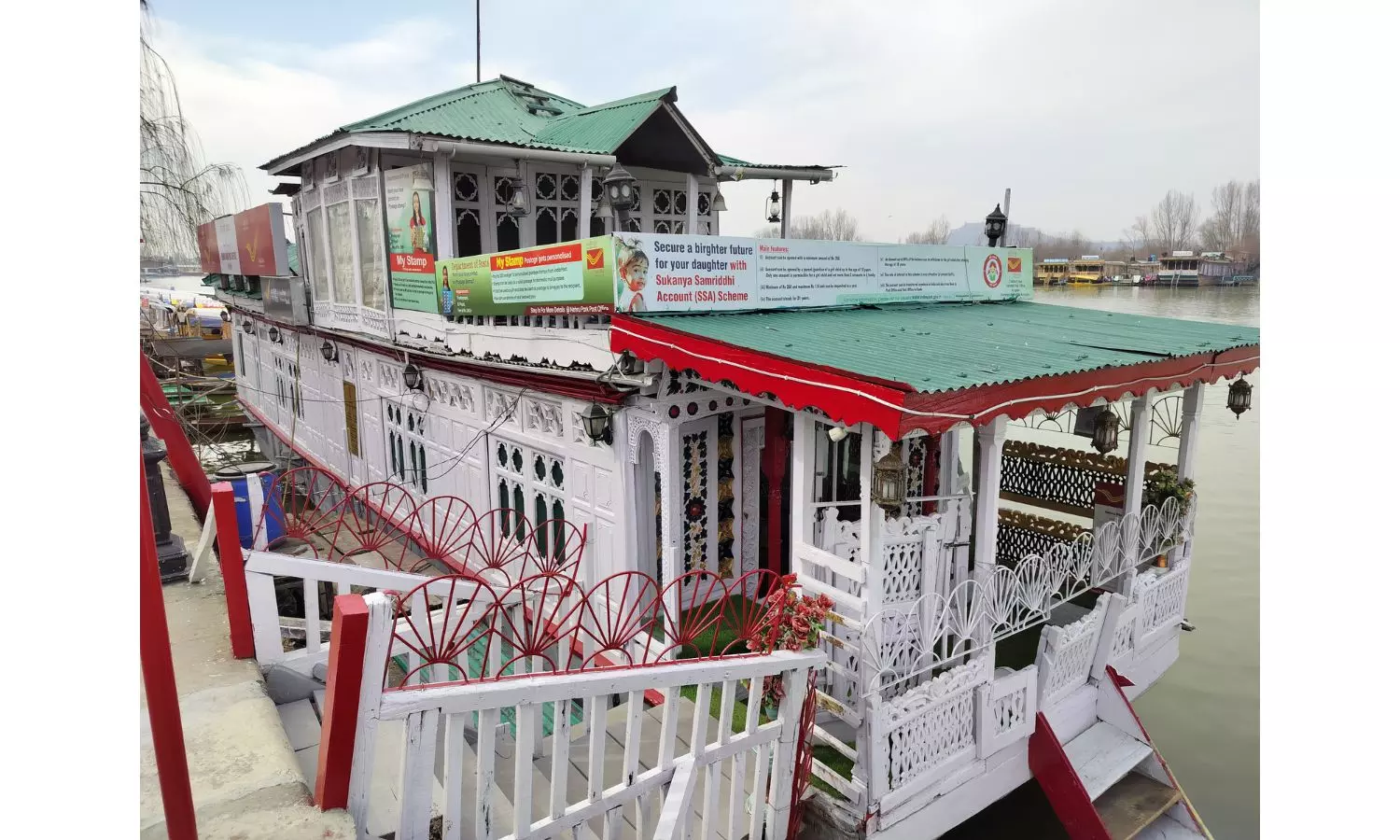
SRINAGAR: Srinagar’s floating post office on Dal Lake is one of those rare places where everyday life and quiet wonder meet. Much like the city’s traditional wooden houseboats—handcrafted from cedar and moored across Dal and Nigeen Lakes—this iconic vessel draws visitors from around the world, not only for routine postal needs but also for the sheer novelty of its existence.
These houseboats, dating back to the early 1900s, are renowned for their intricate wood carvings, antique furnishings, and luxurious yet stationary charm. Managed by local Kashmiri families and accessed by shikaras (traditional water gondolas), they form an essential part of the region’s cultural and architectural identity.
Amid this serene aquatic landscape lies the Floating Post Office, widely regarded as the only one of its kind in the world. Set upon a traditional Kashmiri houseboat near Nehru Park between Ghat 14 and Ghat 15, it gently sways with the rhythm of Dal Lake, blending heritage, utility, and natural beauty into a single, living landmark.
Painted in the white and green, unlike the familiar red and yellow of India Post, the modest two-room structure feels both historic and functional. Inside, carved wooden panels, traditional décor, and a portrait of Kashmiri poet Mehjoor coexist with computers, lockers, and the hum of daily postal operations. Though its roots stretch back to 1953, the post office was formally revived and inaugurated in 2011, reaffirming its place as a symbol of Kashmir’s resilience and cultural pride.
What truly distinguishes this floating post office is the experience it offers. Each morning, shikaras glide across the still waters carrying letters and parcels from visitors eager to send a piece of Kashmir to loved ones. “Posting a letter here becomes a small ritual—an act infused with nostalgia, made memorable by the gentle sway of the lake and the surrounding mountains,” said a houseboat owner Ghulam Nabi.
Even in an age dominated by digital communication, the charm of mailing a postcard from a houseboat remains irresistible. Beyond its functional role, the houseboat also hosts a small philately museum displaying rare stamps and archival material, adding another layer of cultural richness, a visit by this correspondent on Monday revealed. For the houseboat operators and their guests, reaching it by shikara transforms even routine errands into moments of quiet delight.
The story of postal services on Dal Lake stretches back over two centuries to the British colonial era, when mail was delivered by boat to houseboat residents and lake dwellers. Historical photographs from the 1960s show mobile floating post offices operating on the lake. The modern version, inaugurated on August 22, 2011, was established on a century-old houseboat with the PIN code 190001, reviving a fading tradition while ensuring postal access within this unique aquatic ecosystem. Inside, one room functions as the operational counter, while the other serves as a philatelic museum featuring rare stamps, historical artifacts, some pieces of the Valley’s exquisite handicrafts like warm, stylish, and comfortable Kashmiri Phirans and a special pictorial cancellation depicting a shikara—an exclusive postmark treasured by collectors and tourists alike.
The Floating Post Office continues to serve the communities living on Dal Lake’s houseboats, floating gardens, and islands, including shikara operators, vegetable vendors from the floating market, and families residing in remote aquatic areas. It handles letters, parcels, registered mail, and speed post, maintaining vital connectivity for those with limited access to mainland facilities. At the same time, it plays a significant role in tourism, attracting thousands of visitors each year who come to purchase postcards, stamps, and souvenirs. On an average day, it welcomes 20–35 visitors, contributing to the local economy and showcasing Kashmiri hospitality, an official said.
The history of Dal Lake’s houseboats themselves dates back to the late 19th century during the British Raj. Drawn to Kashmir’s cool climate and breathtaking scenery, British officials sought summer retreats but were prohibited from owning land by the Dogra Maharajas. In response, they commissioned local craftsmen to build floating residences. The earliest houseboats, appearing around the 1880s, evolved from simple doongas into elaborate floating homes adorned with carved cedar wood, walnut furniture, and Victorian-inspired interiors—a fusion of colonial tastes and Kashmiri artistry. Over time, ownership shifted to local families, who refined the craft and transformed houseboats into an enduring symbol of Kashmir’s identity.
