Sindhu’s Sacred Call: 30th Darshan Yatra and First Sindhu Kumbh Open in Leh

The five-day celebration, being organised by the Sindhu Darshan Yatra Samiti, will continue until June 27 and is expected to bring together thousands of devotees, saints, scholars, cultural representatives, dignitaries, tourists, and visitors from across India and abroad. This year’s event is being held under the theme “One India, Shreshtha Bharat”, reflecting the ideals of national unity, cultural diversity, social harmony, and shared civilisational pride
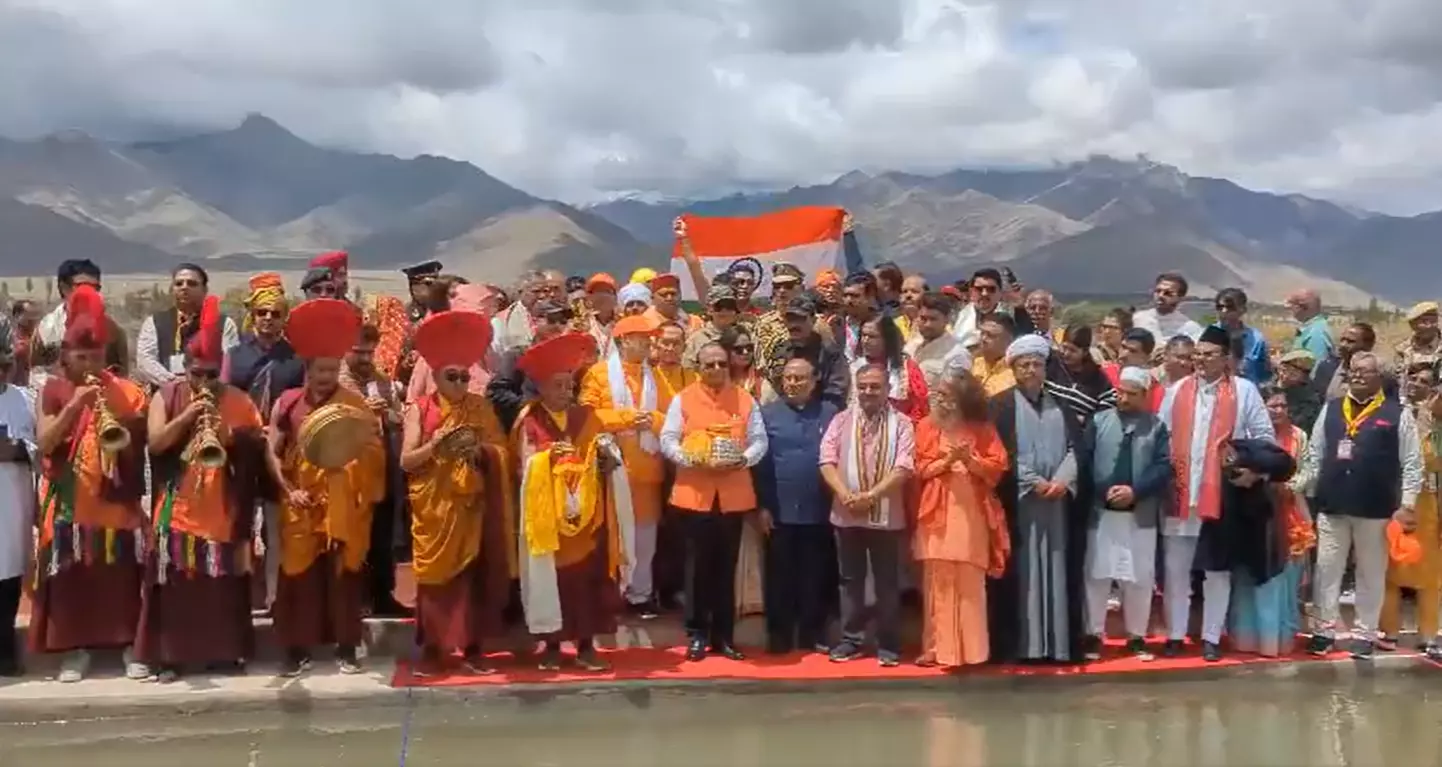
SRINAGAR: The 30th edition of the Sindhu Darshan Yatra and the inaugural Pratham Sindhu Kumbh 2026 commenced with great fervour and spiritual enthusiasm at the historic Sindhu Ghat in Leh on Tuesday, marking a significant milestone in one of Ladakh’s most prominent spiritual and cultural gatherings.
The five-day celebration, being organised by the Sindhu Darshan Yatra Samiti, will continue until June 27 and is expected to bring together thousands of devotees, saints, scholars, cultural representatives, dignitaries, tourists, and visitors from across India and abroad. This year’s event is being held under the theme “One India, Shreshtha Bharat”, reflecting the ideals of national unity, cultural diversity, social harmony, and shared civilisational pride.
The inaugural ceremony was attended by Union Minister of State for Consumer Affairs, Food and Public Distribution Nimuben Jayantibhai Bambhaniya, who joined devotees and spiritual leaders in paying homage to the sacred Sindhu River, widely regarded as one of the oldest and most revered rivers associated with India’s civilisational identity.
The Sindhu Darshan Yatra traces its origins to 1997, when it was initiated as a pilgrimage and cultural movement to reconnect people with the Sindhu, or Indus, River. The festival in particular showcases the historical and cultural importance of the Indus. The festival as Sindhu Darshan was added to the long list of Ladakhi festivals by the BJP-led coalition government at the Centre and, in fact, L. K. Advani the planner and choreographer of this festival, tried his best to make it the single biggest draw for the tourists particularly Hindus who worship the Sindh river.
The river occupies a unique place in Indian history: the names India, Hind and Hindustan are historically associated with the Sindhu, and the river has long been linked with the rise of ancient civilisation, spiritual traditions, and cultural continuity in the subcontinent.
Over the years, the Yatra has evolved from a modest initiative into a major annual gathering at Sindhu Ghat near Leh. For many participants, especially those who regard the Sindhu as a sacred civilisational river, the pilgrimage is not only an act of devotion but also a symbolic return to the roots of Indian cultural identity. The 2026 edition assumes added importance as it coincides with the first-ever Sindhu Kumbh, giving the celebration a larger spiritual and national character.
A grand Kalash Yatra marked the beginning of the celebrations. Sacred waters brought from different parts of the country were ceremonially offered to the Sindhu River, symbolising the coming together of diverse regions, languages, faith traditions, and cultural streams into a shared national consciousness.
The ritual of offering water from rivers across India has become one of the defining features of the Sindhu Darshan Yatra. It represents emotional integration and conveys the message that India’s many cultural and spiritual traditions are bound together by a common civilisational heritage.
The event also witnessed vibrant cultural performances by artists from various states, showcasing India’s diversity through music, dance, traditional attire, and folk expressions. These performances reinforced the message of unity in diversity and highlighted Ladakh’s role as a meeting point of cultures, faiths, and Himalayan traditions.
Participants from across the country, along with domestic and international visitors, took part in the celebrations, transforming the riverbank into a confluence of devotion, culture, patriotism, and community participation.
The programme was graced by the Lieutenant Governor of Ladakh Vinai Kumar Saxena, spiritual leaders, public representatives, and several distinguished guests, including former Chief Executive Councillor of Ladakh Autonomous Hill Development Council (LAHDC), Leh, Tashi Gyalson, Buddhist spiritual leader Palga Rinpoche, Speaker of the Delhi Legislative Assembly, Vijender Gupta, renowned spiritual leader Swami Avdheshanand Giri Ji Maharaj, Dr. Indresh Kumar, and other eminent personalities.
Addressing the gathering, the Lt. Governor welcomed the devotees to Ladakh and highlighted the historical and civilisational significance of the Sindhu River. He observed that the river has remained a powerful symbol of India’s ancient heritage and that the Sindhu Darshan Yatra, since its beginning in 1997, has helped strengthen emotional bonds among people from different parts of the country.
He said the Yatra has grown into a platform that celebrates spiritual devotion, cultural pride, national integration, and respect for the sacred geography of India. He also noted that Ladakh, with its monasteries, landscapes, river valleys, and living traditions, offers a unique setting for such a gathering.
The Lt. Governor also underlined Ladakh’s developmental transformation in recent years, particularly in infrastructure, road connectivity, telecommunications, tourism facilities, and sustainable development initiatives. He said improved connectivity and civic amenities have strengthened Ladakh’s capacity to host pilgrims and tourists while opening new opportunities for local communities.
At the same time, he urged visitors to respect Ladakh’s fragile Himalayan ecosystem by maintaining cleanliness, avoiding littering, and complying with environmental regulations, including the ban on single-use plastic. He said the sanctity of the Sindhu must be protected through responsible conduct and collective awareness.
Speaking on the occasion, Vijender Gupta said the Sindhu Darshan Yatra continues to strengthen the emotional and cultural bond among the people of India and has grown into a significant national event over the past three decades. He said the pilgrimage serves as a reminder of the country’s ancient roots and its enduring commitment to harmony and unity.
Spiritual leaders participating in the event highlighted the timeless message of peace, mutual respect, coexistence, and cultural continuity associated with the Sindhu civilisation. They emphasised that rivers have always occupied a sacred place in Indian thought and that the Sindhu, in particular, represents memory, identity, and civilisational resilience.
The Pratham Sindhu Kumbh 2026 will feature religious ceremonies, cultural programmes, community gatherings, and discussions on heritage, unity, and environmental balance over the coming days. Organisers said the event aims to deepen awareness about the Sindhu River’s historical importance while promoting Ladakh as a centre of spiritual tourism and cultural exchange.
As the celebrations continue until June 27, thousands of devotees, tourists, scholars, and cultural representatives are expected to participate in the programmes at Sindhu Ghat. The gathering reaffirms the significance of the sacred Sindhu River as a symbol of India’s enduring civilisational heritage, spiritual depth, and unity amid diversity, the organisers said.
