LG’s Budget Speech Omits J&K Statehood Reference, Marking Shift from Last Year

The omission stands in sharp contrast to the Lt. Governor’s address during the previous budget session on March 3 last year, when he had explicitly acknowledged the demand for statehood
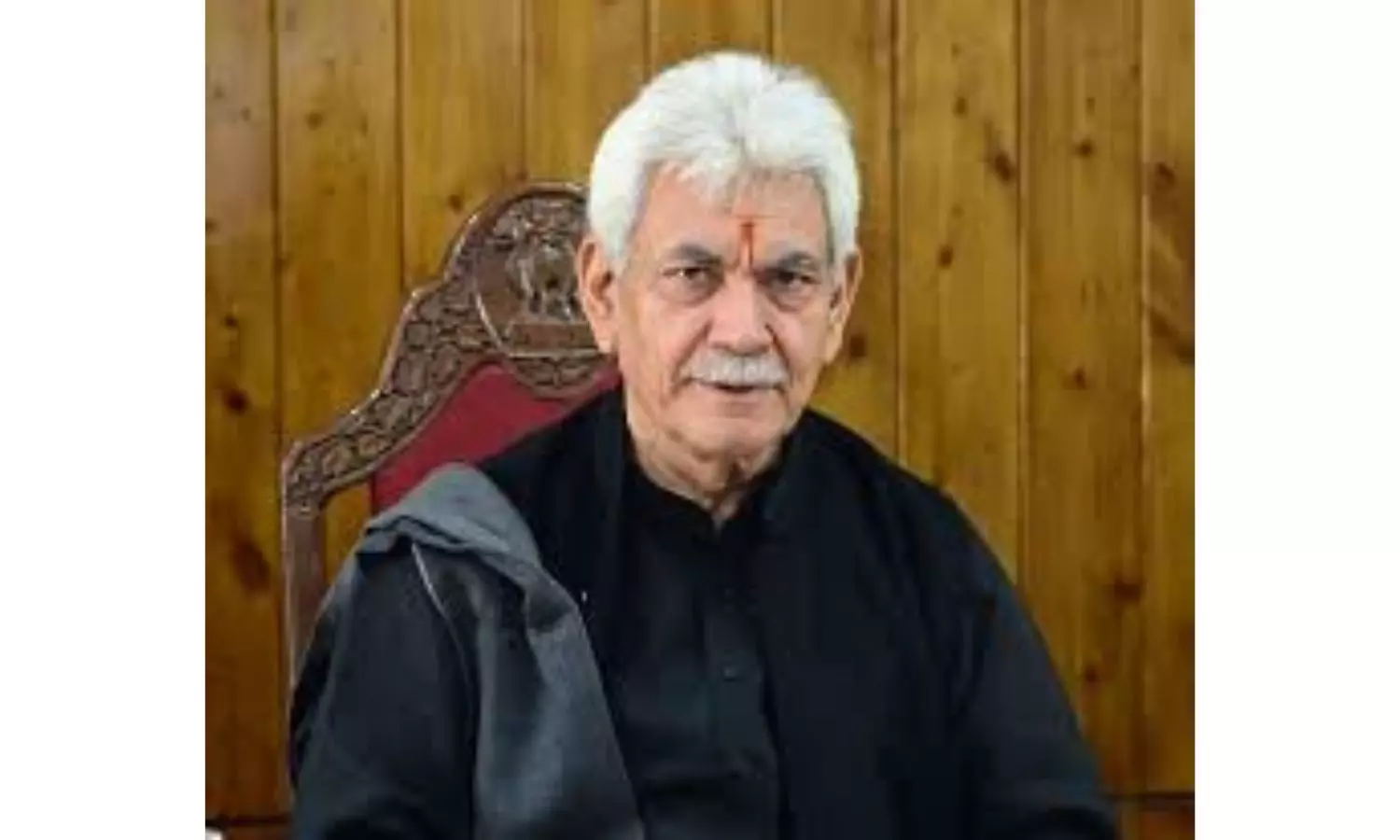
JAMMU: The Lieutenant Governor, Manoj Sinha, made no reference to the restoration of statehood to Jammu and Kashmir in his address to the Union Territory’s Legislative Assembly on the opening day of the budget session on Monday even though it remains a core demand of the elected government.
Instead, his speech centred on the administration’s development agenda, highlighting governance reforms, key achievements, future priorities, and what he described as a deepening transition toward popular governance. He also underscored growing public confidence in democratic institutions and reiterated the government’s commitment to meeting the aspirations of the people.
The omission stands in sharp contrast to the Lt. Governor’s address during the previous budget session on March 3 last year, when he had explicitly acknowledged the demand for statehood. At that time, he had stated, “One of the foremost aspirations of the people of Jammu and Kashmir is the restoration of full statehood. My Government remains steadfast in its commitment to addressing this legitimate desire of the citizens of Jammu and Kashmir.”
He had further emphasised that the administration recognised the “emotional and political significance” of statehood and was “actively engaging with all stakeholders to facilitate this process in a manner that ensures peace, stability, and progress.”
The current budget session of the UT Legislative Assembly which began in winter capital Jammu, he noted, held special significance as an opportunity to “reflect on our collective journey, review our achievements, and chart a clear roadmap for the future,” while reaffirming a shared commitment to fulfilling the aspirations of the people.
The 2025 reference to statehood had been widely interpreted as a reaffirmation of earlier assurances from the Centre. In contrast, the absence of any such mention in the latest customary address has drawn considerable attention, especially amid ongoing public and political debate over the issue.
Political analyst Prof. Dr. Noor Ahmed Baba observed that the shift in tone appears deliberate. With the latest speech focusing solely on development, governance, and institutional confidence, he suggested that the Omar Abdullah–led government may be opting for a cautious, non-confrontational approach toward the Centre, which, in his view, is “obviously not yet ready” to restore statehood to J&K.
“Last time, they were hopeful given the Supreme Court’s observations and the Central Government’s assurances,” Prof. Baba noted. “This time, they seem more realistic and do not want to raise expectations among the people in light of New Delhi’s reluctance,” he added.
In his about 40‑minute address opening the 27‑day session, Lt. Governor said the transition to popular governance after several years had strengthened public faith in democratic institutions and revived participatory governance. He emphasised that the government remains focused on tackling unemployment, closing infrastructure gaps and expanding social welfare measures. “In its first year in office, the government has sought to combine development with dignity, growth with social justice, and progress with peace,” he said, adding that inclusive governance continues to guide policy.
Sinha said the administration has adopted a humane approach toward issues affecting common citizens, including employees, daily wagers, contractual workers and marginalised groups. Decisions concerning them, he noted, have been taken with empathy and corrective measures where required.
Good governance, he said, remains the cornerstone of the development strategy, with reforms in transparency, accountability and citizen‑centric service delivery improving public trust. Over 1,500 public services are now available online, and 391 have been integrated with the auto‑appeal system to ensure timely delivery, he said.
Reaffirming commitment to strengthening democratic processes, Sinha said the government is prepared for the timely conduct of local body elections and is deepening digital governance to enhance transparency and accountability.
Employment generation and youth empowerment, he said, remain central priorities. Last year, 7,650 government posts were filled through merit‑based recruitment, while the process for 23,800 more is underway, he said. Additionally, 910 compassionate appointments were made, including 464 for families affected by terrorism, he added.
Highlighting Mission YUVA, he said the initiative aims to establish 1.35 lakh entrepreneurial units and create opportunities for 4.5 lakh youth. Over 1.51 lakh young people have registered, with more than 61,900 applying under credit‑linked schemes and over 12,000 cases sanctioned, involving loans exceeding ₹800 crore, he said.
Social welfare, he said, remains a key priority. Under the National Food Security Act, ration support is being provided to 25 lakh families, while 16.62 lakh households receive free ration under the Pradhan Mantri Garib Kalyan Anna Yojana. More than 10 lakh beneficiaries receive financial assistance under social security schemes, with pensions now ranging from ₹1,250 to ₹2,000, he said, adding that eligibility under the Marriage Assistance Scheme has also been rationalised to widen coverage.
On urban development, Sinha said 277 projects have been completed under the Smart City Mission, while 90 AMRUT‑II projects worth over ₹1,000 crore have been approved to improve sanitation, water supply and rejuvenation of water bodies.
Housing and rehabilitation remain priority areas, with 3.21 lakh houses constructed under PMAY‑Gramin and land allotted to landless beneficiaries, he said. He added that the families who lost residential land to natural calamities are being provided five marlas (1,370 sq. ft.) of land.
Industrial growth, he said, continues to accelerate. Since 2020, 2,227 industrial units with investments of ₹15,940 crore have begun production, generating employment for over 73,800 people. Another 1,028 units with proposed investments of ₹27,613 crore are under implementation. Under Startup India, he said, 1,316 startups—including 471 led by women—have been registered, while 6,050 self‑employment enterprises have been established under PMEGP.
Lt. Governor said that the handloom and handicrafts sector continues to support nearly 4.45 lakh people, with 18 products receiving GI tagging and 17 more under process. Jammu and Kashmir, he said, has also secured fifth rank nationally under the Business Reform Action Plan.
In agriculture and allied sectors, he highlighted growth in milk, mutton and wool production, along with gains from crop diversification, improved seed systems, and expansion of oilseed and honey production.
Calling for collective effort, Sinha urged legislators to work with unity of purpose. “Let us transform challenges into opportunities and build a Jammu and Kashmir that is peaceful, progressive, inclusive and prosperous, ensuring dignity, opportunity and hope for every citizen,” he said.
