Ladakh Set to Launch India’s First High-Altitude Wildlife Safari

The Lt. Governor has cleared the introduction of guided wildlife safaris along the region’s famed snow‑leopard and bird‑watching trails, marking India’s first-ever high‑altitude safari experience. Visitors will gain rare, structured access to Ladakh’s extraordinary flora and fauna—an opportunity previously limited to trekkers and researchers braving the harsh terrain
SRINAGAR: Ladakh is preparing to unveil what may soon be recognised as the world’s highest wildlife safari, a landmark initiative approved by Lieutenant Governor Vinai Kumar Saxena.
Rising across the Himalayan expanse at elevations between 2,750 meters (9,000 feet) and 5,000 meters (16,400 feet), this ambitious project promises to add a transformative new dimension to Ladakh’s already vibrant eco‑tourism landscape.
The Lt. Governor has cleared the introduction of guided wildlife safaris along the region’s famed snow‑leopard and bird‑watching trails, marking India’s first-ever high‑altitude safari experience. Visitors will gain rare, structured access to Ladakh’s extraordinary flora and fauna—an opportunity previously limited to trekkers and researchers braving the harsh terrain.
In a decisive move, Saxena has instructed the Forest Department to develop guided Jeep Safaris modeled on India’s celebrated national parks such as Kaziranga and Ranthambore. These safaris will use specially designed open‑back vehicles operated by trained local drivers and naturalists. The goal is twofold: to curb illegal off‑roading that disturbs wildlife and damages fragile habitats, and to elevate Ladakh’s tourism model toward sustainability, responsibility and enriched visitor engagement.
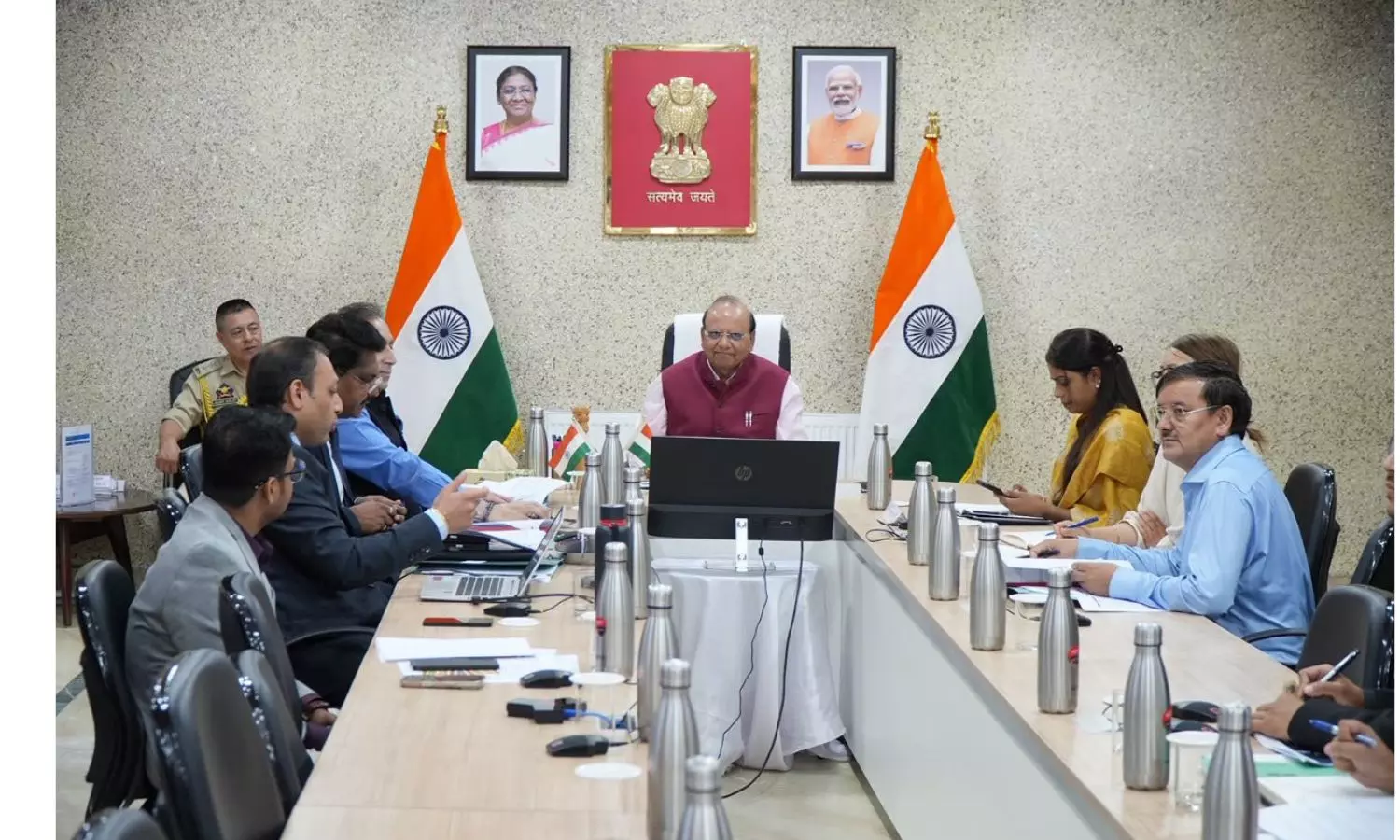
The announcement came during the inaugural governing body meeting of the newly formed Snow Leopard and High‑Altitude Nature (SHAN) Conservation Society, chaired by the Lt. Governor. He has directed officials to identify potential safari routes across Hemis National Park, Changthang and Karakoram Wildlife Sanctuaries, as well as wildlife‑rich regions including Nubra, Zanskar, Sham, Kargil and Drass. These landscapes are known for hosting significant populations of the elusive snow leopard and an astonishing diversity of high‑altitude birdlife.
To strengthen bird tourism, the administration will select and train 20 local youth in bird identification, spotting and guiding skills, equipping them with professional gear such as binoculars. Ten dedicated bird‑watching hides will also be established at major hotspots to support both visitors and conservation monitoring, a statement issued in Leh on Thursday said.
Ladakh’s ecological wealth is exceptional as it shelters India’s largest snow leopard population—477 out of the country’s estimated 718 species. The region also supports more than 38 mammal species, 340 bird species and 1,800 vascular plant species, making it one of the nation’s most compelling biodiversity destinations.
The SHAN Society, constituted on June 16, aims to craft a comprehensive roadmap for community‑led wildlife conservation, improved waste management, plastic‑free tourism, sustainable livelihoods and responsible travel practices across Ladakh. “Its vision is distinctive: environmental protection will not rest solely on government agencies but will actively involve local communities as custodians of Ladakh’s fragile ecosystem,” the statement said, adding that this participatory model is expected to foster a deeper sense of ownership among residents while generating sustainable income opportunities.
Lt. Governor Saxena emphasised that Ladakh’s unique wildlife and delicate high‑altitude environment are its greatest natural assets. He noted that conservation can only succeed when local communities are equal partners and also benefit economically from protecting nature. Through SHAN, he said, Ladakh is building an integrated model that combines wildlife conservation, responsible eco‑tourism, environmental education and community empowerment. “The overarching vision is to ensure that future generations inherit an ecosystem that is richer, healthier and more resilient—and to position Ladakh as a global exemplar of community‑driven conservation and responsible mountain tourism,” he said.
Several other key decisions were finalized during the SHAN Governing Body meeting, aimed at strengthening conservation efforts and promoting responsible tourism across Ladakh. The Lt. Governor has directed all concerned departments to complete preparations ahead of the upcoming winter season, when snow‑leopard sightings peak and tourist inflow increases.
