Kerala SIR Process: Help Desks To Assist 43 Lakh Voters

Two officers will be temporarily assigned to each help desk to guide the public and provide assistance
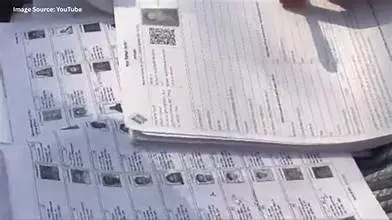
THIRUVANANTHAPURAM: The Kerala government has ordered the setup of help desks at village offices to assist about 43 lakh voters who have either been declared untraceable or need to complete the ‘Mapping’ process for inclusion as part of the Special Intensive Revision (SIR).
The District Collector will oversee the arrangements, and alternative spaces in nearby buildings will be earmarked if the office lacks adequate facilities. Two officers will be temporarily assigned to each help desk to guide the public and provide assistance. In the draft list published on Tuesday, 24,08,505 names were deleted, with 14,61,769 (5.25 percent) excluded due to being absent, untraceable, permanently shifted, or because forms were shifted. Another 6,49,885 forms (2.33 percent) were excluded due to the death of individuals, while 1,36,029 forms (0.49 percent) were removed for other reasons.
People who were not 18 in 2002, and those who turn 18 by December 31, 2024, must complete a “mapping” process to link their relationship (with parents or grandparents) to the 2002 voter list. Around 19,132,000 individuals on the draft list must submit relationship documents during the hearing to confirm their inclusion. Failure to do so will result in exclusion from the final voter list.
Additionally, individuals not on the 2002 list or previously excluded from voter lists will also need to provide documents for inclusion in the final list. Help desks will assist voters through the process.
Kerala CEO meets representatives of political parties
The Chief Electoral Officer stated in a meeting with representatives of political parties that those who submit correct documents will not be called for a hearing during the voter list revision.
The Congress criticised widespread issues with missing names and booth allocation and opposed the requirement for a caste certificate as a document.
The draft list features 19.32 lakh people whose connection to individuals in the 2002 voter list couldn’t be confirmed. Those later verified by BLOs after the list’s release won’t be summoned for hearings.
Parties have called for exempting the elderly from hearings and considering online sessions.
While the CPM pushed to shorten the hearing process, the BJP opposed any exclusions. The Congress and the League rejected the idea of requiring a caste certificate to verify names.
Congress also criticized the omission of people who are alive and present, insisting they be reinstated without applications or hearings. They also noted that during the last Lok Sabha elections, names appeared in flats and rented houses but are now missing, and demanded action to prevent fake votes.
The Congress criticized the meeting as pointless, saying the parties’ suggestions were ignored. After widespread calls for another discussion, it was decided to hold a follow-up meeting next week.
The government directed that a help desk with two officers be set up in villages to include eligible people who had been left out. Collectors were also told to appoint Anganwadi workers, ASHA workers, and Kudumbashree workers to visit upland, hilly, and coastal areas to raise awareness.
