J&K: High Court Reversal Puts Spotlight on Summary Dismissal Drive

The case of Saadut Hussain Pampori, a Deputy General Manager at J&K Bank, presented a different legal challenge. Pampori was dismissed on July 15, 2024 under Clause 12.29 of the bank’s Officers Service Manual (OSM), a provision allowing the Managing Director and CEO to terminate an officer without a departmental inquiry in cases involving alleged terrorist or anti‑national activities
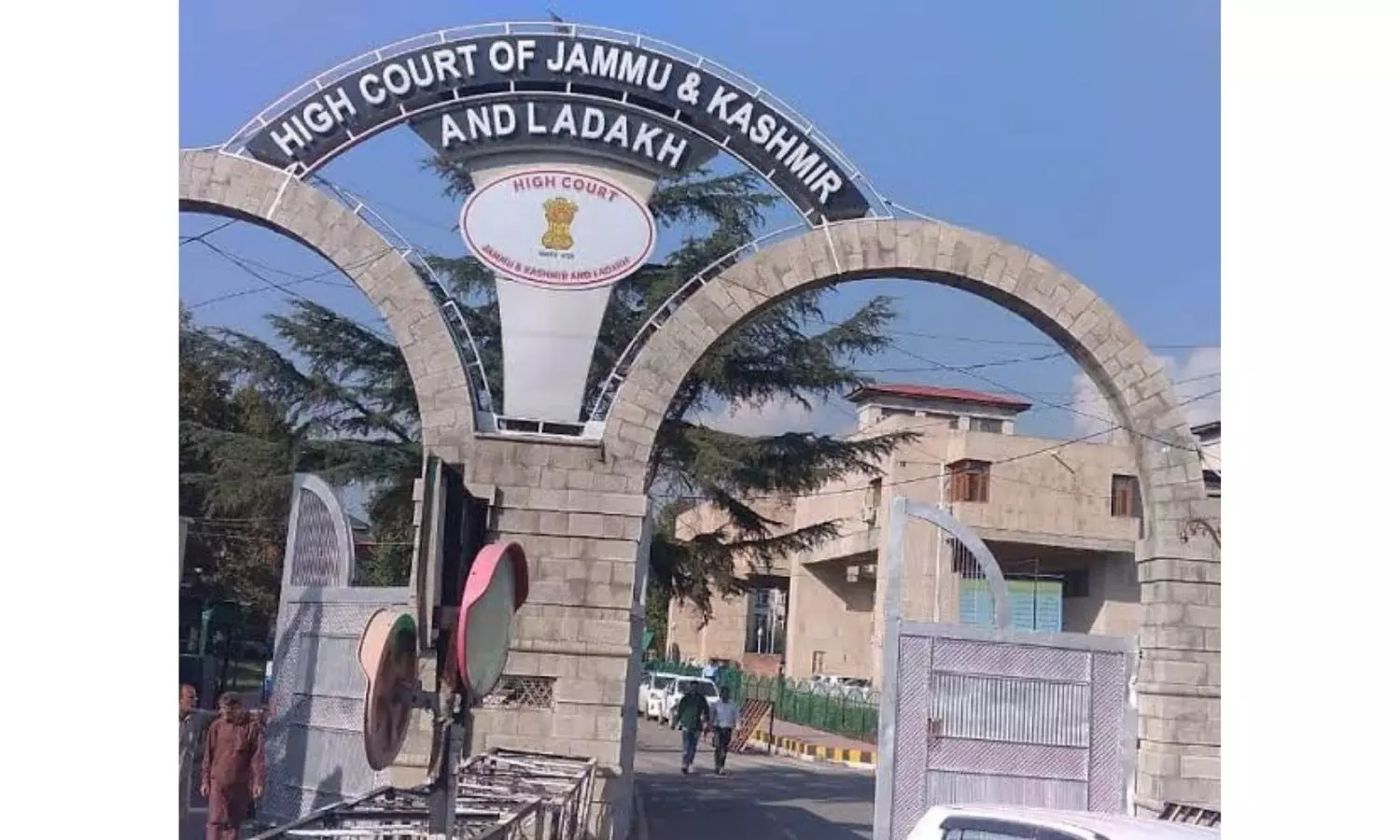
SRINAGAR: In a first‑of‑its‑kind judicial intervention, the High Court of Jammu & Kashmir and Ladakh has struck down the dismissal of a senior J&K Bank officer, marking a significant departure from the pattern of summary terminations carried out in the Union Territory over the past several years.
The case of Saadut Hussain Pampori, a Deputy General Manager at J&K Bank, presented a different legal challenge. Pampori was dismissed on July 15, 2024 under Clause 12.29 of the bank’s Officers Service Manual (OSM), a provision allowing the Managing Director and CEO to terminate an officer without a departmental inquiry in cases involving alleged terrorist or anti‑national activities. The bank accused him of running the #TortureKashmir social media campaign, which it claimed was “aimed at creating false narratives against the sovereignty, unity and territorial integrity of the country and the same has resulted in unrest in Kashmir in the years 2008, 2010 and 2016.”
Pampori, who also served as Officer on Special Duty (OSD) to then Chief Minister Mehbooba Mufti, challenged the dismissal, arguing that Clause 12.29 could be invoked only when an investigation by a State, Union Territory, or central agency established an employee’s involvement. He pointed out that no FIR had been registered against him and no formal investigation had been conducted.
Justice Sanjay Dhar, who passed the judgment, agreed. The court held that four mandatory conditions must be satisfied before bypassing a departmental inquiry-an investigation by a competent agency, a clear finding of involvement in anti‑national or terrorist activities, advice from a competent authority not below the rank of Principal Secretary or Director General of Police and dismissal based on such advice.
The court found that none of these safeguards had been met. Although the bank relied on a confidential police report, the court noted that it was based merely on discreet enquiries, source‑based information, and social media posts, and “did not show any evidence that the witnesses had been examined or that material had been collected through an investigation as required by Clause.” The bench also rejected the argument that Clause 12.29 was analogous to Article 311(2)(c), observing that while high constitutional authorities like the President or Governor may exercise extraordinary powers without prior investigation, “the same level of trust cannot be reposed in the managing director of the bank.”
In the absence of a proper investigation, the court concluded that “it was not open to the Managing Director and CEO of the respondent‑Bank to issue the impugned order dismissing the petitioner from service.” Pampori’s dismissal was quashed, and he was reinstated to the position he held before termination. The court, however, left it open to the bank and government to initiate fresh proceedings in accordance with prescribed procedures or conduct a regular departmental inquiry.
J&K Bank operates as a hybrid institution—formally licensed as a private‑sector bank, yet majority‑owned by the government. The governments of J&K and Ladakh together hold 59.40 per cent of its shareholding.
The ruling comes against the backdrop of a sustained administrative crackdown in J&K with the Lieutenant Governor’s administration, over the past seven years, removing more than eighty government employees on allegations of involvement in anti‑national or anti‑social activities. These dismissals—described by officials as part of a “decisive” campaign to dismantle a purported terror ecosystem within state institutions—were largely executed under Article 311(2)(c) of the Constitution, which permits termination without a formal inquiry when national security is invoked.
In 2020, the administration established a Special Task Force (STF) to identify employees suspected of involvement in activities prejudicial to national security, followed by a committee to scrutinise cases under Article 311(2)(c). These measures have drawn sharp criticism from political parties, civil society, and human rights groups.
Former Chief Minister Mehbooba Mufti has repeatedly argued that such actions deepen alienation and leave families in distress, saying that “hundreds of employees have been summarily dismissed without even a trial, solely based on unproven allegations of so‑called terror affiliations.” Kashmir’s chief Muslim cleric Mirwaiz Umar Farooq has described the dismissals as “inhuman and arbitrary,” calling the use of laws that cannot be legally challenged “despotism.” Chief Minister Omar Abdullah has questioned the practice of terminating employees without judicial scrutiny, insisting that “every accused person is innocent until proven guilty.”
The political debate has also seen counter‑accusations. Ruling National Conference spokesperson Imran Nabi Dar has pointed out that previous governments, including the PDP‑BJP coalition, had also dismissed employees under labels such as “dead wood,” accusing Mehbooba Mufti of objecting only after losing power.
