J&K Court Tightens Scrutiny in Alleged ₹500‑Crore “Fake Silver” Controversy at Vaishno Devi Shrine

The proceedings stem from an application filed by Advocate Deepak Sharma, who had earlier submitted a detailed complaint to the Inspector General of Police, Crime Branch, Jammu, and the Senior Superintendent of Police, Crime Branch, Economic Offences Wing, Jammu. His complaint sought registration of an FIR and a full‑scale investigation into alleged adulteration, substitution, pilferage and possible misappropriation of silver offerings made by devotees at the revered shrine
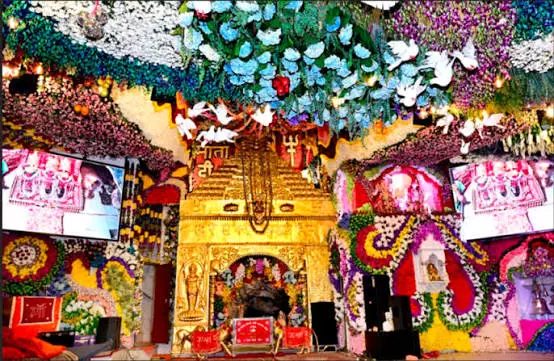
SRINAGAR: The alleged ₹500‑crore “fake silver offerings” controversy linked to Shri Mata Vaishno Devi Shrine at Katra took a significant turn on Monday, with the Court of the Chief Judicial Magistrate, Jammu—presided over by Munish Kumar Manhas—directing the Inquiry Officer of the Crime Branch to appear personally along with the complete record of the case on July 29. The order signals judicial dissatisfaction with the pace and nature of action taken so far by the investigating agency.
Significantly, the Court’s intervention comes at a time when reports of alleged misappropriation of donations at the Ram Mandir in Ayodhya are dominating national headlines, intensifying public scrutiny of transparency and accountability in the management of religious offerings across major shrines in India.
The proceedings stem from an application filed by Advocate Deepak Sharma, who had earlier submitted a detailed complaint to the Inspector General of Police, Crime Branch, Jammu, and the Senior Superintendent of Police, Crime Branch, Economic Offences Wing, Jammu. His complaint sought registration of an FIR and a full‑scale investigation into alleged adulteration, substitution, pilferage and possible misappropriation of silver offerings made by devotees at the revered shrine.
Filed on May 9, the complaint alleged serious cognizable offences including criminal conspiracy, cheating, criminal breach of trust, misappropriation, manipulation of official records and the suspected use or procurement of cadmium‑laden material. According to the complainant, these allegations warranted immediate registration of an FIR and urgent preservation of evidence.
When no substantive action appeared to have been taken, Sharma approached the CJM seeking an action‑taken report and appropriate directions to ensure lawful investigation. In response, the Crime Branch submitted a status report stating that the complaint had been forwarded first to Crime Headquarters, Srinagar, for approval, and thereafter to Zonal Police Headquarters, Jammu, for “appropriate action.”
Sharma filed detailed objections on Monday, arguing that mere administrative forwarding of a complaint disclosing cognizable offences does not constitute lawful action under the Bharatiya Nagrik Suraksha Sanhita, 2023. He emphasised that the Crime Branch, Economic Offences Wing, Jammu, is itself a notified Police Station under a Home Department notification, with its Superintendent of Police functioning as the Station House Officer. Therefore, he contended, the Crime Branch was legally bound to register an FIR and initiate investigation rather than pass the complaint along the administrative chain.
The objections further highlighted that the status report was silent on any steps taken to preserve crucial evidence—such as inventory registers, stock ledgers, CCTV footage, transportation and dispatch records, assay reports, Mint correspondence, electronic data, and documents relating to the receipt, storage, testing, melting and movement of offerings. The complainant argued that failure to secure such material could irreversibly compromise the investigation.
After hearing the submissions, the Court directed the Inquiry Officer concerned to remain personally present on the next date of hearing with the full record, indicating that the Court intends to closely monitor compliance with statutory obligations.
The matter arises from reports that approximately 20 tonnes of accumulated silver offerings—estimated to be worth around ₹550 crore—were sent for testing, melting and processing. Shockingly, only about five to six per cent of the material was reportedly found to be genuine silver, while the remaining bulk allegedly consisted of cadmium, iron and other inferior metals.
The complaint seeks to uncover whether devotees were unknowingly purchasing adulterated or fake silver articles from vendors and jewellers before offering them at the shrine, or whether genuine offerings were substituted, diluted, pilfered or misappropriated at any stage after their receipt. This includes potential wrongdoing during inventory, weighing, storage, transportation, assaying or melting.
It also calls for investigation into the origin, manufacture, procurement and supply chain of the alleged cadmium‑laden material, and demands accountability for all individuals—officials, custodians, vendors, suppliers, handlers or transporters—who may have played a role in the alleged offences.
