CPI (Maoist) Almost Extinct Now, Naxal movement Revival Next To Impossible: Bastar IG
Bastar was historically the strategic heartland of the Maoist movement. Sustained operations in Bastar have: Disrupted the core leadership and operational bases of Maoists
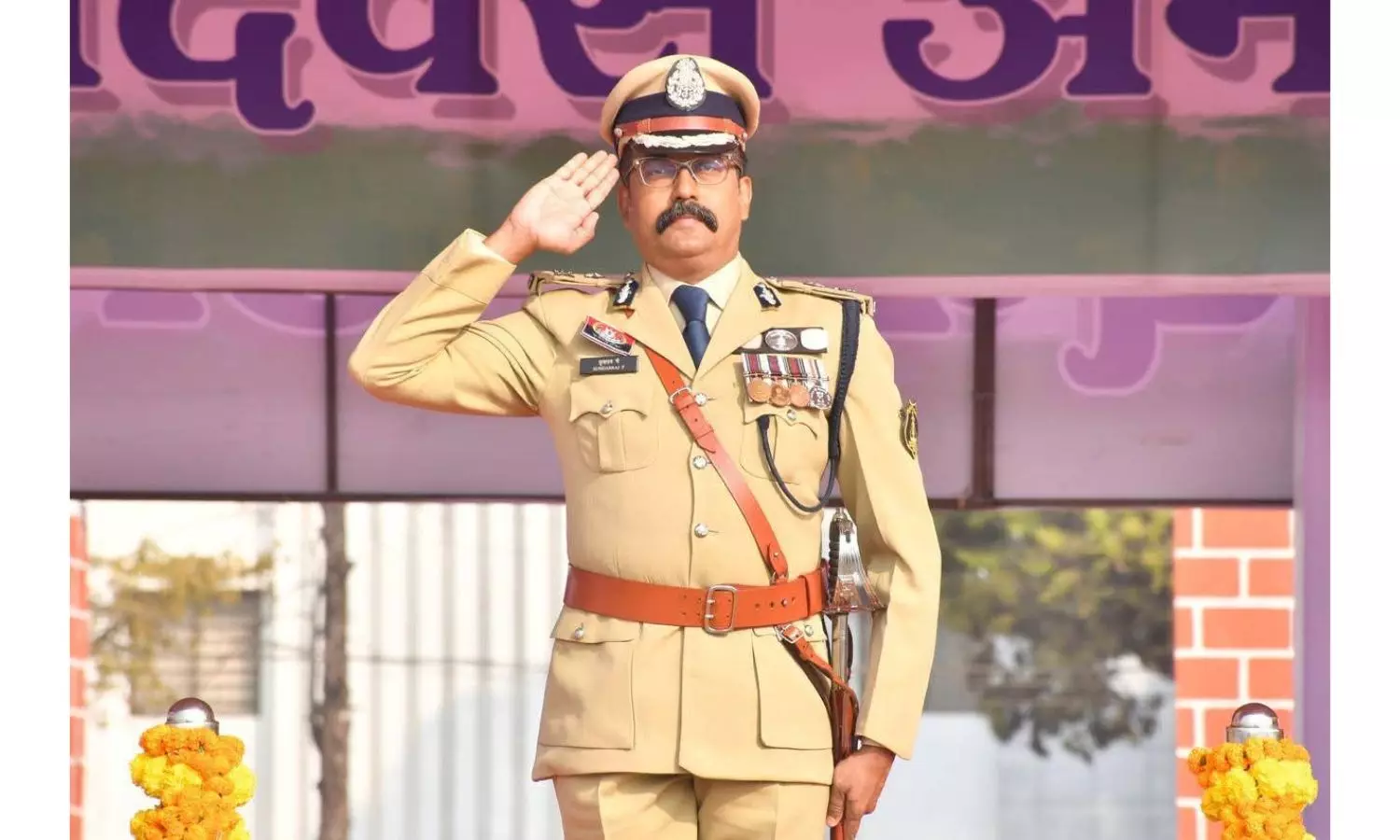
Banned CPI (Maoist) is almost extinct now, claimed Bastar range inspector general of police Sundarraj Pattilingam, who marshalled his forces on the ground in the conflict zone to steer Bastar from the ignominy of being the worst-affected Leftwing Extremism region of the country to ‘almost Naxal-free.
In an exclusive Interview to Deccan Chronicle, he says revival of Naxal movement is next to impossible, as March 31 deadline to eradicate Maoism ends on Tuesday.
Q. When can we say Bastar is Naxal-free?
Ans. Bastar can be now considered Naxal-free as Maoist organizations lost the capacity to operate as an armed extremist force- meaning there are no organized armed squads, no ability to intimidate villagers, no capacity to carry out violence, and the remaining cadres either surrender, get neutralized, or fully integrate into society. The real benchmark is not just the absence of incidents, but the complete restoration of governance, development, and public confidence across all areas.
Q. Considering the March 31 deadline, what remains to be done to declare Bastar Naxal-free?
Ans. Significant progress has already been achieved. The immediate focus is now on: Encouraging the surrendered cadres to organically integrate into the mainstream. Securing the area cleared from the Maoist influence. Expanding development, road connectivity, and administrative presence in previously inaccessible areas.
Q. Which particular areas in Bastar still remain a spot of bother?
Ans. While the overall situation has improved drastically, some remote forest pockets and inter-district border areas still need a lot of focus and attention.
These are mostly areas where difficult terrain historically allowed Maoists to hide. However, even in these pockets their movement and influence have completely reduced due to continuous security pressure and improved infrastructure.
Q. What may be the reason for those Maoists who still refuse to give up?
Ans. The remaining, only a handful of cadre, generally fall into a few categories: Cadres who have been isolated from accurate information and continue under confusion. Some individual cadres who have spent decades in the underground movement and find it psychologically difficult to transition to normal life.
Q. Who are the significant leaders who still remain active?
Ans. A few senior leaders of the CPI (Maoist) organization like politburo member Misir Besara still remain active in the Jharkhand area. However, their operational capability has weakened considerably due to sustained security operations, loss of cadres, and disruption of communication networks. Many mid-level commanders who once formed the backbone of the organization have already been neutralized or have surrendered.
Q. How do you describe the current fighting capability of Maoists in Bastar and in India? What about their battalions?
Ans. The fighting capability of Maoists has declined sharply and have almost become zero both in Bastar and across India. Their once structured military formations have been severely weakened.
In Bastar, Maoists earlier had organized battalion-level formations and multiple armed companies. Due to sustained security pressure, many of these units have been dismantled or reduced to small scattered groups.
Even the historically strongest formations now are decimated and have become nonexistent.
Q. How many Maoist divisions were there in Bastar and how many are still functional?
Ans. Earlier Maoists had organized Bastar into multiple divisions to manage their activities. Over time, due to continuous operations by security forces and declining cadre strength, several of these divisions have either collapsed or become largely inactive. Their command structures have weakened and their ability to coordinate operations has been significantly disrupted.
Q. How do you plan to neutralize rural cadres who formed the base of the Maoists?
Ans. Our approach is not purely security-centric but also socio-economic development. It includes: Encouraging surrender through rehabilitation policies. Community engagement and confidence-building measures. Expanding development schemes in remote villages. Ensuring that former cadres receive livelihood support so they can integrate into society.
Q. Can you give a brief picture of the current situation of Leftwing Extremism in India?
Ans. Across India, Leftwing Extremism has witnessed a significant structural decline. Key indicators include: Collapse of several Maoist organizational structures. Continuous loss of trained cadres and experienced leadership. Reduced operational capability and shrinking geographical influence. Increasing trust deficit within the Maoist leadership. Stronger coordination between Central and state security forces. This has led to a steady weakening of the Maoist movement nationwide. Now the Maoist outfit is almost extinct.
Q. Do you think the surrender of certain top leaders is necessary to declare India Naxal-free?
Ans. Out of 24 Central Committee members/ politburo members in the apex body of CPI (Maoist), in 2024, only one active politburo member Misir Besara is left out at present (March 2026). Whereas another politburo member Ganpathi is out of action for almost the last six to seven years. Remaining all 22 have either been neutralized or surrendered or arrested.
While surrender or neutralization of top leaders would certainly accelerate the process, the movement itself is already weakening structurally. What matters the most is the collapse of the organization’s ability to recruit, mobilize and carry out violence.
Once that capability disappears, the ideology cannot sustain itself in the field.
Q. What are the key reasons for the rapid collapse of such an organized outfit?
Ans. Several factors contributed to the decline: Sustained and coordinated security operations. Improved intelligence and inter-state coordination. Expansion of roads, connectivity, and governance in remote areas. Effective surrender and rehabilitation policies. Loss of local support among tribal communities.
Q. How has Bastar played a key role in eradicating Naxalism in India?
Ans. Bastar was historically the strategic heartland of the Maoist movement. Sustained operations in Bastar have: Disrupted the core leadership and operational bases of Maoists. Broken key corridors that connected Maoist areas across states. Restricted Maoists to isolated forest hideouts. Enabled governance and development to reach remote regions.
Q. Does making Abujhmad free of Naxal influence play a major role? How free is Abujhmad now?
Ans. Bringing Abujhmad into the administrative and development framework is a major milestone. For decades it remained a Maoist stronghold due to inaccessibility. With increasing security presence, road construction, and administrative outreach, Maoist dominance in the region has weakened considerably. The area is progressively opening up for governance and development.
Abujhmad, loosely translated into English as an ‘area not comprehensible’ is a 4,000 sq km forested area dotted with difficult hilly terrains. It extends from south Bastar in Chhattisgarh to Gadchhiroli in Maharashtra. The region had been used as a safe haven by top Maoist leaders and a training ground for the military cadres of the CPI (Maoist). It was once considered Maoist capital in India. CPI (Maoist) general secretary Basavaraju was tracked and killed in Abujhmad forest on May 21, 2025 by security forces.) This was the first time in the decades long history of Leftwing Extremism, its head was killed in an encounter with security forces.
Q. Any chances of revival of Naxalism?
Ans. At present, the chances of revival of Naxalism appear next to impossible. The Maoist organization has lost much of its manpower, leadership strength, logistical networks, and local support. Continuous vigilance by security forces and sustained development initiatives will ensure that such a movement does not regain ground.
Q. IEDs (improvised explosive devices) planted by Maoists still pose a challenge. What is the plan to make Bastar IED-free?
Ans. IEDs remain one of the primary threats. Security forces are focusing on: Advanced mine-detection technologies. Specialized bomb disposal teams. Training local forces in counter- IED operations. Increasing road opening and surveillance measures. These steps are gradually reducing the threat.
Q. Will social integration of surrendered Maoists be a challenge?
Ans. Integration is always a sensitive process, but the government’s rehabilitation policies focus on reform, livelihood, and dignity. Community outreach programs are also conducted to build acceptance and reconciliation. Overtime, many surrendered cadres have successfully integrated and are now living normal lives.
Q. Is there a possibility of extending the surrender deadline?
Ans. The surrender policy represents a humane opportunity extended by the government for Maoist cadres to renounce the path of violence and return to the mainstream, where they can rebuild their lives with peace, dignity, and lawful livelihood.
While certain timelines may be announced by the government for operational purposes, the underlying message is unequivocal – there is no justification or space left for pursuing violence in the name of a struggle for rights.
In a democratic framework, every citizen has access to constitutional safeguards and legal avenues to raise grievances and seek justice.
The path of violence must now give way to the path of dialogue, development, and democracy.
