Centre Tells States: Review Vital Public, Private Sector Assets As Terror Targets For Op Sindoor Revenge

It added, “This review has become critical taking into account the fact that with the evolution of Country's economy, many vital installations in the country are now in the private sector and these can also be targeted by terrorist/saboteurs.”
Kolkata: The Centre has advised all the state governments to review the vital installations at public and private sectors in their territories to thwart any terror attack on them in retaliation to Indian military’s ‘Operation Sindoor’ against Pakistan.
In a confidential communication on September 26 to all the state chief secretaries and director generals of police, the ministry of home affairs (MHA) stated, “...there is a need to review the critical infrastructure/vital installations in your jurisdiction to prevent any threat posed by retributtal or disruptive action by terror groups/ saboteurs in light of the success of Operation Sindoor.”
It added, “This review has become critical taking into account the fact that with the evolution of Country's economy, many vital installations in the country are now in the private sector and these can also be targeted by terrorist/saboteurs.”
The advisory, issued from the IS-I Division/VIP Security Unit under the MHA, also lists guidelines on identifying and classification of critical/vital installations for undertaking the exercise “immediately” in both the sectors.
Defining the vital installations “as those systems and assets so vital to the nation that their destruction, fully or partially would affect the security, economy, essential services, network and safety of a large section of the society,” it has categorised sectors of economic, defence and strategic importance under the benchmark.
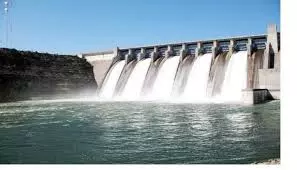
“These include nuclear, space, oil & gas, defence, power plants, main power grids, major dams, research organizations, chemical plants, major ports, mass transits systems, strategic surface transport links, RBI bullion, security printing press, telecommunication and information technology organisations etc. As new sectors keep emerging the list of facilities under critical infrastructure will remain open ended,” the advisory noted. It further featured a matrix format detailing 10 parameters and their weightage in a scale of 100 points. Among the 10, vital assets of strategic importance tops the list. It includes a) key research facilities of defence, DAE, space, finance etc. b) P&NG, power, ports, shipbuilding, data centers etc.) major dams and reservoirs and d) equipment manufacturing of units etc.
Next comes vital installations of economic importance which covers railways and metro among others, followed by technology i.e. highly specialised, cutting edge and advanced technology (indigenous), specialized and advanced technology (replaceable with difficulty) and high end technology (collaboration with foreign entities, MNCs etc) (replaceable).
The chart also has ‘Locational vulnerabilities’ which underlines vital installations located “in militant/naxal/extremist and violence infested areas and law and order, mafia prone areas” for a review.
