Bringing Millets Back To The Table: Koraput Woman Turns Tradition Into Opportunity

Instead of allowing this heritage to fade, Sumitra and her husband, Jagannath Chinnari, decided to give millets a new identity. Their initiative, Koraput Millet Bank, grew from a simple question: Could traditional grains become attractive to modern consumers while creating economic opportunities for rural communities?
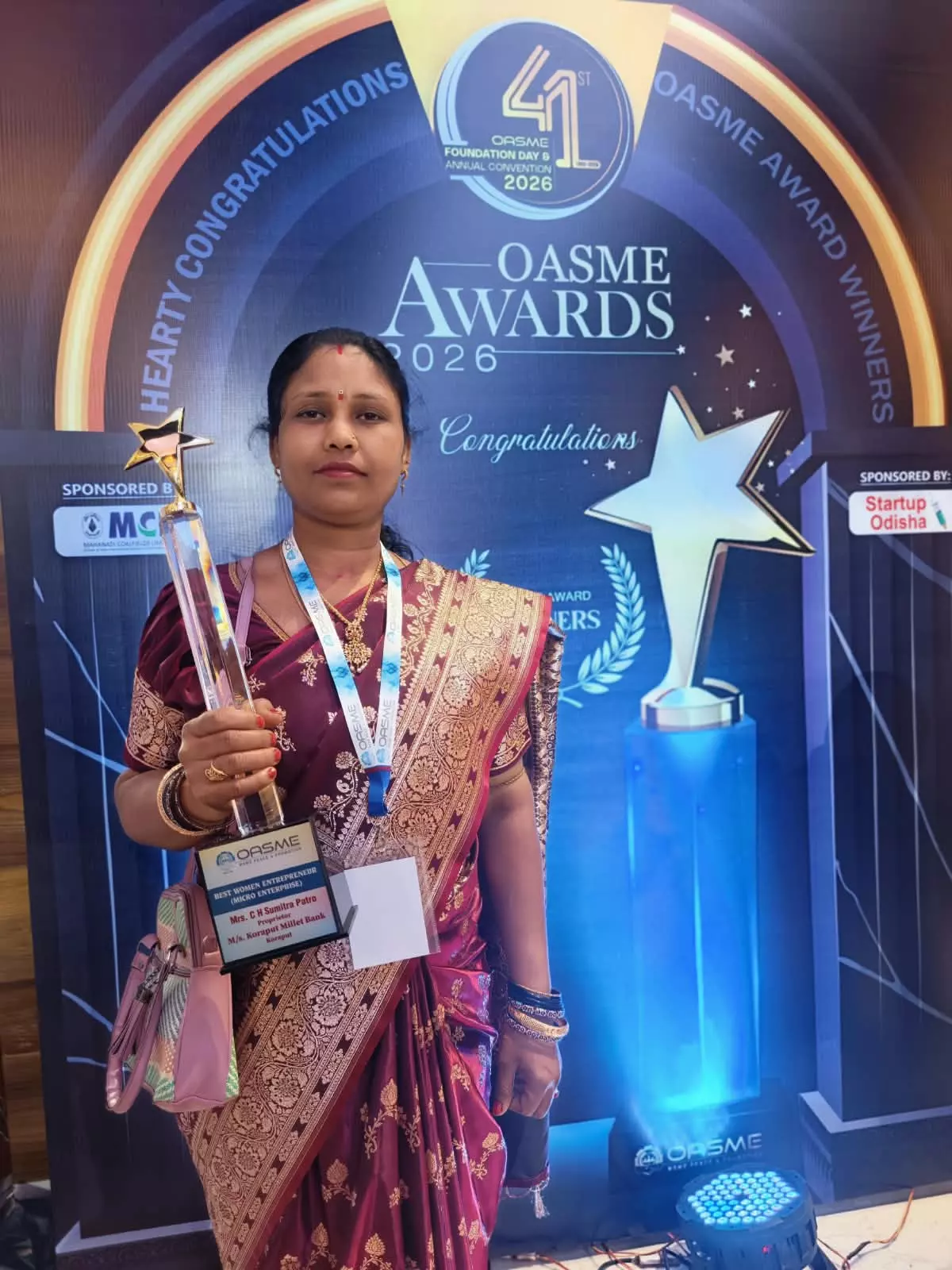
Bhubaneswar: Long before millets became a global health-food trend, they were a staple of everyday life in Odisha’s tribal villages. In Koraput, generations of families relied on these hardy grains for nourishment, cultivating them on rain-fed farms. But as food habits changed and farmers shifted to other crops, millets gradually disappeared from local kitchens and fields.
For C.H. Sumitra Patro, watching this transformation was deeply personal. She saw traditional grains losing their place in people's diets while small farmers struggled to find sustainable livelihoods.
Instead of allowing this heritage to fade, Sumitra and her husband, Jagannath Chinnari, decided to give millets a new identity. Their initiative, Koraput Millet Bank, grew from a simple question: Could traditional grains become attractive to modern consumers while creating economic opportunities for rural communities?
Their answer was to transform millets into convenient, value-added products.
From millet tea, cookies and snacks to ready-to-cook pongal, khichdi and biryani premixes, the enterprise began offering products suited to contemporary lifestyles. What was once considered traditional rural food gradually found acceptance among urban consumers seeking nutritious alternatives.
However, expanding production required investment.
Support under the Centre's Pradhan Mantri Formalisation of Micro Food Processing Enterprises (PMFME) Scheme proved a turning point. Palladium, the scheme's State Project Unit in Odisha, facilitated a loan of Rs 8.10 lakh, enabling the enterprise to purchase modern processing equipment.
The impact was substantial. Monthly production capacity increased from 150 kg to 1,500 kg, helping the household venture evolve into a professionally managed food-processing unit operating under the brand Jagannath Millet Foods.
Today, the enterprise provides employment to 40 people and has reported a turnover of Rs 1.10 crore in FY 2025-26. Its products reach consumers through 10 local outlets and markets in Bhubaneswar, Cuttack, Rourkela, Hyderabad, Visakhapatnam and Bengaluru.
Beyond business, the couple is training and mentoring women's self-help groups, non-governmental organizations (NGOs) and community organisations in millet processing, packaging and marketing. Some trainees have gone on to establish their own enterprises, creating additional livelihood opportunities.
“Koraput Millet Bank showcases how women-led entrepreneurship, rooted in agricultural heritage, can strengthen food security, create sustainable livelihoods, and drive community prosperity,” said Amit Patjoshi, CEO of Palladium India, a global Advisory & program management firm.
