J&K Man Branded Terrorist Reburied as Family Challenges Encounter Claim

Family members identified the deceased as Raashid Ahmad Mughal of Chunt Walivar in the Lar area of Ganderbal. They said his remains were exhumed on June 13 and handed over to them before being reburied late at night in his ancestral graveyard, in the presence of police personnel and a small number of relatives
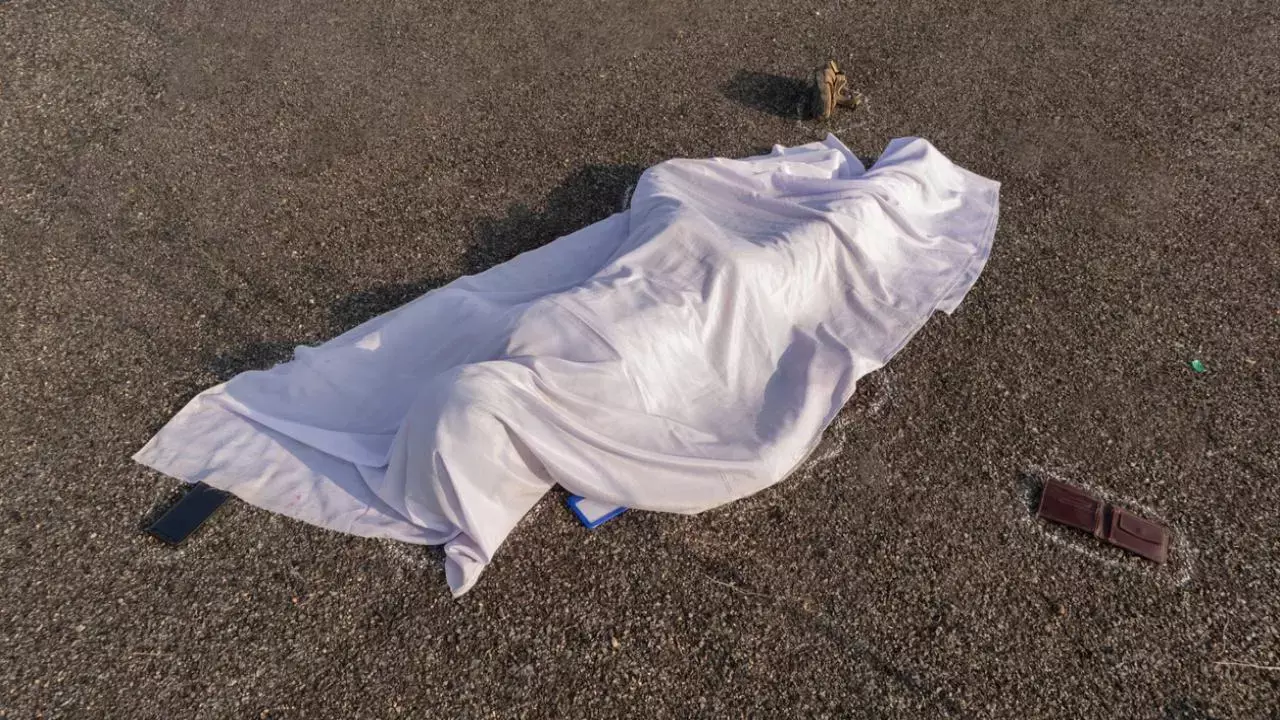
SRINAGAR: Months after security forces claimed to have killed a “terrorist” in an encounter in Jammu and Kashmir’s Ganderbal district, the body of the slain man has been exhumed and returned to his family — a development that has revived serious questions over the official version and strengthened the family’s assertion that he was not a militant.
Family members identified the deceased as Raashid Ahmad Mughal of Chunt Walivar in the Lar area of Ganderbal. They said his remains were exhumed on June 13 and handed over to them before being reburied late at night in his ancestral graveyard, in the presence of police personnel and a small number of relatives.
Police officials confirmed that Mughal’s remains were returned to the family last week. For his relatives, however, the late-night burial was not closure but another reminder of a case they say was clouded from the beginning by official secrecy, contradictory accounts and an attempt to portray an ordinary civilian as a militant.
The case dates back to the night of April 1, when the Army announced that a “terrorist” had been killed during an operation in the forests of Arhama village in Ganderbal. The identity of the deceased was not immediately disclosed. The Army said the operation followed specific intelligence about suspicious movement and that troops responded with “calibrated and effective” counter-fire after detecting movement in the area.
But the official claim soon came under scrutiny after the deceased was identified as Raashid Ahmad Mughal, reportedly through an ATM card recovered from the body and later through his brother at the Police Control Room in Srinagar. His family rejected the militant label outright, saying Mughal had no links with militancy and had been wrongly branded after his death.
According to his relatives, Mughal earned his livelihood by helping local residents with paperwork related to domicile certificates, job cards, pension benefits and bank loans. In earlier accounts, family members and local residents described him as an unarmed civilian and a part-time computer operator who assisted villagers with routine documentation work.
His brother, Ajaz Ahmad, said Raashid left home on the morning of March 31 for routine work and did not return that evening. When the family tried to contact him around 6 pm, his mobile phone was switched off. Ajaz said they initially assumed the old handset had stopped working.
The next morning, Ajaz said, a police officer visited him and told him that his brother had met with an accident. He was taken to a police facility in Srinagar and asked to identify a body. There, he said, he found that the deceased was Raashid. The family was later told that Raashid had been killed as a militant during an encounter — a claim Ajaz has consistently denied.
The family also alleged that the clothes Mughal was wearing when his body was shown to them did not match the clothes he had worn when he left home, deepening their suspicion that the encounter narrative did not reflect what had actually happened. They further alleged that despite repeated requests, the body was not immediately handed over to them and was instead taken to Handwara in frontier district of Kupwara, with Ajaz being the only family member accompanying the remains.
The allegations triggered protests and political reactions across Kashmir. Chief Minister Omar Abdullah publicly supported the family’s demand for an impartial investigation, saying their claims should not be dismissed outright and calling for a transparent, time-bound probe with facts placed in the public domain.
Peoples Democratic Party president Mehbooba Mufti also called for an impartial probe, while the issue resonated during Friday prayers at Srinagar’s Jama Masjid, where Mirwaiz Muhammad Umar Farooq described the reports surrounding the killing as deeply distressing and condemned the failure to hand over Mughal’s body to the family for burial at the time.
Amid the public outrage, Lieutenant Governor Manoj Sinha ordered what he described as a “thorough and impartial magisterial inquiry” into the Arhama incident. The Home Department, which functions under the Lt. Governor’s administration, directed the District Magistrate, Ganderbal, to conduct a comprehensive and unbiased inquiry into the facts and circumstances leading to Mughal’s death.
The inquiry was to be completed within seven days, with a report submitted to the Home Department. However, the findings have not been made public so far, leaving unanswered the central question raised by the family and local residents: why was a man they describe as a civilian killed and publicly portrayed as a terrorist?
Police sources had earlier indicated that the local police station was examining Mughal’s background to verify whether there were any links to militancy and to assess the family’s allegation that he may have been detained, killed and subsequently projected as a terrorist. The return of his body to the family, months later, has only intensified demands that the inquiry findings be disclosed.
