Replacing Russian Crude With Costlier US, Venezuelan Oil Difficult: GTRI

Let's see what tariffs we were paying a year back. Average tariffs in the US on Indian goods were less than 3 per cent. Of course, they vary from product to product. When it was raised, by 50 per cent, it became 53 per cent
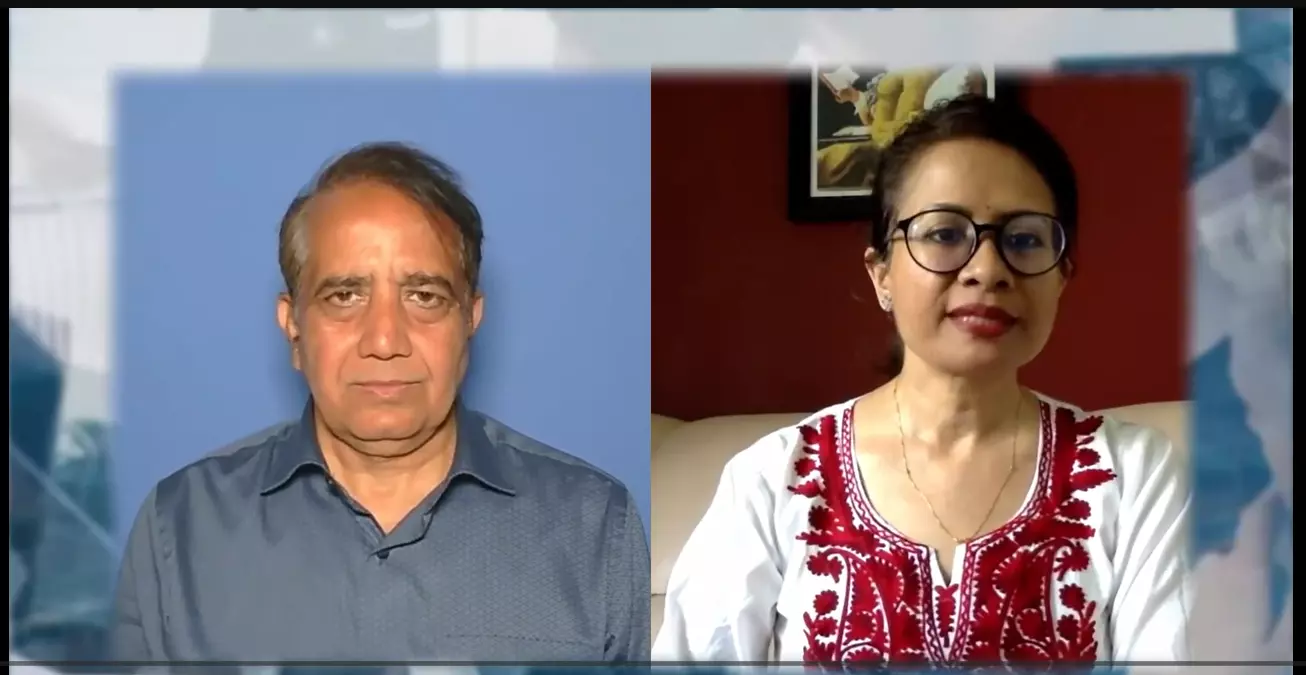
Chennai: India buys almost one third of its crude oil from Russia and replacing Russian oil with supply from US and Venezuela is difficult. US or Venezuelan crude will also be costlier than the discounted Russian crude, said Ajay Srivastava, founder of GTRI, in a conversation with Financial Chronicle.
Q) The announcement by Trump says that the reciprocal tariff will be brought down to 18 per cent. But we will also have to pay the MFN tariffs. On the other hand, India will bring the tariffs to zero for all American properties. How balanced is this trade deal from a tariff?
Let's see what tariffs we were paying a year back. Average tariffs in the US on Indian goods were less than 3 per cent. Of course, they vary from product to product. When it was raised, by 50 per cent, it became 53 per cent. Now we brought it down to 18 per cent. So, it's 18 plus 3 - 21 per cent. So, we were paying pre-Trump 3 per cent. Now we'll be paying 21 per cent and we are very happy about this.
So that's a mindset change. Reciprocal tariffs have not been imposed taking congressional approval and the US Supreme Court can hold these illegal as the lower two courts have done so.
Here, we don't see the balance, we see the comparative or competitive advantage. We are very happy that we are paying lesser tariffs compared to our competitors like Bangladesh or Vietnam or Malaysia or Indonesia or even Pakistan.
Trade deals are no charity business. I will extend some benefits when I get something in return. I think the world has forgotten about the balance.
Q) Trump has also mentioned that India has agreed not to buy oil from Russia. A third country has announced our decision on making oil purchases. Do you think this is a transgression into our sovereignty?
It is a sad issue. Indian decisions should be communicated to Indian people by the Indian government or Indian sources. But two things are there. The Indian government has not said anything about this. Neither has it accepted, nor denied. Russian spokesperson says that the arrangement with the Indian government on oil purchase continues. It has not changed. So, we'll wait for a few more days to understand what the game really is. But one thing is clear, India buys almost one third of its crude oil from Russia and replacing Russian oil is difficult from sources like the US or Venezuela. They don't have so much supplies.
Q) How costlier or cheaper it would be to buy from the US and Venezuela compared to Russia?
We will not have the exact figures, but we know that we have been buying Russian oil because it was cheaper. And most of the American oil is produced using the fracking process which makes the oil more expensive than the normal Brent crude and other oils. Venezuelan oil is of low quality, thick oil and their wells are not in proper condition and oil is going to be expensive. Only if we get it at the same price, we have to think of buying oil from those countries.
Q) He said India has agreed to buy $500 billion worth goods from the US. If you look at the current imports, it's somewhere around $50 billion. So how can this be scaled? and by when? And if at all this happens, don't you think we will have a large trade deficit with both the two large economies, US and China?
When he talks about $500 billion. I'm happy and relieved that he is not asking for investments into the US. He secured $600 billion from the EU, and Japan $550 billion. But buying goods worth $500 billion is impossible. The US doesn't have many things we need. They are into highly subsidized agricultural goods or they are into very high-tech goods or aircrafts. We cannot buy them in large enough quantities. We can say that this $500 billion can be spread across years. Suppose we don't increase our buying from the US by a single dollar, then $50 billion multiplied by 10 years will make $500 billion. In one year, $500 billion is impossible.
Q) After the reciprocal tariffs and punitive tariffs came into force, we had expected a heavy drop in exports to the US. But if you look at the exports between September and December, they are flat. Do you think that the goods exports would have probably survived even without it?
You are right, our exports fell very sharply between May and September. But from September to November, some rise was there. Friends in industry say that January onwards it is going to be very tough for labour-intensive products. Both the Indian side and the American side took a hit on their profits for the business relationship. It takes years to develop and should be maintained because they were waiting for this deal. They say if the deal will be delayed a few more months then this trust will break and exports will come down very sharply.
Q) Do you think a trade deal is a guarantee that US President Donald Trump will not take any other trade-related action on us in the future?
It depends on what his mood is. When he wanted to capture Greenland, he immediately threatened European countries with tariffs. But Europe didn't just listen. They responded by suspending their trade deal. The trade deal between the US and EU remains suspended. We should be expecting it. Not only be ready, we should be expecting that Trump, the moment India does something in Brics, he will be threatening tariffs. We should be ready to stand up and take action the way the EU did.
The full interview is available at https://youtu.be/SLITEMieNdQ
