India-US Trade Deal To Be Finalised By March Next Year: CEA

Many of the major issues have been resolved
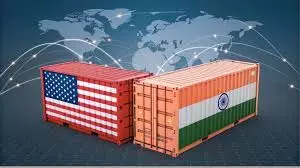
New Delhi: Chief economic adviser (CEA) V Anantha Nageswaran on Thursday hinted that India and the United States are very close to finalising their long-pending trade deal, saying that most of the major issues have already been resolved. "The talks are now in their final stage and a deal appears likely by March next year," he said, while speaking to a television channel, adding that India’s growth prospects for FY '27 remain strong and described the rupee as undervalued relative to fundamentals.
Amid renewed optimism on both sides, the US officials have also publicly acknowledged receiving the most forward-leaning trade proposals from India to date. However, the CEA’s comments come at a time when global business conditions are uncertain, and both countries are aiming for a stable, balanced, and growth-oriented agreement.
“I was hoping something would be done by the end of November this year, but it has turned out to be elusive. That’s why it is difficult to give a timeline on this. I think a deal is likely by March 2026. However, I would be surprised if we don’t have it sealed by the end of the financial year,” Nageswaran said in an interview.
Initially, New Delhi and Washington had agreed to conclude the first tranche of the trade agreement, by fall of this year. However, the two nations failed to strike a deal before the deadline. In the last few weeks, India has expressed confidence that the deal could be concluded by the end of the year.
When asked about the delay in the India-US deal, Nageswaran, however, blamed geopolitics for the delay and said it is hard to put a timeline for the deal. “I believe this is as much a matter of geopolitics as it is of bilateral trade,” the CEA said, adding right now, it is very difficult to put a timeline to it.
On the country's economy and rupee movement, Nageswaran also said that the country's economy is ‘doing rather well’, with exporters managing to hold out against the tariff effects and partially offset the negative fallout by diversifying into other markets. “The economy has surprised us with better performance than we anticipated early in the forecast cycle. The FY27 economic outlook has positive momentum and I will not be surprised if something like this happens for 2026–27 as well,” he said.
Moreover, he further said, a weaker rupee at this point of time has been beneficial for the export sector amid the global uncertainties. “The rupee has lost 5 percent–15 percent of its value against India’s trade competitors. Having a weaker rupee at this point is not a major problem, as it benefits the export sector given global uncertainties,” he said.
