What is Indus Water Treaty? How Does India's Action Affect Pakistan?

24 April 2025 11:15 AM IST24 April 2025 11:15 AM IST
India and Pakistan signed the Indus Waters Treaty in 1960, with the World Bank as an additional signatory.
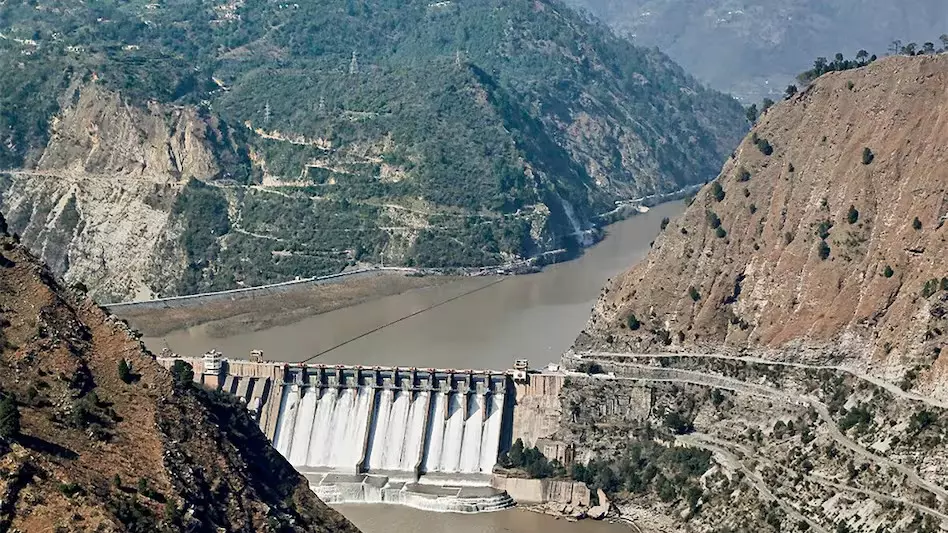
80% of Pakistan’s cultivated land—about 16 million hectares—relies on water from the Indus system.
The Cabinet Committee on Security (CCS) on Wednesday suspended Indus Waters Treaty with Pakistan indefinitely. The Indian government's decision comes a day after 26 people, including foreign nationals and mostly tourists were gunned down by terrorists at the scenic Pahalgam in Jammu Kashmir.
The Resistance Front (TRF),Pakistan-based Lashkar-e-Taiba group, claimed responsibility for the attack.
With the suspension of this treaty, the water supply from the Indus river and its tributaries—the Jhelum, Chenab, Ravi, Beas, and Satlej—will be stopped. These rivers are the source of water supply for Pakistan, impacting tens of millions of people in that country.
When was the treaty signed between India and Pakistan?
India and Pakistan signed the Indus Waters Treaty in 1960, with the World Bank as an additional signatory. The pact sought to divide the water of the Indus river and its tributaries equally between the two countries. Under the treaty, water from the three eastern rivers—Beas, Ravi, and Sutlej—was allocated to India, and that from the three western rivers—Chenab, Indus, and Jhelum—to Pakistan.
The treaty also permits both countries to use the each other’s rivers for certain purposes, such as small hydroelectric projects that require little or no water storage.
Who got what from the treaty?
The treaty gives control over the waters of the three “Eastern Rivers"—the Beas, Ravi, and Sutlej, located in India with a mean annual flow of 41 billion m3 (33 million acre⋅ft)—to India, while control over the waters of the three “Western Rivers"—the Indus, Chenab, and Jhelum, located in India with a mean annual flow of 99 billion m³—to Pakistan.
India received about 30% of the total water carried by the Indus River System located in India, while Pakistan got the remaining 70%.
The treaty allows India to use the water of Western Rivers for limited irrigation use and unlimited non-consumptive uses such as power generation, navigation, floating of property, fish culture, etc. It lays down detailed regulations for India in building projects over the Western Rivers.
What happens now?
The decision to suspend the IWT will straightaway give more options to India on how to use the waters of the Indus river system.
India can also stop visits by Pakistani officials to the two hydroelectric projects currently under construction in Jammu & Kashmir — the Kishenganga HEP on Kishenganga, a tributary of the Jhelum, and the Ratle HEP on the Chenab.
However, the suspension will not have an immediate impact on the flow of water to Pakistan for at least a few years. India does not currently have the infrastructure to either stop the flow of water into Pakistan, or to divert it for its own use.
( Source : Deccan Chronicle )

Next Story