Vulture Travels 750 km, Reaches Near Anjaneri Hills

Released on December 11 under a vulture reintroduction programme by the Maharashtra Forest Department and the Bombay Natural History Society (BNHS), the bird has travelled nearly 750 km in about 15 days, crossing several districts of central and western Maharashtra.
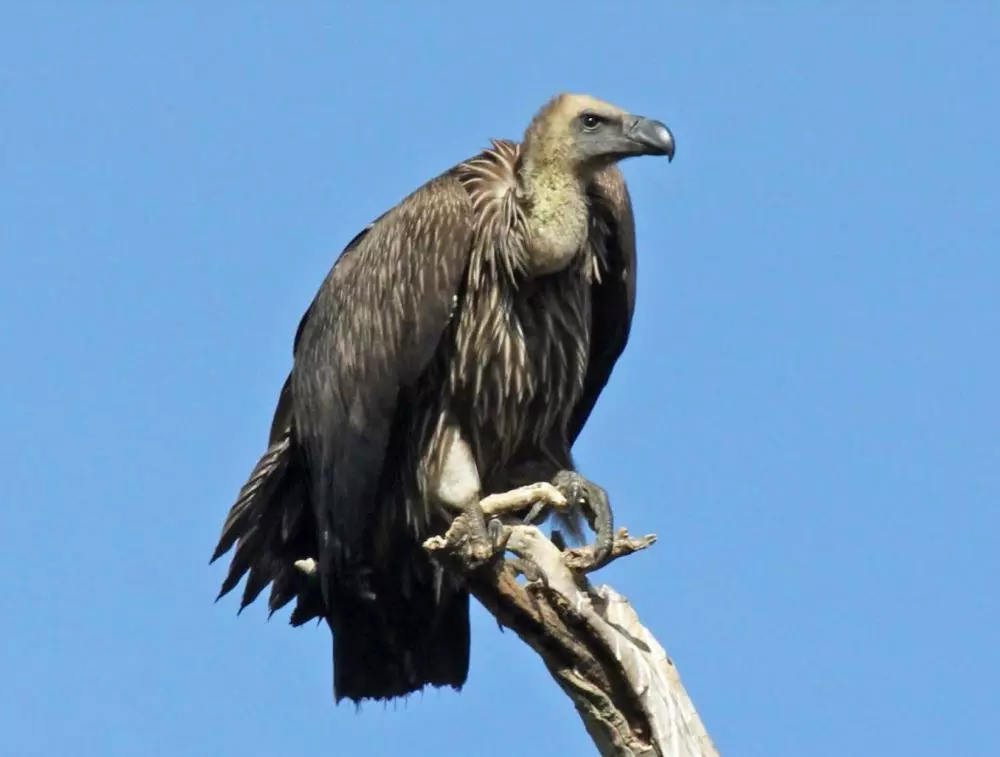
Mumbai: Anjaneri hills near Trimbakeshwar in Maharashtra’s Nashik district — believed in mythology to be the birthplace of Lord Hanuman and a former habitat of Jatayu from the Ramayana — have witnessed a striking coincidence. A critically endangered Long-billed Vulture, J132, released at Pench Tiger Reserve in Nagpur, has flown to within 38 km of Anjaneri, thrilling conservationists and bird enthusiasts.
Released on December 11 under a vulture reintroduction programme by the Maharashtra Forest Department and the Bombay Natural History Society (BNHS), the bird has travelled nearly 750 km in about 15 days, crossing several districts of central and western Maharashtra.
BNHS researcher Manan Singh said the bird’s journey is being closely monitored. “The vulture followed the route Nagpur, Wardha, Yavatmal, Hingoli, Washim, Buldhana, Jalna and Chhatrapati Sambhajinagar before reaching Nashik. On Thursday, it roosted on cliffs. It has travelled around 750 km so far,” Mr. Singh said. He added that the bird typically roosts in the evening, feeds in the morning, and then flies on, with activity data indicating at least two full meals during its journey.
The Maharashtra Forest Department, in collaboration with BNHS, is releasing captively bred vultures into the wild as part of a long-term conservation effort. The second batch of 14 vultures was brought from Pinjore in Haryana on April 24, 2025, and housed in a pre-release aviary at Pench Tiger Reserve, where they were trained for eight months to feed independently on carcasses. The birds were fitted with GSM tags last month to enable post-release monitoring. The batch includes eight White-rumped Vultures (Gyps bengalensis) and five Long-billed Vultures (Gyps indicus), while one bird fell ill and remains at Pench.
After completing a structured acclimatisation period, including training in natural foraging and survival alongside wild vultures, the birds were released on December 11, 2025, by Maharashtra Chief Wildlife Warden Sreenivas Reddy and BNHS President Praveen Pardeshi.
BNHS Director Kishor Rithe said GPS transmitters would allow long-term scientific monitoring of movement, habitat use and survival. “This journey has been fascinating and has generated tremendous interest among the birding community. Close monitoring will continue to assess movement, feeding behaviour and site use, contributing to long-term vulture conservation efforts in central India,” he said, adding that the information has been shared with the concerned chief conservators of forests in Nashik and Chhatrapati Sambhajinagar.
Chief Wildlife Warden of Maharashtra Sreenivas Reddy said tagging operations have also been completed in Melghat and Tadoba-Andhari Tiger Reserves, where vultures are slated to be released soon.
