According to a statement issued by the organisation on Friday, the delegation raised three key demands, including a clear legal definition of STs based on Lokur Committee criteria and contemporary realities.
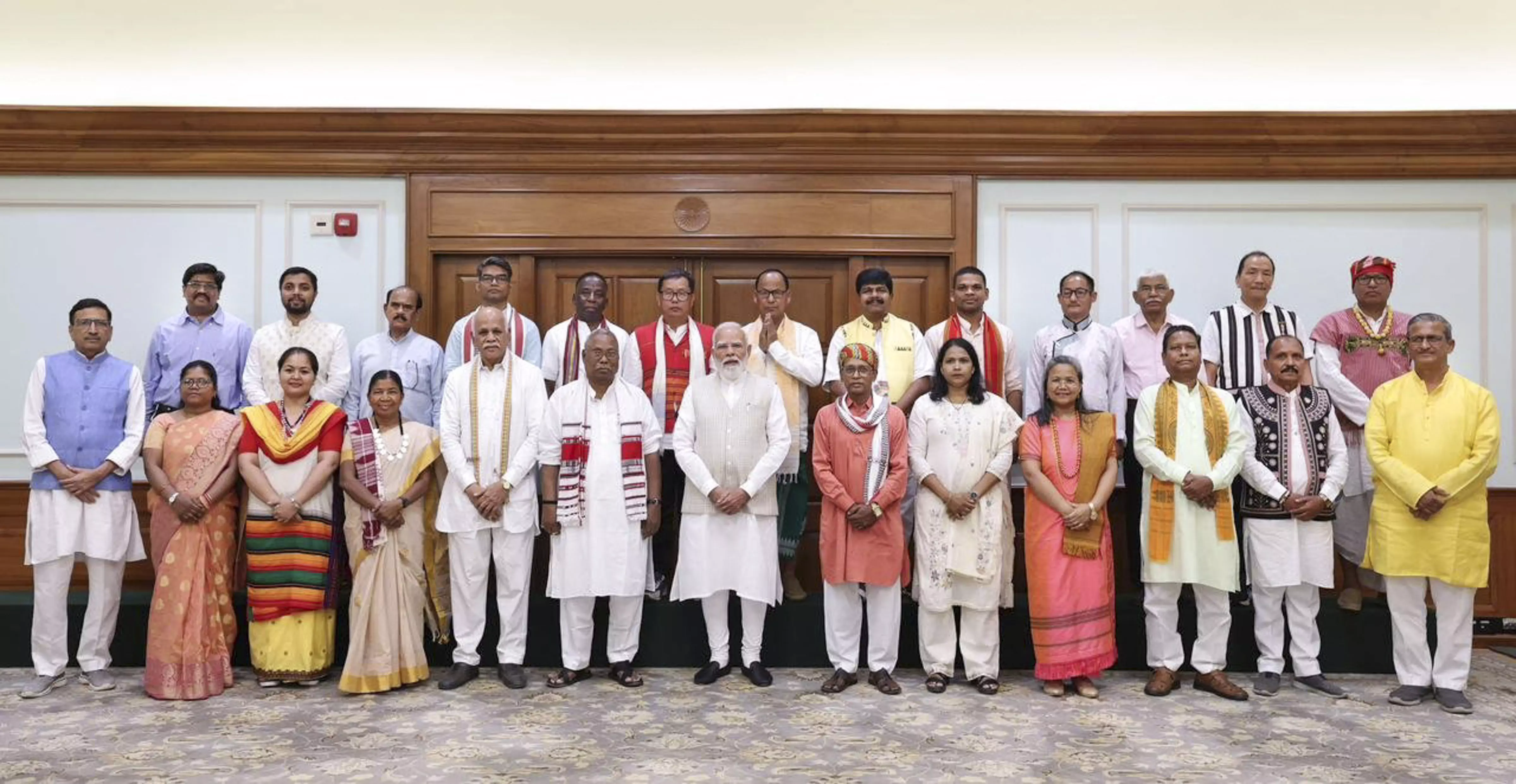
New Delhi: A 27-member delegation of the RSS-linked Janjati Suraksha Manch met Prime Minister Narendra Modi and President Droupadi Murmu on May 28, seeking legal changes concerning the status of Scheduled Tribes (STs).
According to a statement issued by the organisation on Friday, the delegation raised three key demands, including a clear legal definition of STs based on Lokur Committee criteria and contemporary realities.
It also sought an amendment to the Constitution (Scheduled Tribes) Order, 1950, to provide for “delisting” of individuals who, after religious conversion, abandon traditional tribal faith, customs and practices. A third demand related to protection of the cultural identity and constitutional rights of tribal communities.
“The issue is not merely about reservations or legal interpretation but concerns the cultural identity, traditions and existence of millions of tribal people,” Janjati Suraksha Manch national co-convener Raj Kishore Hansda said.
The organisation claimed that a section of the tribal population that had converted to Christianity continued to avail ST reservation benefits along with minority welfare schemes, describing it as a “dual benefit”.
The delegation also urged the President to refer the matter to the National Commission for Scheduled Tribes for examination.
Satyendra Singh, national president of the Akhil Bharatiya Vanvasi Kalyan Ashram, who was part of the delegation, said the concerns were conveyed to both the Prime Minister and the President and described the response as positive.
He said the demand to delist converted tribal individuals from ST benefits had been raised earlier as well.
“This demand is based on truth and justice. We believe it will happen, although it is difficult to say when,” he said.
On engagement with converted tribal communities, he said any return to traditional practices would be voluntary and based on social dialogue.
“Many tribal families already have members following different faiths, and any return to traditional practices will have to happen voluntarily through social dialogue and community acceptance. Tribal society does not use the term 'ghar wapsi'. If people wish to return to their original traditions, communities have their own customary ways of accepting them back,” he said.
On the demand for a separate Sarna religious code, he expressed reservations, stating that tribal traditions were integral to the country’s heritage.
Responding to queries on the proposed Great Nicobar project, he said environmental concerns needed to be balanced with national security and that local tribal communities should be consulted in the development process.