Tourism Resilience Shines in J&K Despite Pahalgam Attack

Pahalgam attack dents sentiment briefly; pilgrimages and valleys drive surge
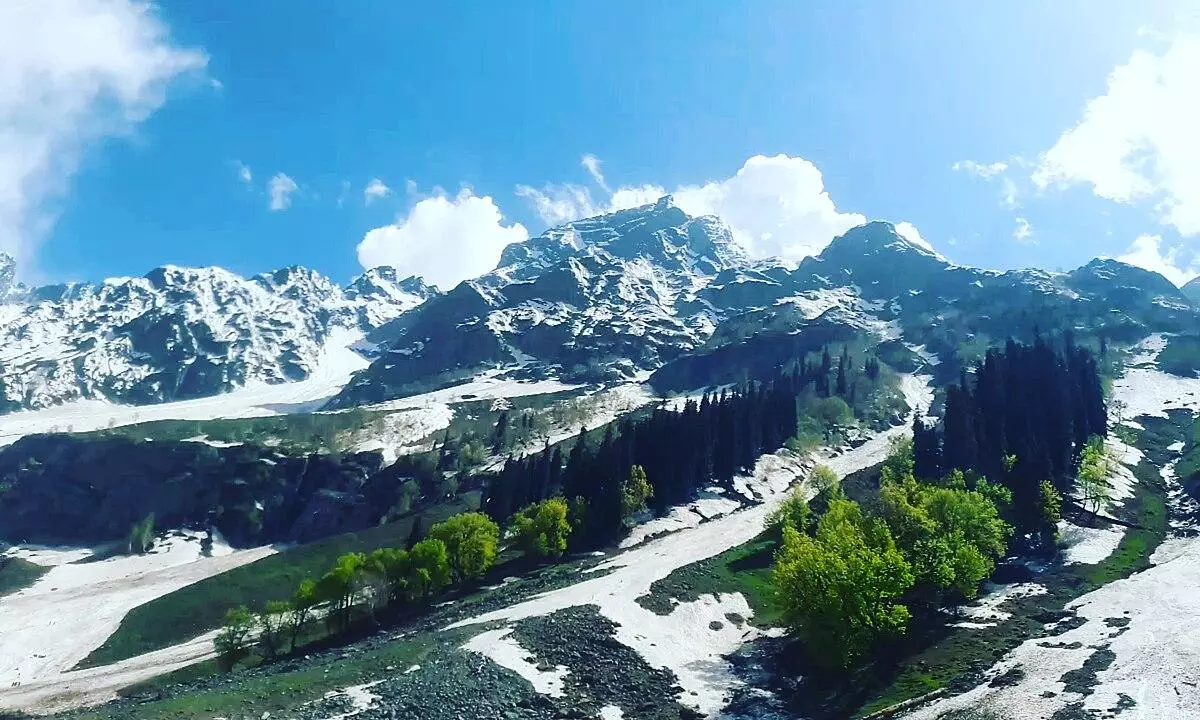
Srinagar: Despite the shadow cast by the Pahalgam terror attack—which briefly disrupted travel sentiment and raised concerns about visitor safety—Jammu and Kashmir continued to demonstrate remarkable tourism resilience in 2025.
Government data presented in the Legislative Assembly, currently in its budget session in winter capital Jammu, revealed that more than 16 million domestic and foreign tourists visited the Union Territory this year, underscoring the scenic region’s enduring appeal and the administration’s sustained efforts to revive and expand the tourism sector.
Responding to a query raised by National Conference (NC) legislator Javid Hassan Baig, the Tourism Department noted that tourist footfall is tracked destination-wise and that comparative data for the past three years, including pre-2019 benchmarks, has been compiled.
According to the figures tabled in the House, the Jammu division alone recorded 1,62,35,036 visitors in 2025, while the Kashmir division received 4,77,882 tourists, taking the cumulative count to over 1.67 crore. This steady influx comes despite intermittent security concerns, including the Pahalgam incident, which momentarily dampened travel enthusiasm but did not derail the broader tourism trajectory.
The data reflects a fluctuating yet robust pattern. In 2024, Jammu welcomed 2,00,91,379 tourists and Kashmir Valley 98,19,841, while in 2023 the numbers stood at 1,80,24,166 for Jammu and 96,33,972 for Kashmir. The 2025 figures, though impacted by the Pahalgam attack, reaffirm the region’s strong tourism fundamentals. Major destinations in Kashmir continued to attract significant footfall: Gulmarg received 1,10,728 visitors, Pahalgam 1,00,236, Sonamarg 4,87,638, Doodhpathri 1,27,919, and Kokernag 6,12,235. The fact that Pahalgam still crossed the one-lakh mark despite the April 22, 2025 attack highlights both the destination’s popularity and the administration’s swift response to restore confidence.
In the Jammu division, pilgrimage tourism remained the backbone of visitor inflow. Shri Mata Vaishno Devi in Katra drew over 69.32 lakh pilgrims, while Shiv Khori registered more than 10.56 lakh visitors. Other scenic and adventure destinations such as Patnitop, Mansar, Bhaderwah, Sanasar, and Surinsar also maintained steady tourist arrivals, reinforcing Jammu’s role as a year-round tourism hub.
The government reiterated that tourism is a vital pillar of J&K’s economy, supporting a wide ecosystem of stakeholders—hotel owners, transporters, tour operators, artisans, guides, and small traders. Acknowledging the temporary setback caused by the Pahalgam attack, officials emphasised that comprehensive measures have been implemented to counter negative perceptions. These include strengthened security at tourist sites, improved road connectivity, upgraded civic amenities, and enhanced tourism infrastructure. Promotional campaigns have been intensified across national and international platforms, while Familiarisation (FAM) tours for travel operators, influencers, and media professionals are being organised to rebuild trust and showcase the region’s offerings.
The administration is also pursuing a phased and structured roadmap aimed at long-term sectoral growth. This includes infrastructure modernisation, expansion of accommodation options such as homestays, strengthening of tourism development authorities, and skill development programs for local youth. Special focus is being placed on diversifying tourism beyond traditional circuits—promoting pilgrimage tourism, adventure sports, eco-tourism, rural experiences, and winter tourism. These initiatives are designed not only to attract a wider spectrum of visitors but also to generate employment and ensure inclusive economic growth across the Union Territory.
While the Pahalgam terror attack briefly threatened to derail the positive momentum, the overall tourism performance of 2025 demonstrates that J&K’s appeal remains resilient. With continued investment, strategic promotion, and enhanced security, the region is poised to further consolidate its position as one of India’s most sought-after travel destinations.
