Time for Global South To Turn From Rule Takers To Rule Makers: PM Modi at BRICS

While saying the reform of the UNSC cannot be delayed anymore, the PM sought equal participation in shaping the global rules.
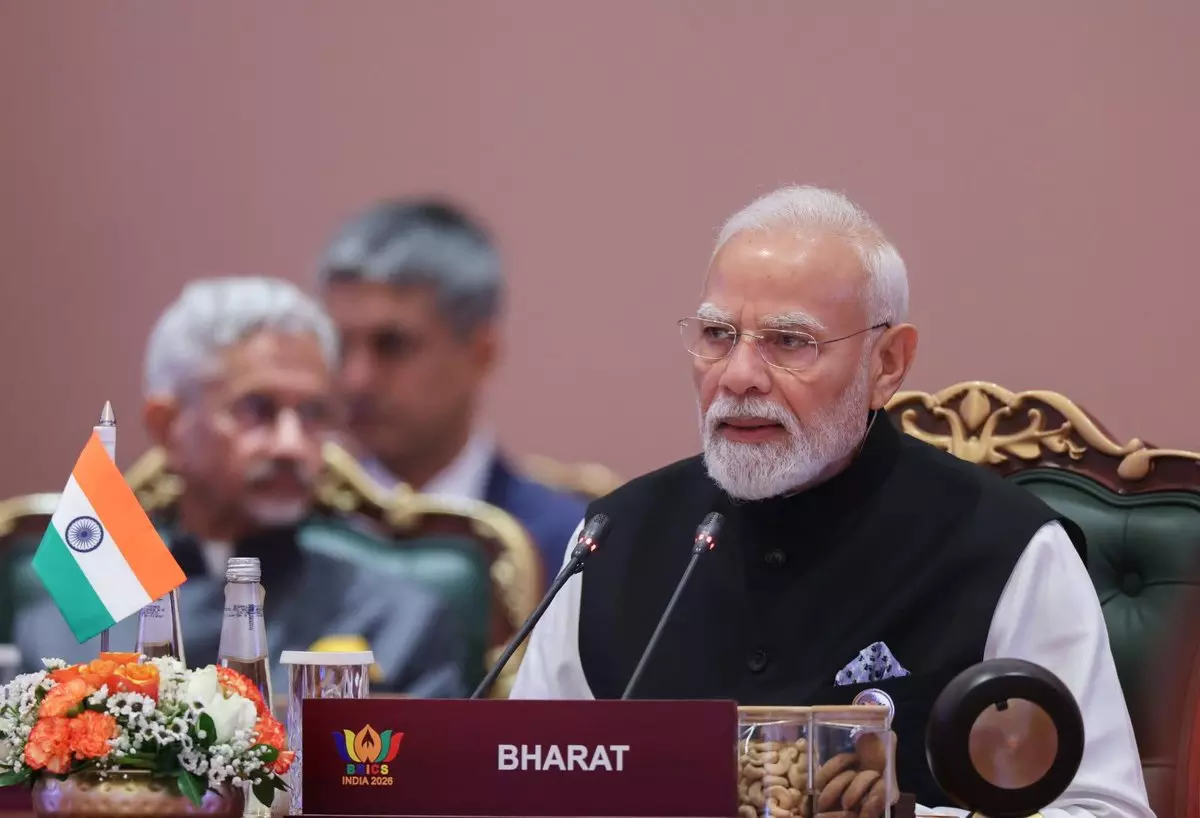
New Delhi: Seeking better representation for developing countries in the United Nations Security Council and global financial bodies like the World Bank, World Trade Organisation Prime Minister Narendra Modi, while speaking at the Brics summit on Saturday, said it is time for the Global South to shift from being rule takers to being rule makers. He added that the existing "pyramid of privilege" structure in global governance must give way to a "platform of partnership". PM proposed a 10-point roadmap for global governance reform with focus on representation, responsiveness, and rule-making even called for a seafarers emergency support network.
Russian President Vladimir Putin, Chinese President Xi Jinping, Iranian President Masoud Pezeshkian, South African President Cyril Ramaphosa, Malaysian Prime Minister Anwar Ibrahim, Indonesian President Prabowo Subianto, Abu Dhabi Crown Prince Mohamed bin Zayed Al Nahyan and Egyptian President Abdel Fattah El-Sisi attended the closed door meeting. President Xi supported Mr Modi’s points saying Brics should support a multilateral trading system centred on the World Trade Organization, and reject all forms of protectionist measures.
While saying the reform of the UNSC cannot be delayed anymore, the PM sought equal participation in shaping the global rules. He noted that in financial institutions too voting power, leadership positions, and policy priorities should reflect present economic realities. He added that the Global South is in the front row of global crises, but in the back row of decision-making.
“Countries that drive global economic growth should also have an appropriate role in shaping global economic governance… The current structure of global governance resembles a pyramid. At the top, power and decision-making are concentrated, while at the bottom are countries that are affected by these decisions but have little say in shaping them. We must transform this 'pyramid of privilege’ into a `platform of partnership’, where every country has a voice, every member has a stake,” Mr Modi added.
Calling for prompt response to emergency situations, particularly for the seaferers, Mr Modi said, “Seafarers make a very significant contribution to global trade, yet they often find themselves without adequate support during times of difficulty. I propose whether we can establish a seafarers emergency support network? This network could connect the maritime authorities and missions of the countries concerned. It could facilitate distress alerts, medical assistance, communication with families, and support for evacuation.”
The PM suggested Brics must work on a new and ambitious agenda by strengthening its own working systems in the next twenty years and added that the change in Brics Chairship every year, should not interrupt the groups institutional momentum. For this he proposed the establishment of a Brics continuity and implementation mechanism and creating a secure digital repository in which, for every decision, the nodal point, timeline, and implementation status can be recorded.
